Cameo Business Model Breakdown: How Personalized Celebrity Videos Became a Multi-Million Dollar Industry

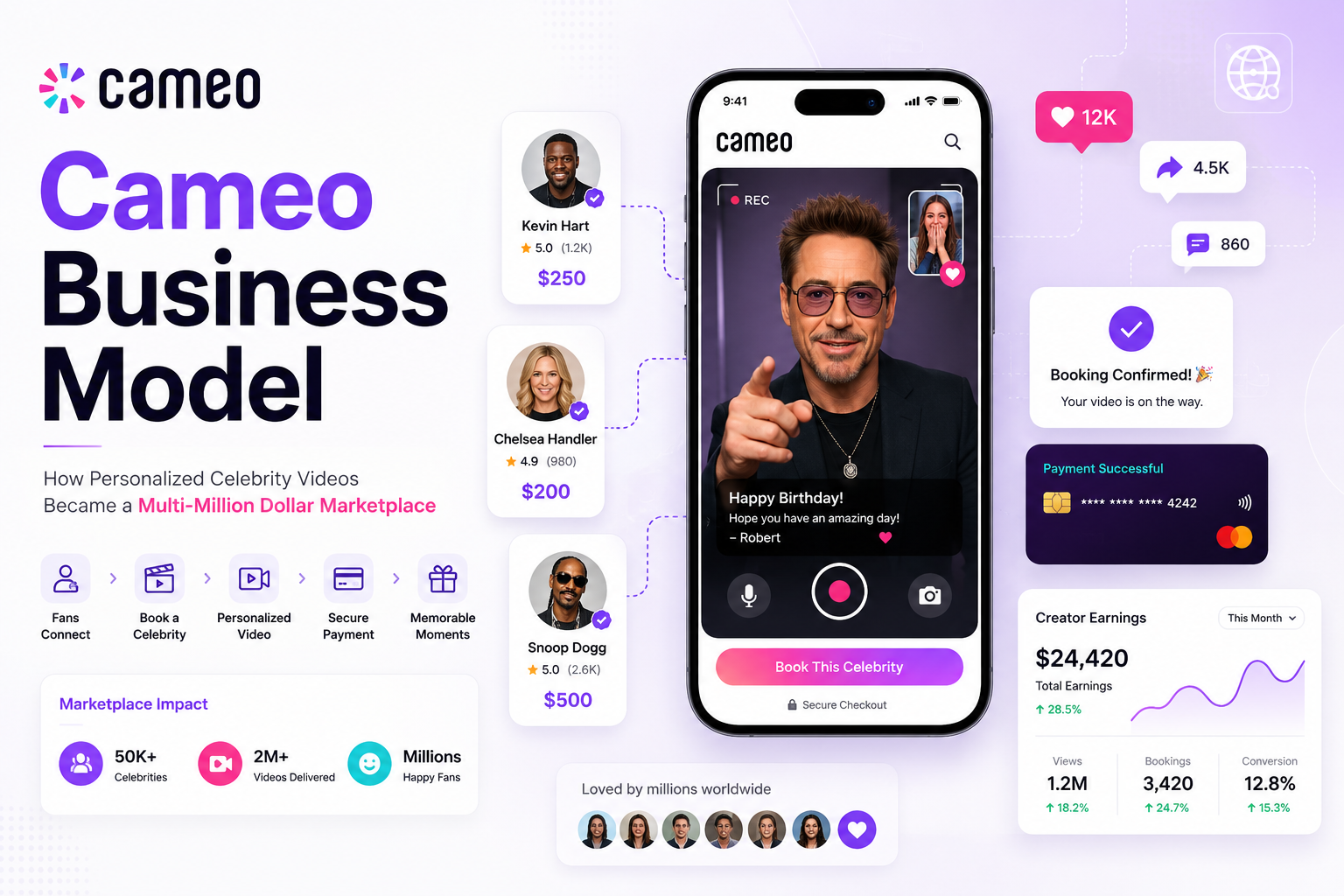
Cameo operates a celebrity marketplace business model where fans pay celebrities for personalized video messages, live interactions, and branded content. The platform earns revenue mainly through commission fees on every transaction between fans and talent.
What Is Cameo?
Cameo is an online marketplace that connects fans with celebrities, athletes, musicians, comedians, and influencers for personalized video shoutouts, live calls, direct messages, and business collaborations.
Founded in 2017 by Steven Galanis, Martin Blencowe, and Devon Townsend, Cameo started with a simple idea: what if fans could pay their favorite celebrities for a personal message? That idea turned into a platform valued at over $1 billion at its peak.
The platform became popular because it solved a real problem. Fans wanted access to celebrities. Celebrities wanted new income streams. Cameo built the bridge between both sides.
How the Cameo Business Model Works
Cameo runs a two-sided marketplace. One side has talent (celebrities, influencers, athletes). The other side has buyers (fans, gift-givers, businesses). The platform connects both and takes a cut of every transaction.
The Celebrity Side
Celebrities sign up, verify their identity, create a profile, and set their own prices. A D-list reality TV star might charge $20 per video. A top-tier athlete might charge $500 or more. Cameo gives talent full control over pricing and availability.
The Fan Side
Fans search for a celebrity, submit a request with details about what they want said, pay upfront, and wait for delivery. Most videos arrive within seven days. If the celebrity doesn’t fulfill the request, the fan gets a full refund.
The Platform Role
Cameo handles payments, manages the interface, handles disputes, and promotes talent through its app and website. It does not create content. The celebrities do all the heavy lifting.
Cameo Business Model Canvas
| Component | Details |
|---|---|
| Key Partners | Celebrities, influencers, talent agencies, payment processors |
| Key Activities | Platform management, talent acquisition, marketing |
| Value Proposition | Personalized celebrity access for fans, easy monetization for talent |
| Customer Segments | Fans, gift buyers, businesses, event organizers |
| Channels | Mobile app, website, social media |
| Revenue Streams | Commission fees, business partnerships, live calls |
| Cost Structure | Infrastructure, marketing, salaries, payment processing |
How Cameo Makes Money
Cameo’s primary revenue source is transaction commissions. Every time a fan buys a celebrity video, Cameo keeps a percentage of that payment.
Commission-Based Revenue
Cameo charges a 25% commission on every booking. If a fan pays $200 for a celebrity video, Cameo keeps $50 and the celebrity receives $150. This model scales automatically. More bookings mean more revenue without adding operational complexity.
The commission structure is straightforward and applies across all standard video requests. Celebrities accept this fee because Cameo handles all the marketing, platform maintenance, payment processing, and customer support.
Cameo for Business
Cameo for Business is a separate revenue stream targeting brands and companies. Businesses can book celebrities for:
- Branded promotional videos
- Product endorsements
- Corporate event appearances
- Internal team motivation messages
- Social media campaign content
Business bookings typically involve higher price points than personal fan requests. A brand paying a celebrity for a sponsored shoutout generates significantly more commission revenue per transaction than a birthday greeting.
Live Video Calls
Cameo offers live one-on-one video calls between fans and celebrities. These are priced higher than standard pre-recorded videos because they require real-time availability from the talent.
Live calls are a premium product. Fans pay for the exclusivity of an actual conversation with someone they admire. This segment generates stronger margins per booking and attracts superfans willing to spend more.
Promotional Partnerships
Cameo occasionally partners with brands for promotional campaigns. These deals involve celebrities on the platform creating content tied to a brand initiative, with Cameo earning revenue from the partnership arrangement.
Future Monetization Possibilities
Cameo has explored and continues to evaluate additional revenue models:
- Subscription features for fans who want priority access or discounts
- Fan memberships tied to specific celebrities
- AI-generated celebrity interactions using licensed voice and likeness
- Merchandise integrations with celebrity profiles
Cameo Pricing Strategy
Dynamic Celebrity Pricing
Cameo does not set prices. Celebrities do. This creates a dynamic pricing environment where cost reflects demand, popularity, and availability.
A celebrity with 10 million social media followers charges more than someone with 100,000. A retired athlete charges less than one currently active in their sport. Supply and scarcity drive price points organically.
| Celebrity Tier | Typical Price Range |
|---|---|
| Micro-influencers | $5 – $50 |
| Mid-tier talent | $50 – $200 |
| Well-known personalities | $200 – $500 |
| Major celebrities | $500 – $2,500+ |
Psychological Pricing Factors
Cameo’s pricing works because of the emotional value attached to the product. A $100 birthday video from a fan’s favorite athlete feels like a bargain compared to the emotional impact it delivers. The perceived value far exceeds the monetary cost in most cases.
Scarcity also plays a role. Some celebrities limit their availability, which creates urgency. When a fan sees that their favorite celebrity only accepts a few requests per week, they book faster and question the price less.
High-Ticket Celebrity Economy
At the top of the market, Cameo hosts celebrities who charge thousands per video. This positions some transactions as luxury digital experiences. The platform benefits from these high-ticket bookings because even a 25% commission on a $2,000 video is a meaningful revenue event.
Target Audience of Cameo
Fans Seeking Emotional Connection
The core Cameo buyer is a fan who wants something money usually cannot buy: personal recognition from someone they admire. These buyers are emotionally motivated. They are not comparing prices across platforms. They want a specific person.
Birthday and Occasion Buyers
A large portion of Cameo purchases happen around specific occasions: birthdays, anniversaries, graduations, retirements. Gift buyers represent a reliable, recurring customer segment because occasions repeat every year.
Internet and Meme Culture Users
Cameo grew significantly through internet culture. Videos of celebrities saying absurd or unexpected things went viral on TikTok, Twitter, and Reddit. This created awareness at zero cost to Cameo. Meme buyers purchase videos specifically to create shareable content.
Businesses and Brands
Corporate buyers use Cameo for marketing campaigns, internal communications, and event entertainment. This segment spends more per transaction and is less price-sensitive than individual fans.
Cameo Marketing Strategy
Cameo grew heavily through viral marketing, social media sharing, influencer culture, and internet meme ecosystems.
Viral Social Media Loop
Every Cameo video is a piece of shareable content. When a fan receives a video and posts it online, that post becomes free advertising for Cameo. The person in the video gets exposure. The fan gets attention. Cameo gets brand awareness.
This loop powered organic growth across:
- TikTok: Reaction videos and celebrity clips spread rapidly
- Instagram: Birthday shoutout shares and story reposts
- Twitter/X: Meme accounts and viral screenshot culture
- Reddit: Threads highlighting unusual or funny celebrity requests
User-Generated Content Strategy
Cameo built its marketing engine on user-generated content. Customers create and distribute the content that markets the platform. No ad spend required. The product markets itself every time someone shares their video.
This is one of the most efficient marketing models in the creator economy. Cameo spends less on paid acquisition than competitors because organic sharing drives a consistent flow of new users.
Celebrity-Driven Growth
When a high-profile celebrity joins Cameo, their existing fan base discovers the platform. A single announcement from a major athlete or musician can bring thousands of new users to the app in one day.
Cameo actively recruits recognizable names to expand its talent roster. Each new celebrity brings their audience. The platform grows every time a well-known name signs up.
SEO and Search-Based Acquisition
Cameo benefits from strong search demand. Fans search for their favorite celebrities by name. Many of those searches surface Cameo profiles. Occasion-based searches like “birthday gift for football fan” also lead users to the platform.
The combination of celebrity name SEO and occasion-based intent creates a high-converting search traffic pipeline.
Why the Cameo Business Model Works
Emotional Commerce
Cameo does not sell a product. It sells an emotional experience. That distinction matters because emotional purchases are less price-sensitive, more memorable, and more likely to generate word-of-mouth.
When someone receives a personalized video from their favorite childhood athlete, the emotional impact is real. That experience gets shared, talked about, and remembered. Cameo monetizes that emotion at scale.
Low Inventory, High Scale
Cameo holds no physical inventory. It does not manufacture anything. The celebrities create the content. The platform simply facilitates the transaction and takes its commission.
This asset-light model allows Cameo to scale without proportional cost increases. Adding a thousand new celebrities to the platform does not require Cameo to hire a thousand new employees.
Network Effects
Cameo benefits from classic two-sided marketplace network effects:
- More celebrities attract more fans
- More fans make the platform more attractive to celebrities
- More transactions generate more viral content
- More viral content attracts more new users
Each side of the marketplace makes the other side more valuable. This creates a compounding growth dynamic that is difficult for competitors to replicate quickly.
Celebrity Economy Expansion
The creator economy normalized the idea of paying directly for access to talent. Cameo arrived at the right moment. Fans were already comfortable paying for content through Patreon, Twitch subscriptions, and OnlyFans. Cameo extended that behavior to personalized video interactions.
Competitive Advantages of Cameo
First-Mover Advantage
Cameo launched the personalized celebrity video category. That head start gave it time to build brand recognition, a large talent roster, and user trust before competitors entered the space.
Strong Celebrity Network
Cameo has enrolled thousands of celebrities across entertainment, sports, music, comedy, and reality TV. That depth of talent is a significant barrier to entry. Signing exclusive or semi-exclusive relationships with top talent protects its market position.
Viral Brand Recognition
The Cameo brand became synonymous with personalized celebrity videos. When people think about getting a celebrity video message, they think of Cameo first. That top-of-mind awareness is an asset that compounds over time.
Personalized Experience Differentiation
Cameo does not just sell content. It sells content made specifically for one person. That personalization creates emotional value that generic content platforms cannot replicate. A video that says your name and references your inside jokes with a friend is not comparable to watching a celebrity YouTube video.
Multi-Niche Celebrity Coverage
Cameo covers celebrities across dozens of niches: NFL players, reality TV personalities, YouTubers, chefs, comedians, politicians, musicians, and more. This breadth ensures there is someone on the platform for almost any buyer. A niche competitor focused on only athletes or only musicians cannot serve the same range of requests.
Challenges in the Cameo Business Model
Celebrity Dependence
Cameo’s product quality depends entirely on the celebrities it hosts. If major talent leaves the platform, raises prices dramatically, or delivers poor-quality videos, the user experience suffers and Cameo cannot do much about it.
Content Quality Variability
Some celebrities deliver enthusiastic, high-quality videos. Others deliver minimal effort, read requests robotically, or miss details entirely. This inconsistency creates uneven customer experiences that are hard to control at platform scale.
Platform Saturation Risk
As more celebrities join the platform, discovery becomes harder. A fan searching for someone specific finds them easily. But a fan browsing for ideas may feel overwhelmed by the volume of options. Curation and recommendation quality become critical at scale.
Copycat Competitors
The personalized video concept is not patentable. Competitors like Memmo, TalentSync, and others have launched similar platforms in specific markets. International competitors have replicated the model in Europe and other regions. Cameo must compete on brand strength, talent depth, and product quality rather than uniqueness of concept.
Economic Sensitivity
Personalized celebrity videos are discretionary spending. During economic downturns or periods of financial stress, consumers cut non-essential purchases first. Luxury digital experiences like high-ticket celebrity bookings are particularly vulnerable to reduced consumer spending.
Competitors of Cameo
| Competitor | Model | Key Difference |
|---|---|---|
| Memmo | Personalized video marketplace | Strong in European markets |
| Patreon | Creator subscription platform | Ongoing membership vs one-time purchase |
| OnlyFans | Direct creator monetization | Adult content focus, subscription-based |
| TikTok Creator Tools | Platform-native monetization | Integrated into existing social platform |
| Instagram Subscriptions | Social media subscriptions | Tied to existing follower relationships |
Cameo’s strongest differentiation from all of these competitors is the one-time personalized video product. No other platform has built the same depth of talent specifically around custom video requests.
Future of Cameo
AI Celebrity Interactions
The most significant future opportunity for Cameo involves AI-generated content using licensed celebrity voices and likenesses. If fans can receive a “personalized” message from a celebrity without the celebrity spending time creating it, Cameo can dramatically increase transaction volume.
This model raises ethical and legal questions about consent and authenticity, but several platforms are already exploring licensed AI voice and image products. Cameo is well-positioned to lead this category if it moves carefully.
International Celebrity Expansion
Cameo’s talent roster is heavily weighted toward American celebrities. Expanding into international markets, particularly in Latin America, Europe, and Southeast Asia, with locally recognized talent represents a major growth opportunity.
Business Collaboration Expansion
The Cameo for Business segment is underdeveloped relative to its potential. Brands increasingly need authentic, personality-driven content. Cameo can position itself as a talent marketplace for branded content at a fraction of traditional influencer marketing costs.
Subscription-Based Fan Communities
Cameo could build subscription tiers that give fans ongoing access to their favorite celebrities through exclusive content, early access to availability, and discounted booking rates. This recurring revenue model would reduce dependence on one-time transaction volume.
Lessons Startups Can Learn From Cameo
Monetize attention creatively. Fame has always existed. Cameo found a way to turn it into a transactional product at internet scale. Look for existing social dynamics that have no commercial infrastructure yet.
Build emotional products. Products that create emotional memories outperform purely functional products in word-of-mouth marketing. Cameo videos get shared because they feel meaningful, not just useful.
Use marketplace scalability. Cameo does not create content. It connects supply and demand and takes a fee. This model scales without proportional cost growth. Build platforms, not production houses.
Leverage viral user behavior. Design your product so that using it naturally creates shareable moments. Cameo videos get posted online because they are inherently shareable. That sharing drives new user acquisition at zero marginal cost.
Focus on shareability. The unit of content Cameo produces is a video message. That format is natively shareable across every social platform. Design your core product around the formats people already share online.
Final Verdict
Cameo transformed celebrity access into a scalable digital marketplace by combining emotional commerce, creator monetization, and viral internet culture.
The commission-based marketplace model works because it is asset-light, scales with transaction volume, and benefits from network effects on both sides of the platform. Every video created is potential marketing content. Every celebrity that joins brings their audience with them.
The challenges are real: celebrity dependence, content quality inconsistency, and economic sensitivity are genuine risks. But the core model addresses a demand that does not disappear: fans want connection with the people they admire, and they will pay for it.
Cameo showed that personalization at scale is possible and profitable. That lesson applies well beyond celebrity videos to any marketplace that can monetize attention, access, and emotional value.
FAQs
Cameo uses a marketplace commission-based business model. It connects fans with celebrities and earns a 25% commission on every transaction.
Cameo makes money primarily through transaction commissions on celebrity bookings. Secondary revenue comes from Cameo for Business partnerships, live video calls, and promotional campaigns.
Cameo reached a $1 billion valuation in 2021 but has faced profitability challenges since. The company laid off staff in 2022 and has worked to reduce costs while focusing on higher-margin business partnerships and premium products.
The primary Cameo users are fans buying personal gifts for friends and family around occasions like birthdays. Businesses and brands represent a smaller but higher-value segment.
Cameo’s core differentiation is personalized celebrity video content. The product is made specifically for one recipient, which gives it emotional value that no generic content platform can match.
Cameo’s main competitors include Memmo, Patreon, OnlyFans, and platform-native creator monetization tools on TikTok and Instagram. No competitor has replicated Cameo’s specific focus on personalized video requests at the same scale.
Discover more from Business Model Hub
Subscribe to get the latest posts sent to your email.