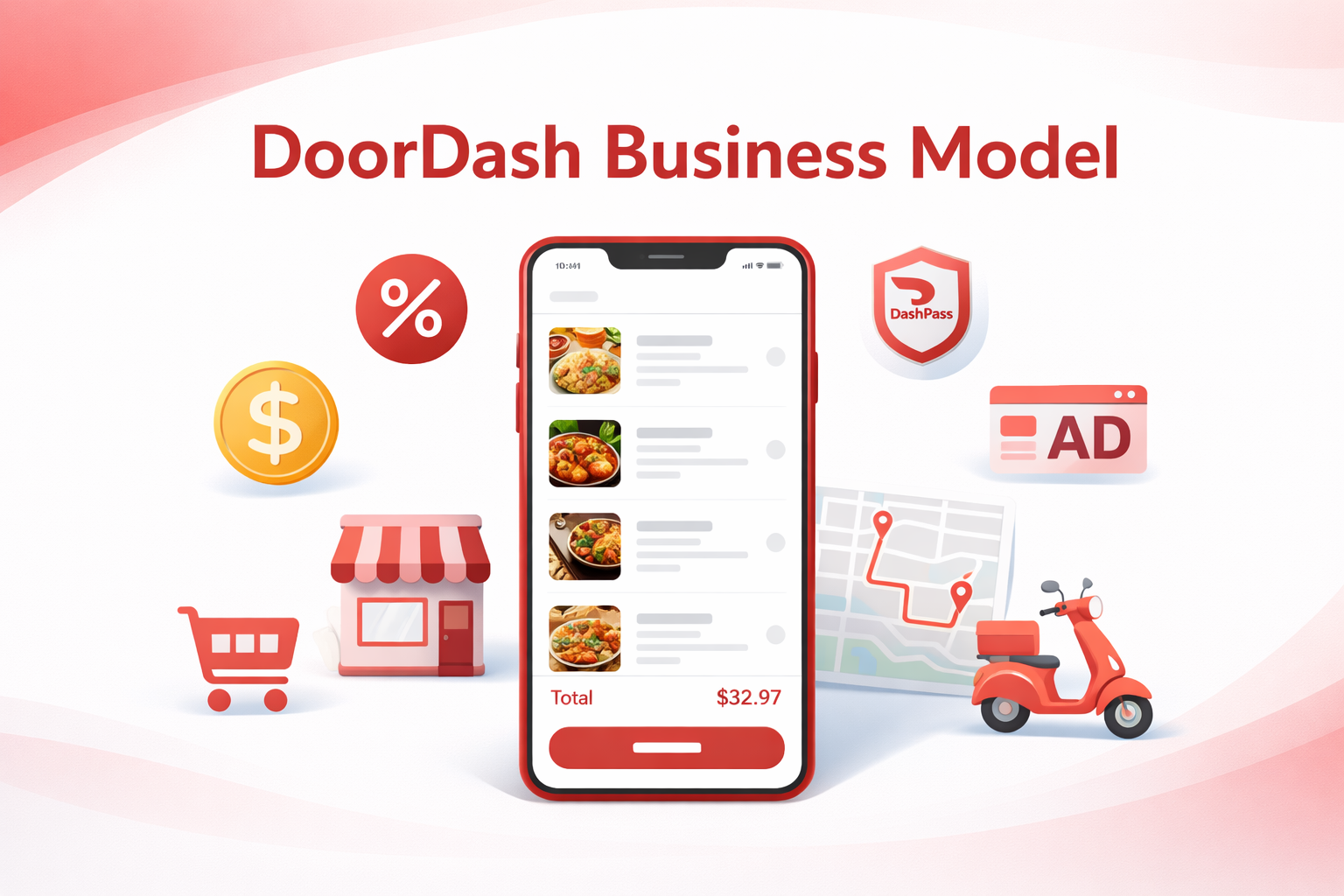
DoorDash Business Model Explained: How DoorDash Makes Money From Food Delivery

What is DoorDash’s business model? DoorDash operates a three-sided marketplace connecting restaurants, customers, and delivery partners (Dashers). It makes money through restaurant commissions (15-30% per order), customer delivery and service fees, DashPass subscriptions ($9.99/month), and in-app advertising from restaurants seeking visibility.
What Is DoorDash?
Brief Overview
- Leading on-demand food delivery platform in North America
- Connects customers, restaurants, and independent delivery drivers (Dashers)
- Operates across US, Canada, Australia, and Japan
Founded Year and Market Focus
- Founded in 2013 by Tony Xu, Andy Fang, Evan Moore, and Stanley Tang
- Started as Stanford student project to help local macaroon shop
- Primary markets: United States and Canada
- Expanded into grocery, convenience, alcohol, and retail delivery
Why DoorDash Became Dominant
- Focused on underserved suburban markets first while competitors chased cities
- Built superior logistics technology and routing algorithms
- Created flexible earning opportunity for millions of Dashers
- Invested heavily in restaurant partnerships and customer experience
What DoorDash Actually Does
- Aggregates demand from hungry customers through mobile app
- Provides restaurants instant access to delivery infrastructure
- Coordinates independent contractors for last-mile delivery
- Takes percentage of each transaction for facilitating the connection
DoorDash’s Core Business Idea (In Simple Words)
Logistics + Marketplace Company
- Not a restaurant company—doesn’t own kitchens or prepare food
- Technology platform connecting three distinct user groups
- Orchestrates millions of daily deliveries through software
- Core competency is logistics optimization, not food preparation
Why It Doesn’t Own Restaurants
- Asset-light model requires less capital investment
- Scales faster without physical infrastructure costs
- Avoids food quality and restaurant operations risks
- Partners with thousands of existing local restaurants
Role of Technology and Delivery Network
- AI-powered dispatching matches orders to optimal Dashers
- Route optimization reduces delivery times and costs
- Real-time tracking provides transparency for all parties
- Data analytics improve efficiency with each delivery
Sitting Between Demand and Supply
- Customers get access to hundreds of local restaurants
- Restaurants reach customers without building delivery teams
- Dashers earn flexible income using their own vehicles
- DoorDash captures value by facilitating all transactions
DoorDash Business Model Overview
| Element | Details |
|---|---|
| Business Type | On-demand marketplace platform |
| Platform Sides | Customers, restaurants, Dashers |
| Revenue Model | Commissions, fees, subscriptions, advertising |
| Core Asset | Logistics network + data algorithms |
| Market Focus | Urban & suburban delivery |
| Value Proposition | Convenience for customers, reach for restaurants, flexibility for Dashers |
How DoorDash Works (Step-by-Step Flow)
Customer Side
Ordering Process
- Open app or website, search restaurants or browse by cuisine
- View menus, photos, ratings, and estimated delivery times
- Add items to cart and proceed to checkout
- See cost breakdown: subtotal, delivery fee, service fee, tip
App Experience
- Real-time order tracking from preparation to delivery
- Live map showing Dasher location and estimated arrival
- Direct messaging with Dasher if needed
- Push notifications for order status updates
Payments and Tracking
- Multiple payment options: credit cards, Apple Pay, Google Pay
- Order confirmation with itemized receipt
- Post-delivery rating and feedback system
- Order history for easy reordering
Restaurant Side
Partner Onboarding
- Choose commission tier (15-30% based on services)
- Receive tablet for order management
- Set up menu, pricing, and operating hours
- Access merchant portal for analytics
Menu Listing
- Upload menu items with descriptions and photos
- Set availability and out-of-stock items
- Adjust prices (often higher than in-store to offset commissions)
- Create promotional offers and discounts
Order Management
- Tablet alerts when new orders arrive
- Prepare food like any takeout order
- Package for delivery and mark ready
- Track order volume and customer feedback
Dasher (Delivery Partner) Side
Order Assignment
- Algorithm assigns orders based on location, ratings, acceptance rate
- Dashers see estimated earnings before accepting
- Can decline orders without major penalties
- Multiple orders batched for efficiency
Delivery Flow
- Navigate to restaurant using in-app GPS
- Confirm pickup with restaurant staff
- Deliver to customer address following optimized route
- Mark delivery complete and optionally collect tip
Earnings Structure
- Base pay per delivery ($2-10 depending on distance, time, desirability)
- Customer tips (100% goes to Dasher)
- Peak pay bonuses during busy times
- Challenges and promotions for completing order targets
How DoorDash Makes Money (Revenue Streams)
Restaurant Commissions
Percentage Per Order
- Basic tier: 15% commission (restaurant handles marketing)
- Plus tier: 25% commission (increased visibility)
- Premier tier: 30% commission (maximum promotion and visibility)
- Commissions apply to entire order subtotal
Why Restaurants Still Join
- Access to millions of potential customers
- No upfront costs to build delivery infrastructure
- Incremental revenue from customers who wouldn’t visit in-person
- Marketing exposure in competitive local markets
Trade-off Between Reach and Margin
- Restaurants sacrifice 15-30% margin per order
- But gain order volume they couldn’t capture otherwise
- Particularly valuable during slow hours or bad weather
- Many restaurants raise menu prices on DoorDash to offset commissions
Customer Delivery & Service Fees
Delivery Fee
- Typically $1.99-$5.99 per order
- Varies based on distance, time, and demand
- Free for DashPass subscribers on eligible orders
- Reduced for orders during slower periods
Service Fee
- Usually 10-15% of order subtotal
- Capped at certain dollar amounts
- Helps cover operational costs
- Additional revenue stream beyond delivery fees
Surge Pricing Logic
- Dynamic pricing during peak demand (lunch, dinner rush)
- Bad weather or holidays trigger higher fees
- Incentivizes more Dashers to go online
- Balances supply and demand in real-time
DashPass Subscription Model
What DashPass Offers
- $9.99/month subscription
- $0 delivery fees on eligible orders over $12
- Reduced service fees for members
- Exclusive offers and promotions
Monthly Recurring Revenue
- Predictable, stable income stream
- Millions of active subscribers
- Higher customer lifetime value
- Less susceptibility to economic downturns
Customer Retention Strategy
- Subscribers order 2-3x more frequently
- Creates habit and loyalty
- Reduces price sensitivity
- Lower churn than non-subscribers
Advertising & Sponsored Listings
Paid Visibility for Restaurants
- Promoted placement in search results
- Featured slots on homepage and category pages
- Sponsored spots in “near you” sections
- Priority ranking for relevant searches
In-App Ads
- Banner ads for specific restaurants
- Carousel placements for special promotions
- Targeted advertising based on user preferences
- Higher click-through on hungry, engaged audience
High-Margin Revenue Stream
- Minimal incremental costs to show ads
- Restaurant-funded so doesn’t affect customers
- Growing portion of overall revenue
- Similar to Google/Facebook ad model
White-Label & Merchant Services
DoorDash Drive
- Delivery-as-a-service for restaurants with own ordering systems
- Businesses use DoorDash fleet without DoorDash branding
- Charged per delivery rather than commission
- Walmart, Chipotle, and other major brands use this
Logistics-Only Partnerships
- Restaurants keep customer relationship and data
- DoorDash provides only delivery fulfillment
- Lower revenue per order but attracts big merchants
- Builds delivery density for overall network
Storefront Integrations
- Tools for restaurants to build own online ordering
- Commission-free for direct orders
- Monthly software fee instead of per-order commission
- Helps restaurants reduce reliance on third-party platforms
DoorDash’s Cost Structure
Dasher Payouts (Largest Cost)
- 50-60% of revenue goes to delivery driver pay
- Base pay, tips, promotions, and peak bonuses
- Must remain competitive with Uber Eats and other platforms
- Independent contractor model reduces benefits costs
Technology and Engineering
- Engineers building routing algorithms and platform features
- Cloud infrastructure and data storage costs
- App development and maintenance
- AI and machine learning for optimization
Marketing and Promotions
- Customer acquisition costs through ads and referral programs
- Restaurant onboarding incentives and reduced commissions
- Dasher sign-up bonuses during supply shortages
- Brand advertising and sponsorships
Customer Support
- 24/7 support teams handling order issues
- Refunds and credits for failed deliveries
- Restaurant and Dasher support operations
- Technology for automated issue resolution
Insurance and Compliance
- Liability insurance for deliveries
- Background checks for Dashers
- Legal and regulatory compliance costs
- Varying requirements across different cities and states
Why Profitability Is Challenging
- Razor-thin margins on core delivery business
- Constant pressure to lower fees to remain competitive
- Heavy investment required in technology and marketing
- Regulatory changes can increase costs overnight
- Customer and Dasher acquisition costs remain high
DoorDash’s Unit Economics (Simple Explanation)
Order Value vs Costs
- Average order: $35-40 subtotal
- DoorDash earns: ~$8-12 per order (commissions + fees)
- Dasher payout: ~$5-8 per delivery
- Gross profit: ~$3-4 per order before overhead
- Operating costs eat into remaining margin
Why Scale Matters
- Fixed costs (technology, support) spread across more orders
- Denser delivery networks reduce Dasher travel time
- Better restaurant selection attracts more customers
- Data improves efficiency as volume increases
- Network effects make market leaders hard to displace
Subscriptions + Ads Improving Margins
- DashPass subscription revenue has minimal marginal cost
- Advertising is nearly pure profit
- Both reduce reliance on low-margin delivery fees
- Help offset expensive customer acquisition costs
- Key to path toward sustainable profitability
DoorDash’s Competitive Advantage
Strong Logistics Network
- Millions of active Dashers across North America
- Proprietary algorithms for route optimization
- Years of delivery data improving predictions
- Difficult for new entrants to replicate
High Restaurant Coverage
- Over 500,000 restaurant partners
- Best selection in suburban markets
- Exclusive partnerships with major chains
- Local restaurants often list on DoorDash first
Suburban Dominance
- Focused on suburbs while competitors chased dense cities
- Less competition in these markets initially
- Car-dependent areas with limited alternatives
- Harder for international competitors to penetrate
Data-Driven Dispatching
- Machine learning predicts preparation times
- Matches orders to optimal Dashers in real-time
- Reduces wait times and improves experience
- Continuous improvement from billions of data points
DoorDash vs Uber Eats vs Grubhub (Quick Comparison)
| Factor | DoorDash | Uber Eats | Grubhub |
|---|---|---|---|
| Market Focus | US suburbs, expanding | Global cities | Legacy US markets |
| Market Share | ~60% in US | ~20% in US | ~15% in US |
| Revenue Mix | Fees + subs + ads | Cross-platform with rides | Heavy commission focus |
| Strength | Logistics scale | Brand recognition + ride network | Early mover advantage |
| Weakness | Profitability challenges | Playing catch-up in US | Losing ground rapidly |
| Differentiation | Suburban coverage | Uber One membership | Restaurant relationships |
DoorDash’s Growth Strategy
Geographic Expansion
- Filling gaps in existing US markets
- International growth in Canada, Australia, Japan
- Targeting mid-sized cities and rural areas
- Building density in competitive urban markets
Grocery & Convenience Delivery
- Partnerships with Walmart, CVS, Walgreens, Albertsons
- Faster delivery times (15-30 minutes)
- Higher order frequency than restaurant meals
- Leverages existing Dasher network
Non-Food Categories
- Pet supplies, flowers, alcohol, retail items
- DashMart (DoorDash-operated convenience stores)
- Same-day delivery competing with Amazon
- Diversifies beyond restaurant dependency
Subscription Push
- Aggressive DashPass marketing and promotions
- Bundle with other services (Chase credit cards)
- Student discounts to build early loyalty
- Predictable revenue and increased order frequency
Merchant Tools
- Self-serve advertising platforms for restaurants
- Analytics and insights dashboards
- DoorDash Storefront for commission-free orders
- Kitchen management and fulfillment solutions
Challenges in DoorDash’s Business Model
Thin Margins
- Delivery business naturally low-margin
- Price wars with Uber Eats compress profitability
- Must balance Dasher pay, customer fees, restaurant commissions
- Scale required to achieve sustainable profits
Regulatory Pressure
- Cities capping commission rates (15% in some markets)
- Worker classification debates (employee vs contractor)
- Minimum wage requirements for delivery workers
- Data privacy and consumer protection regulations
Dasher Retention
- High turnover among delivery partners
- Competition from rideshare and other gig platforms
- Must constantly recruit new Dashers
- Quality concerns with inexperienced drivers
Restaurant Dissatisfaction
- Many view 30% commissions as excessive
- Tension over customer data ownership
- Disputes about order accuracy and customer experience
- Growing interest in direct ordering alternatives
Price-Sensitive Customers
- Many won’t pay high delivery fees
- Economic downturns reduce delivery frequency
- Younger demographics especially price-conscious
- Constant promotional spending needed to maintain volume
Is DoorDash Profitable?
Profitability Timeline
- First profitable quarter: Q1 2023
- Sustained profitability beginning in 2023
- Took 10 years from founding to consistent profits
- Still investing heavily in growth despite profitability
Why Losses Were Strategic
- Prioritized market share over short-term profits
- Heavily subsidized customer orders and Dasher pay
- Invested in technology infrastructure
- Built network effects before competitors
Role of Ads and DashPass
- Advertising revenue has high margins (70-80%)
- DashPass provides predictable recurring income
- Both businesses scaled significantly 2022-2024
- Allowed core delivery to remain competitive on pricing
Long-Term Sustainability
- Path to profitability now clear
- Diversification into higher-margin categories
- Operating leverage as technology costs stabilize
- Market leadership position defensible
Key Lessons from DoorDash’s Business Model
Marketplaces Need Scale
- Network effects are everything in two/three-sided platforms
- Winner-take-most dynamics in local markets
- Early market share gains compound over time
- Geographic density matters more than broad coverage
Logistics Is Expensive But Powerful
- Last-mile delivery has brutal economics
- But creates defensible competitive moat once built
- Technology and data are key to efficiency
- Hard for newcomers to replicate mature logistics networks
Subscriptions Stabilize Revenue
- Recurring revenue reduces volatility
- Subscribers become loyal, high-value customers
- Predictable income enables better planning
- Critical for investor confidence and profitability
Data Improves Efficiency
- More orders = better predictions = lower costs
- Machine learning requires massive datasets
- Continuous improvement loop
- Data moat strengthens with scale
Diversification Reduces Risk
- Relying solely on restaurant delivery too risky
- Grocery and convenience provide stability
- Advertising adds high-margin revenue stream
- Multiple business lines protect against disruption
Wrapping Up
DoorDash as a Logistics-First Company
- Core competency is moving things efficiently, not food specifically
- Technology platform can deliver anything locally
- Competitive advantage comes from logistics network density
- More similar to FedEx/UPS than restaurants
Why Its Model Is Evolving
- Moving beyond pure marketplace to merchant services
- Building owned inventory through DashMart
- Expanding internationally and into new categories
- Increasing focus on profitability over growth at all costs
What Founders Can Learn
- Focus on underserved markets competitors ignore
- Build network effects through multi-sided platforms
- Unit economics matter—but scale can fix many problems
- Technology and data create lasting competitive advantages
- Diversification protects against single-product risk
- Patience required—true marketplace value takes years to build
Discover more from Business Model Hub
Subscribe to get the latest posts sent to your email.


-
-
-
-
-
-
-
-
-
-
-
Show Comments[…] faces intense competition from DoorDash, Deliveroo, and other delivery platforms. Its competitive advantages include strong existing […]
[…] DoorDash and Instacart are asset-light. They don’t hold inventory, own warehouses, or employ drivers directly. This keeps their risk low and lets them scale quickly. […]
[…] by changing consumer habits, mobile technology, and urban lifestyles. Platforms like Uber Eats, DoorDash, and Deliveroo have reshaped how people order food but Just Eat remains one of the most established […]
[…] DashMart its own dark store network stocked with curated grocery and convenience items. This gives DoorDash direct control over inventory and margins, but requires heavy capital investment and operational […]
[…] DoorDash is the dominant food delivery platform in the United States but has limited direct presence in Brazil. Its model is studied as a comparison point, but it is not a primary competitive threat in the Brazilian market at present. […]
[…] that smoothed out the volatility of transaction-based income. The model was directly comparable to DoorDash’s DashPass and Uber’s Uber One all three recognized that subscription revenue was a more stable […]
[…] it operates across Europe and parts of Asia. And in 2022, DoorDash acquired it which tells you a lot about how valuable Wolt’s model really […]
[…] delivery apps (DoorDash, Uber […]
[…] 2019, DoorDash acquired Caviar for $410 million, folding it into a broader delivery ecosystem while keeping the […]
[…] Eats competes primarily with DoorDash in the US, with Grubhub in certain urban markets, and with regional players internationally […]
[…] Eats, DoorDash, and Grubhub all charge percentage-based commissions on every order. These commissions fund the […]