Live Streaming Business Model And How Platforms Turn Real-Time Attention Into Revenue

A live streaming business model is how platforms generate revenue by enabling users to broadcast real-time video to audiences worldwide. Revenue comes from multiple sources including advertising, subscriptions, virtual gifts, brand partnerships, and live commerce integrations.
Intro
Something remarkable happened over the last decade. Millions of people stopped watching polished, pre-recorded content and started tuning into raw, unscripted, real-time video instead.
Gaming tournaments drew millions of concurrent viewers. Fitness coaches built empires from their living rooms. Fashion brands sold out entire product lines during a single 30-minute live session. Teachers reached students across continents without ever stepping into a physical classroom.
Live streaming did not just change how content is consumed. It fundamentally changed how money flows through the creator economy.
Platforms figured out something powerful early on: when people watch live, they feel present. That feeling of presence drives engagement, and engagement drives spending. The result is one of the most durable and scalable business models in digital media.
In this guide, we break down exactly how the live streaming business model works, who profits from it, what revenue streams matter most, and how platforms and creators can build sustainable businesses on top of it.
What Is a Live Streaming Business Model?
At its core, a live streaming business model is a framework that allows platforms to monetize real-time video content by connecting creators with audiences and layering multiple revenue mechanisms on top of that connection.
It is different from traditional video businesses in one critical way: the content is happening right now.
That immediacy changes viewer behavior completely. People stay longer, interact more, and spend more freely when they feel like they are part of something live.
The model rests on three foundational pillars:
- Real-time content that creates urgency and presence
- Audience engagement through chat, reactions, and donations
- Monetization layered on top of that engagement loop
The beauty of this model is that it does not require expensive content production. Creators are doing the work. Platforms simply provide the infrastructure, the audience, and the monetization tools.
How the Live Streaming Business Model Works
The mechanics are straightforward once you break them into stages.
Creators Go Live
Everything starts with a broadcaster. This could be a solo gamer, a fitness coach, a small business owner, a musician, or a large brand. They open their streaming software, go live, and start producing content in real time.
Creators bring their own audience or build one over time through consistent streaming.
Audience Joins
Viewers find the stream through platform discovery, social sharing, notifications, or search. Some join for free. Others pay for access through subscriptions or pay-per-view tickets.
The audience determines the value of the stream. More viewers mean more ad impressions, more gift-givers, and more potential subscribers.
Engagement Happens
This is where live streaming separates itself from every other content format. Viewers are not passive. They type in chat, send reactions, ask questions, and donate virtual gifts to get the streamer’s attention.
This back-and-forth loop keeps viewers watching longer than they would watch any pre-recorded video.
Platform Monetizes
The platform sits at the center of all this activity and extracts value through multiple channels. Ads play automatically. Subscriptions are processed. Virtual gifts are purchased with real money. Brand deals get activated. The platform keeps a percentage of everything that flows through it.
Key Players in the Ecosystem
Understanding who benefits from live streaming helps clarify how the economics work.
Creators and Streamers These are the people who show up and produce content. They attract the audience, drive engagement, and bring personality to the platform. Without creators, the platform is just empty infrastructure.
Viewers and Audience Viewers are the fuel. They provide the attention that platforms sell to advertisers, the emotional energy that drives gift-giving, and the community that keeps other viewers coming back.
The Platform The platform provides technology, distribution, discovery tools, and payment infrastructure. It takes a cut of nearly every transaction that happens on its surface.
Advertisers and Brands Brands pay to reach the audience that creators have built. They do this through pre-roll ads, sponsorship integrations, influencer deals, and live shopping activations.
Revenue Streams of Live Streaming Platforms
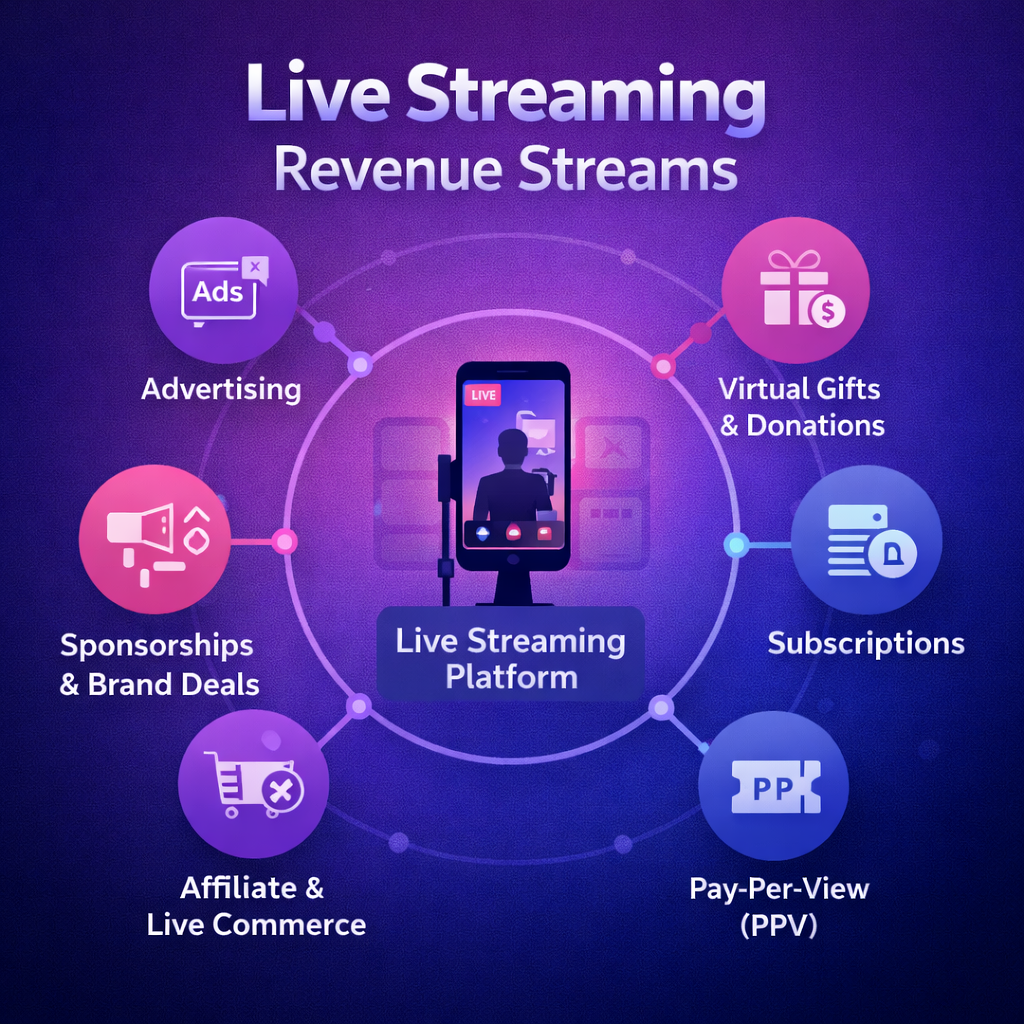
This is where the real mechanics of the business model become clear. Platforms do not rely on a single income source. They stack multiple revenue streams on top of each other.
Advertising Revenue
Advertising is the oldest and most universal revenue stream in digital media, and it works just as well in live streaming.
How it works:
- Pre-roll ads play before a stream starts
- Mid-roll ads interrupt streams at intervals
- Display ads appear alongside the video player
- Sponsored content integrates directly into the stream
Platforms charge advertisers on a CPM basis, meaning cost per thousand impressions. Popular channels with large audiences command higher CPM rates.
YouTube and Facebook Live generate enormous advertising revenue because they already have mature ad networks that they plug directly into their live streaming products.
Why it scales: The more viewers a platform has, the more ad inventory it can sell. Advertising revenue grows almost automatically as the user base expands.
Subscriptions
Subscriptions create predictable, recurring revenue. This is the revenue stream that platforms love most because it is stable and loyalty-driven.
Common subscription models include:
- Monthly memberships that unlock ad-free viewing
- Channel-specific subscriptions that support individual creators
- Tiered plans with different perks at different price points
- Platform-wide premium tiers that offer enhanced features
Twitch built its entire creator economy around subscriptions. Viewers subscribe to their favorite streamers at different tier levels, and both the creator and Twitch earn revenue from every subscription processed.
YouTube Memberships allow fans to pay a monthly fee to access exclusive posts, custom emojis, and member-only live streams from their favorite creators.
Virtual Gifts and Donations
This is the most emotionally driven revenue stream in the entire model, and it is enormously powerful.
How virtual gifting works:
- Viewers buy virtual currency with real money (Bits on Twitch, Coins on TikTok, Stars on Facebook)
- They spend that virtual currency to send animated gifts, super chats, or stickers during a live stream
- The creator receives a portion of the revenue from each gift
- The platform keeps the rest
What makes this model so effective is the emotional dynamic behind it. Viewers send gifts to:
- Get the streamer to notice them in chat
- Show support during a milestone moment
- Compete with other fans for attention
- Express excitement or appreciation in real time
YouTube’s Super Chat feature allows viewers to pay to have their message pinned at the top of live chat during a stream. This single feature generates millions of dollars globally every year.
TikTok Live has turned virtual gifting into its primary creator monetization mechanic. Top TikTok Live creators earn thousands of dollars per stream purely from gifts sent by their audiences.
Sponsorships and Brand Deals
As live streaming audiences have grown, brands have followed the attention. Sponsorships and brand deals represent a massive revenue opportunity for both creators and platforms.
This takes several forms:
- Direct creator sponsorships where brands pay streamers to feature their products
- Platform-level brand partnerships where companies sponsor entire events or categories
- Branded content integrations that feel native to the stream rather than disruptive
- Affiliate deals where creators earn commission on products they recommend live
This revenue stream is particularly valuable because it does not depend on platform algorithms or ad rates. It is negotiated directly and can be highly lucrative for creators with niche but loyal audiences.
Pay-Per-View Events
Not all live content should be free. Pay-per-view gives platforms and creators a way to monetize premium, one-time events.
Common PPV use cases:
- Live concerts and music performances
- Professional boxing or combat sports events
- Exclusive webinars and online courses
- Comedy specials or theatrical performances
PPV works best when the content has genuine scarcity. If viewers know they can watch a recording later for free, they have less urgency to pay for the live experience. Framing events as exclusive and time-sensitive drives purchase behavior.
Affiliate and Commerce Integration
Live commerce is the fastest-growing revenue stream in the live streaming ecosystem right now.
The model merges entertainment with shopping. A creator streams themselves trying on clothes, cooking with a specific ingredient, or testing a tech product. Products are tagged directly in the stream. Viewers click to buy without ever leaving the platform.
Why this works so well:
- Viewers trust creators more than they trust traditional advertising
- Live demonstrations reduce purchase hesitation
- The urgency of a live stream drives impulse buying
- Limited-time offers create fear of missing out
In China, live commerce through platforms like Taobao Live and Douyin generates billions of dollars in annual sales. Western platforms including TikTok Shop, YouTube Shopping, and Instagram Live Shopping are rapidly building out similar capabilities.
Types of Live Streaming Business Models
Not every live streaming platform operates the same way. The category of content shapes the monetization strategy.
Gaming Streaming Platforms like Twitch are built almost entirely around gaming content. Their model prioritizes subscriptions, virtual currency (Bits), and ad revenue. Creator loyalty is high, and communities are deeply engaged. Twitch pioneered many of the monetization mechanics that other platforms later copied.
Social Live Streaming Instagram Live, TikTok Live, and Facebook Live use live streaming as a feature within a broader social platform. Monetization happens through gifting, advertising, and creator fund distributions. Discovery is driven by existing social graphs and recommendation algorithms.
OTT Live Streaming Over-the-top platforms streaming sports, news, or entertainment events primarily rely on subscription fees and advertising. Think of live sports streaming on ESPN Plus or Prime Video. The content is premium, the audiences are large, and the revenue is largely subscription-driven.
Live Commerce This model treats the stream itself as a storefront. Every product featured is directly purchasable. Revenue comes from commissions, brand partnerships, and platform transaction fees.
Educational Streaming Platforms built around courses, coaching, and professional development charge for access through subscriptions or one-time purchases. Creators earn from course sales, live coaching sessions, and community memberships.
Real Examples That Show the Model in Action
YouTube Live
YouTube Live layers several revenue streams seamlessly.
- Ads run automatically based on channel monetization settings
- Super Chats allow viewers to pay to highlight messages during live streams
- Channel Memberships give fans a way to subscribe monthly for exclusive perks
- YouTube Shopping allows creators to tag and sell products mid-stream
YouTube takes a percentage of Super Chat revenue and Membership fees, while creators keep the rest. The platform’s massive advertiser network means ad CPM rates are consistently high.
Twitch
Twitch built the template for gaming-focused live streaming monetization.
- Subscriptions at three price tiers (with Twitch taking a revenue cut)
- Bits, a virtual currency viewers use to cheer in chat
- Ad revenue shared with partner-level streamers
- Brand deals and sponsored streams negotiated by creators directly
Twitch’s model is creator-first by design. The platform’s value is entirely dependent on the creators who stream on it, so the monetization tools are built to reward consistency and community-building.
TikTok Live
TikTok Live has pushed virtual gifting to new heights.
- Viewers purchase Coins and convert them into digital gifts
- Gifts appear as animations during the stream, giving the creator real-time social proof
- Creators convert gifts into Diamonds and then withdraw real cash
- TikTok takes a significant platform fee from every gift transaction
TikTok Live has proven that short-form video audiences can be converted into generous live stream gift-givers with the right discovery mechanics and social dynamics in place.
Why This Business Model Works So Well
The live streaming model has durability that most digital business models do not.
Real-time engagement drives higher retention. Viewers stay longer on a live stream than they do watching pre-recorded video because leaving feels like missing something. That extended watch time translates directly into more ad impressions and more gifting opportunities.
Emotional connection increases spending. When a viewer feels genuinely connected to a streamer, they want to support them. That emotional impulse drives gift-giving behavior that is entirely voluntary and often surprisingly generous.
The creator-driven economy lowers production costs. Platforms do not have to produce content. Creators do all the work. The platform provides infrastructure and takes a cut of every transaction. This is an exceptionally capital-efficient model at scale.
Community compounds over time. A loyal viewer community becomes self-reinforcing. Long-time fans recruit new viewers, help moderate chat, and become evangelists for the platform and creator simultaneously.
Challenges in the Live Streaming Business Model
No model is without friction. Live streaming comes with specific challenges that platforms and creators both need to navigate.
Content Moderation at Scale Live content cannot be reviewed before it is published. Harmful, illegal, or policy-violating content can appear in real time, creating legal and reputational risk for platforms. Moderation tools and AI systems are improving, but the challenge is ongoing.
Revenue Sharing Conflicts Many creators feel that platforms take too large a percentage of gift revenue and subscription income. When creators feel undercompensated, they leave for competing platforms or try to move their audience off-platform entirely. This tension is a constant issue across the industry.
Platform Dependency Creators who build their entire business on a single platform are vulnerable. Algorithmic changes, policy updates, or platform shutdowns can wipe out years of audience-building overnight. The audience belongs to the platform, not the creator.
High Infrastructure Costs Streaming real-time video at scale is technically demanding and expensive. Server costs, CDN expenses, and latency management eat into margins significantly. Smaller platforms struggle to compete with tech giants who can absorb these costs more easily.
How to Build a Live Streaming Business
For founders and creators looking to enter this space, the path is clearer than it might seem.
Step One: Choose a Niche Broad live streaming platforms require enormous scale to compete. Niche platforms built around specific communities (fitness, language learning, independent music, professional sports) can build loyal audiences more efficiently.
Step Two: Pick Your Monetization Strategy Early Different niches support different revenue models. Gaming communities respond well to subscriptions and virtual gifts. Educational audiences prefer pay-per-access or course bundling. Commerce-focused streams need product integration from day one.
Step Three: Build a Creator Ecosystem Your platform is only as good as the creators on it. Early creator incentives, revenue-share programs, and community support tools are essential investments. Help your creators earn money and they will bring their audiences to you.
Step Four: Focus on Engagement Features Chat, reactions, polls, Q&A tools, and co-streaming features keep viewers active during a stream. Every minute of engagement is a monetization opportunity. Invest in the tools that make viewing interactive, not passive.
Step Five: Scale With Ads and Partnerships Once your audience reaches meaningful scale, layer advertising and brand partnership programs on top. This is where unit economics improve dramatically.
Growth Strategies Used by Top Platforms
Platforms that have scaled successfully share common growth tactics.
- Creator incentive programs that pay top streamers to stream exclusively on their platform
- Referral and invite mechanics that turn existing users into recruiters
- Exclusive content deals that give viewers a reason to show up on a specific platform rather than a competitor
- Community tools like Discord integrations, fan clubs, and moderation systems that help creators build loyal followings
- Algorithm-driven discovery that surfaces new creators to audiences who share relevant interests
Future Trends Shaping Live Streaming
The category is still evolving rapidly. Several trends will define the next chapter.
Live Commerce Acceleration The gap between content and commerce will continue to close. Every product seen in a live stream will eventually be purchasable in one tap. Platforms that nail the shopping experience will unlock enormous transaction revenue.
AI-Powered Streaming Tools Real-time AI translation, automatic highlight clipping, AI moderation, and personalized stream recommendations will change how content is produced and consumed. Smaller creators will get access to production capabilities that only large studios could afford previously.
VR and AR Live Experiences As headsets become more accessible, live streaming will move into immersive environments. Concerts, sporting events, and community gatherings will happen in virtual spaces where new engagement and monetization mechanics are still being invented.
Micro-Communities and Niche Platforms The era of one platform dominating everything is giving way to specialized communities. Creators with passionate niche audiences will build their own platforms or join platforms purpose-built for their specific community rather than competing on massive general-purpose platforms.
Conclusion
The live streaming business model works because it solves a fundamental human need: the desire to be present, connected, and part of something happening right now.
Platforms convert that desire into attention. Attention becomes engagement. Engagement becomes revenue through advertising, subscriptions, gifts, commerce, and brand partnerships.
The model rewards creators who build real communities, platforms that invest in creator success, and brands that understand why native integration outperforms disruptive advertising.
Whether you are building a platform, growing as a creator, or trying to understand where digital media revenue is heading, live streaming sits at the center of every interesting answer.
FAQs
Live streaming platforms generate revenue through advertising, subscriptions, virtual gifting, brand partnerships, pay-per-view events, and commerce integrations. Most platforms layer several of these streams together to build diversified revenue.
Yes, live streaming can be highly profitable at scale. Platforms like YouTube, Twitch, and TikTok generate billions in annual revenue. Individual creators can also build profitable businesses through a combination of platform monetization tools and direct brand deals.
The best platform depends on your content type. Twitch is ideal for gaming and entertainment. YouTube Live works well for creators who already have a subscriber base. TikTok Live excels at gifting and discovery for newer creators. LinkedIn Live suits professional and B2B content.
Streamers earn from viewers through direct subscriptions, virtual gifts and tips, Super Chats, and affiliate commissions from products purchased through stream links. The most successful streamers combine all of these income sources with external brand sponsorships.
The defining difference is real-time interaction. Viewers can influence what happens during a live stream by chatting, asking questions, and sending gifts. This creates a two-way relationship that drives longer viewing sessions and significantly higher spending than passive pre-recorded content.
Discover more from Business Model Hub
Subscribe to get the latest posts sent to your email.



[…] Choosing the right business model is the most important decision you will make before development begins. Your entire feature set, tech stack, and monetization infrastructure depends on it. […]
[…] business case for live streaming is stronger than ever in […]
[…] Live streaming is no longer just entertainment. It’s a billion-dollar digital business model that’s transforming how creators monetize their talent and how audiences engage with content. […]