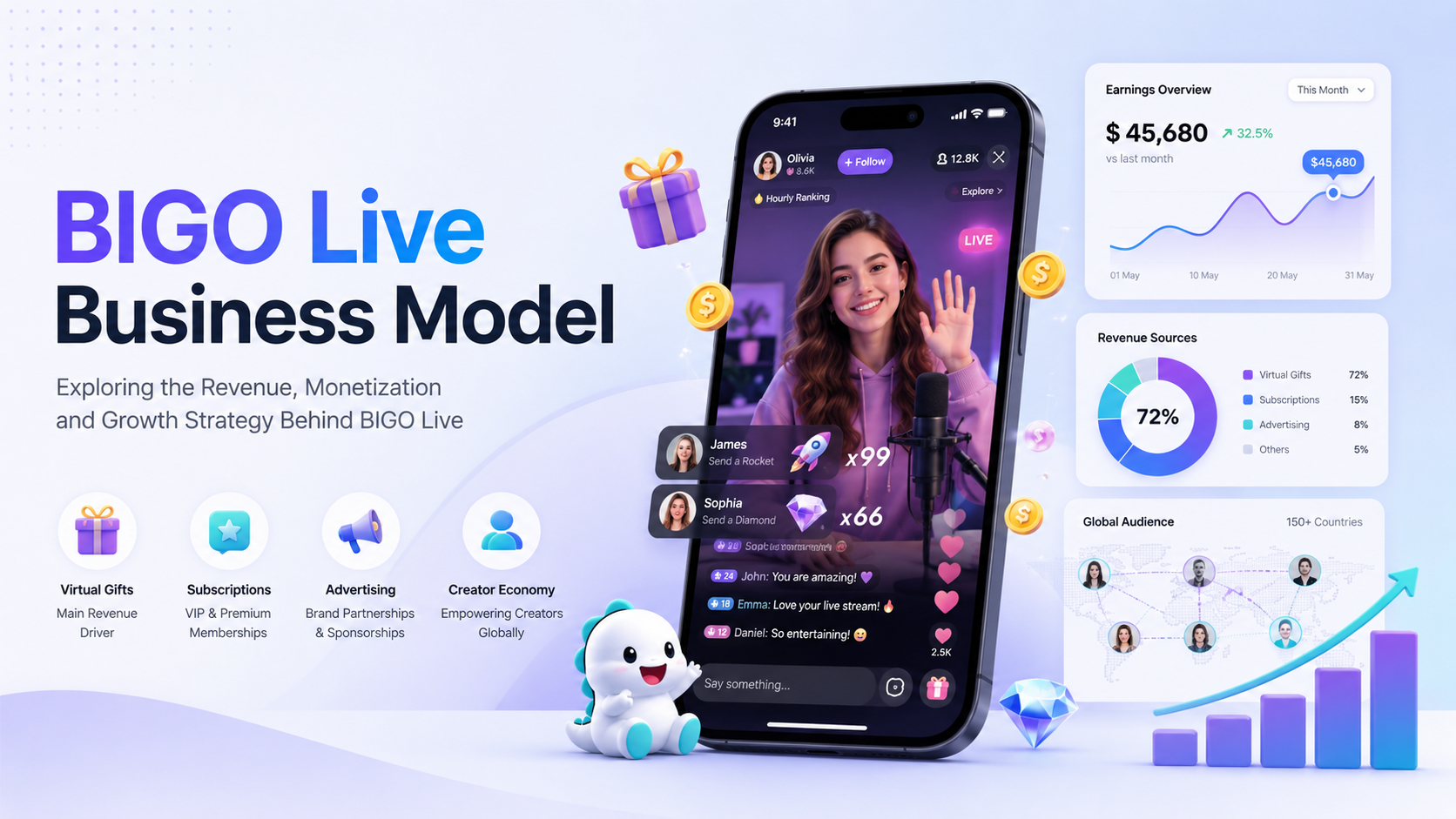
BIGO Live Business Model And How BIGO LIVE Makes Money and Dominates the Live Streaming Industry

The live streaming industry has exploded into a multi-billion dollar market, reshaping how people consume entertainment and connect with creators worldwide. Platforms like BIGO LIVE have transformed casual broadcasting into lucrative business opportunities, proving that virtual entertainment is far more than a passing trend.
The creator economy now generates over $100 billion annually, with live streaming apps capturing a significant share of this revenue. Virtual gifting, subscriptions, and real-time engagement have created entirely new revenue streams that traditional media never imagined possible.
BIGO LIVE stands at the forefront of this revolution. With millions of active users across Asia, the Middle East, Europe, and North America, the platform has mastered the art of turning social interaction into sustainable profit. Entrepreneurs and investors are taking notice, searching for ways to replicate this success through BIGO Live clone app development.
This guide breaks down exactly how BIGO LIVE makes money, the technology powering its platform, and what makes its business model so effective. Whether you’re planning to launch your own streaming app or simply curious about the economics of creator platforms, you’ll find everything you need to understand this thriving industry.
What is BIGO LIVE?
Overview of BIGO LIVE
BIGO LIVE is a real-time live streaming social platform that connects content creators with global audiences through video broadcasting. Unlike pre-recorded content platforms, BIGO LIVE thrives on authentic, unfiltered moments where creators interact directly with viewers in real time.
The platform operates as a creator-driven entertainment ecosystem where anyone with a smartphone can become a broadcaster. Singers, dancers, gamers, lifestyle influencers, and everyday people share their talents, stories, and daily lives with audiences who reward them through virtual gifts and engagement.
BIGO LIVE functions as a global audience engagement platform, breaking down geographical barriers and enabling creators from developing markets to monetize their content just as effectively as those in established regions.
History and Growth of BIGO LIVE
BIGO Technology founded BIGO LIVE in 2016, recognizing the untapped potential of mobile live streaming before it became mainstream. The company invested heavily in building infrastructure that could handle millions of simultaneous streams with minimal latency.
The platform’s expansion across Asia happened rapidly, with countries like Thailand, Indonesia, and the Philippines becoming key growth markets. BIGO LIVE then pushed into the Middle East, where its features resonated strongly with audiences seeking new forms of digital entertainment.
European and North American markets followed, though the platform faces stiffer competition from established players like Twitch and YouTube Live in these regions. Despite this, BIGO LIVE maintains strong user growth, with over 400 million registered users globally and millions of daily active streamers.
The platform’s market positioning focuses on emerging markets where smartphone penetration is high but entertainment options remain limited. This strategic approach has allowed BIGO LIVE to dominate regions that Western platforms often overlook.
Key Features of BIGO LIVE
Live video broadcasting forms the core of the platform, enabling creators to stream directly from their mobile devices with minimal technical setup. The interface prioritizes simplicity, allowing anyone to go live within seconds of opening the app.
The virtual gifting system represents BIGO LIVE’s most crucial feature from a business perspective. Viewers purchase virtual coins with real money, then send animated gifts during live streams to show appreciation and gain recognition.
Multi-guest live rooms allow up to nine people to broadcast together simultaneously. This feature drives collaboration between creators and increases engagement by bringing multiple audiences together in a single stream.
PK battles pit two streamers against each other in real-time competitions where audiences send gifts to support their favorite creator. The streamer whose audience sends more gifts wins the battle, creating intense engagement and driving significant revenue.
In-app chat and messaging enable viewers to communicate with creators and each other during streams. This social layer transforms passive viewing into active participation, increasing time spent on the platform.
AI-powered content recommendations analyze user behavior to suggest streams that match individual preferences. The algorithm learns from viewing patterns, gift-sending behavior, and engagement metrics to keep users discovering new content.
The creator monetization dashboard gives streamers detailed analytics about their earnings, audience demographics, and performance metrics. This transparency helps creators optimize their content strategy and track their income in real time.
VIP subscriptions offer viewers premium badges, exclusive emoticons, and special privileges in chat. These subscriptions create recurring revenue while giving dedicated fans ways to stand out in their favorite creator’s community.
BIGO Live Business Model Explained
How the BIGO LIVE Platform Works
User registration requires only a phone number or social media account, removing friction from the onboarding process. New users can immediately start watching streams without providing payment information, lowering the barrier to entry.
The creator-audience interaction cycle begins when streamers go live and viewers discover them through recommendations, search, or following lists. Viewers engage through comments, likes, and virtual gifts, which encourages creators to stream more frequently and for longer durations.
This engagement-driven ecosystem creates a flywheel effect where popular creators attract more viewers, generating more revenue that motivates them to produce better content, which attracts even more viewers.
Real-time social entertainment distinguishes BIGO LIVE from recorded content platforms. The immediacy of live interaction creates emotional connections that pre-recorded videos cannot replicate, driving higher engagement and willingness to spend.
Core Elements of the BIGO Live Business Model
Viewers form the foundation of the business model, providing both attention and revenue through gift purchases. The platform succeeds when it keeps viewers engaged and willing to spend money supporting their favorite creators.
Content creators produce the entertainment that attracts and retains viewers. BIGO LIVE’s success depends entirely on having enough talented, entertaining streamers to satisfy diverse audience interests.
Agencies recruit, train, and manage groups of creators, taking a commission from their earnings in exchange for promotion, technical support, and strategic guidance. These agencies accelerate creator success while providing BIGO LIVE with a scalable recruitment channel.
Advertisers pay to reach BIGO LIVE’s engaged user base through in-stream ads, sponsored content, and brand partnerships. The platform’s detailed user data enables targeted advertising that commands premium rates.
Platform operators maintain the infrastructure, develop new features, moderate content, and optimize the monetization system. BIGO LIVE’s role is to balance the interests of all stakeholders while extracting maximum value from the ecosystem.
Why the BIGO LIVE Business Model is Successful
High user retention stems from the unpredictable, authentic nature of live content. Unlike scripted entertainment, viewers never know what might happen during a live stream, creating anticipation that brings them back repeatedly.
Gamified engagement through PK battles, leaderboards, and achievement systems triggers psychological rewards that keep users active. These game-like elements tap into competitive instincts and the desire for status within communities.
Strong creator incentives ensure that talented broadcasters remain on the platform. BIGO LIVE’s revenue sharing is competitive enough to make streaming a viable income source, even a full-time career for successful creators.
Scalable monetization infrastructure allows BIGO LIVE to handle millions of transactions daily with minimal friction. The virtual currency system, automated revenue sharing, and instant payouts create a seamless financial ecosystem.
Emotional and social interaction psychology drives the virtual gifting phenomenon. Viewers send gifts not just to support creators but to gain recognition, feel connected to communities, and experience the dopamine rush of generosity.
Business Model Framework Used by BIGO LIVE
The platform economy model positions BIGO LIVE as an intermediary connecting creators with audiences. The company doesn’t create content but instead provides the infrastructure and marketplace where content creation and consumption happen.
Creator economy monetization recognizes that individual creators are the new media companies. BIGO LIVE empowers these micro-entrepreneurs with tools to build audiences and generate income, taking a percentage of their earnings as its fee.
The freemium strategy allows unlimited free access to content while monetizing through voluntary purchases. Users can enjoy BIGO LIVE without spending money, but those who want to enhance their experience or support creators have abundant opportunities to do so.
The digital gifting ecosystem transforms intangible social interactions into measurable, monetizable transactions. By attaching monetary value to emotional expressions, BIGO LIVE has created a revenue engine that scales with engagement.
How BIGO LIVE Makes Money
Virtual Gifts and In-App Purchases
Users purchase virtual coins through in-app payments, with packages ranging from a few dollars to hundreds of dollars for bulk purchases. The platform offers bonus coins for larger purchases, incentivizing higher spending.
Sending gifts to creators during live streams happens with a simple tap, triggering animated graphics that appear on screen for all viewers to see. This public display creates social pressure and recognition, encouraging more gift-giving.
Revenue sharing between creators and platform typically splits earnings, with BIGO LIVE taking 30 to 50 percent depending on the creator’s status and any agency agreements. Top creators often negotiate better terms, while newcomers accept standard rates.
Virtual gifting represents the most profitable monetization channel, accounting for an estimated 80 to 90 percent of total revenue. The low cost of digital goods combined with high emotional value creates exceptional profit margins.
Creator Commission Structure
Streamers earn money by converting virtual gifts received during broadcasts into real currency. BIGO LIVE credits their accounts with diamonds, the platform’s creator currency, which can be withdrawn to bank accounts.
Agency partnerships significantly impact creator earnings. Agencies typically take 10 to 30 percent of a creator’s income in exchange for promotion, training, and strategic support. Many successful creators join agencies to accelerate their growth.
The BIGO LIVE payout system processes withdrawals weekly or monthly, depending on the region and payment method. Minimum withdrawal thresholds ensure that transaction costs don’t eat into small payouts.
Top creators on BIGO LIVE can earn thousands or even tens of thousands of dollars monthly. The highest earners combine large audiences with engaged communities willing to send expensive gifts regularly.
VIP Membership Subscriptions
Premium badges display next to subscriber usernames in chats and leaderboards, signaling their support and dedication. These visual indicators confer status within creator communities, motivating purchases through social recognition.
Exclusive content access gives VIP members early entry to streams, special emotes, and sometimes private broadcasts. These perks create tiers of access that reward paying subscribers with enhanced experiences.
Subscription-based recurring revenue provides BIGO LIVE with predictable income streams that complement the more volatile gift revenue. Monthly subscriptions create baseline revenue that stabilizes cash flow.
VIP subscriptions also reduce reliance on virtual gifting alone, diversifying monetization and appealing to users who want benefits beyond sending individual gifts.
Advertising Revenue
In-app ads appear between streams, in discovery feeds, and as banner placements throughout the interface. BIGO LIVE carefully balances ad frequency to monetize attention without degrading user experience.
Brand sponsorships involve companies paying creators to mention products, use branded effects, or host sponsored streams. These partnerships generate revenue for both BIGO LIVE and creators.
Influencer collaborations bring celebrities and established social media personalities onto the platform for special events. Brands pay premium rates to sponsor these high-profile streams that attract massive audiences.
Sponsored live events like concerts, competitions, or product launches create marquee moments that command top advertising rates. These events drive user acquisition while generating substantial sponsor revenue.
Gaming and Event Monetization
Live competitions where creators compete for prizes attract large audiences and intense engagement. Entry fees, ticket sales, and increased gifting during these events create revenue spikes.
Streaming tournaments for popular mobile games leverage BIGO LIVE’s real-time infrastructure. Gaming enthusiasts watch skilled players compete while sending gifts to support their favorites.
Paid events and fan engagement opportunities include virtual meet-and-greets, exclusive Q&A sessions, and premium content accessible only through ticket purchases. These events cater to superfans willing to pay for closer creator access.
Data-Driven Monetization
Personalized recommendations increase time spent on the platform by showing users content they’re likely to enjoy and support financially. Better recommendations drive higher gift revenue per user.
AI-powered engagement optimization analyzes which stream formats, times, and creator behaviors generate maximum revenue. The platform uses these insights to guide creators toward more profitable content strategies.
User behavior analytics identify high-value users early, allowing BIGO LIVE to target retention efforts and special offers to those most likely to become significant spenders.
BIGO LIVE Revenue Model Breakdown
Estimated Revenue Sources
Virtual gifting contributes approximately 80 to 90 percent of total revenue, making it the dominant income source. The high margins on digital goods make this channel extraordinarily profitable.
Advertising revenue accounts for an estimated 5 to 10 percent of total income. While smaller than gifting, ads require minimal additional effort and scale automatically with user growth.
Subscription income from VIP memberships provides roughly 3 to 5 percent of revenue. This growing segment offers stability and predictability that volatile gifting revenue lacks.
Agency commissions flow indirectly through creator revenue sharing, as BIGO LIVE benefits from agency-recruited creators generating more total gifts on the platform.
Revenue Sharing Model
Creator payouts typically range from 30 to 50 percent of gift value, with the remainder going to BIGO LIVE and any involved agencies. Top performers negotiate higher percentages, sometimes keeping 60 to 70 percent.
Agency commissions come from creator earnings, with agencies taking their cut before creators receive payment. This structure incentivizes agencies to recruit and develop successful streamers.
Platform profit margins on virtual gifts exceed 50 percent after accounting for creator payouts, payment processing fees, and operational costs. Digital goods carry almost no marginal cost, making them extremely profitable.
Unit Economics of Live Streaming Apps
ARPU (Average Revenue Per User) varies dramatically by region, ranging from under one dollar monthly in developing markets to over ten dollars in high-value regions. Whales, the top spending users, can generate hundreds or thousands of dollars monthly.
Customer acquisition cost depends heavily on the marketing channel. Organic growth through content discovery costs nothing, while paid user acquisition might cost five to twenty dollars per install in competitive markets.
User lifetime value for engaged users far exceeds acquisition costs. A user who begins gifting often continues for months or years, generating cumulative value that justifies aggressive acquisition spending.
Engagement-to-revenue conversion rates determine profitability. BIGO LIVE optimizes every aspect of the experience to convert passive viewers into active gift-senders, even if only a small percentage of users ever spend money.
Why Virtual Gifts Drive Massive Profits
Digital goods scalability means that once the infrastructure exists, serving one gift or one million gifts costs essentially the same. There’s no inventory, shipping, or manufacturing expense.
Emotional purchasing behavior drives gift-sending beyond rational value calculations. Users send gifts to express appreciation, gain attention, support creators they care about, and enjoy the dopamine rush of generosity.
High-margin monetization results from minimal variable costs. After paying creators their share, almost all remaining revenue flows to the platform as profit, creating exceptional unit economics.
Technology Behind BIGO LIVE
Live Streaming Infrastructure
Real-time video streaming architecture must handle millions of concurrent streams with minimal delay. BIGO LIVE uses Content Delivery Networks (CDNs) with servers distributed globally to reduce latency.
Low-latency communication requires specialized protocols like WebRTC and adaptive bitrate streaming that adjust video quality based on connection speed. These technologies ensure smooth playback even on mobile networks.
Cloud scalability allows BIGO LIVE to handle traffic spikes during viral events or peak hours without crashing. Auto-scaling infrastructure provisions more resources automatically when demand increases.
AI and Recommendation Algorithms
Personalized content feeds analyze viewing history, gift-sending patterns, and engagement signals to predict which streams each user will enjoy. Machine learning models continuously improve as they gather more data.
Engagement prediction systems identify which creators are likely to go viral or which content types perform best at specific times. These insights guide both algorithmic recommendations and creator coaching.
AI moderation technology automatically flags potentially problematic content, including nudity, violence, and copyright violations. Human moderators review flagged content, but AI handles the initial screening at scale.
Security and Moderation Systems
User safety measures include blocking, reporting, and filtering tools that help users control their experience. BIGO LIVE takes harassment seriously, with dedicated teams investigating reports.
Content moderation AI scans video streams in real-time for policy violations. The system uses computer vision to detect inappropriate imagery and natural language processing to identify harmful speech.
Anti-spam and anti-fraud systems protect against fake accounts, payment fraud, and manipulation of engagement metrics. These protections maintain platform integrity and user trust.
Payment and Wallet Infrastructure
In-app currency systems use virtual coins as an intermediary between real money and gifts. This abstraction makes spending feel less painful while giving BIGO LIVE control over pricing and promotions.
Payment gateway integration supports credit cards, digital wallets, carrier billing, and local payment methods across dozens of countries. Broad payment support reduces friction and increases conversion.
Creator withdrawals connect to banks, PayPal, and local payment providers to ensure creators worldwide can access their earnings. Fast, reliable payouts keep creators motivated and loyal to the platform.
BIGO LIVE Marketing Strategy
Influencer and Creator Acquisition
Recruiting streamers happens through direct outreach, agency partnerships, and creator referral programs. BIGO LIVE scouts talent from other platforms, offering better monetization terms to convince them to switch.
Agency partnerships provide a scalable recruitment channel. Agencies maintain rosters of hundreds or thousands of creators, delivering a steady supply of new streamers to the platform.
Referral programs reward existing creators for bringing in new talent. This organic growth costs less than traditional marketing while ensuring new creators receive peer support.
Gamification and User Retention
Daily rewards encourage users to open the app every day, even if only briefly. Streak bonuses increase the reward for consecutive days, creating habit formation.
Leaderboards display top gift-senders and popular creators, triggering competitive instincts. Users strive for recognition by climbing rankings, which requires spending money or creating engaging content.
Streaming challenges encourage creators to meet goals like streaming a certain number of hours or reaching audience milestones. Completing challenges unlocks rewards and recognition.
Loyalty systems reward long-term users with special badges, benefits, and status. These programs reduce churn by making users feel invested in their account history and achievements.
Localization Strategy
Regional content adaptation recognizes that entertainment preferences vary dramatically across cultures. BIGO LIVE promotes content types popular in each market rather than forcing global standardization.
Multi-language support extends beyond interface translation to include creator tools, customer support, and payment options appropriate for each region.
Local creator partnerships with popular influencers help BIGO LIVE gain credibility in new markets. When respected local figures join the platform, their audiences often follow.
Social Media and Viral Growth
TikTok-style promotion uses short highlight clips from streams shared on other social platforms. These clips drive curiosity and installs from users who want to see full streams.
User-generated content spreads organically when viewers share interesting moments from streams they watched. This free marketing extends BIGO LIVE’s reach without advertising spending.
Viral engagement loops occur when exciting streams attract more viewers, who send more gifts, which motivates creators to produce even more engaging content. This positive feedback loop drives exponential growth.
BIGO LIVE Competitors
Top Competitors in the Live Streaming Industry
TikTok LIVE leverages its massive existing user base to compete directly with BIGO LIVE. The integration with TikTok’s short video platform gives creators multiple ways to build audiences.
Twitch dominates gaming streams in Western markets, with robust monetization through subscriptions, bits, and advertising. Its focus on gaming differentiates it from BIGO LIVE’s broader entertainment approach.
YouTube Live benefits from Google’s infrastructure and integration with the world’s largest video platform. Creators use YouTube Live to engage with subscribers they’ve built through recorded content.
Nonolive operates primarily in Southeast Asian markets, competing directly with BIGO LIVE in some of its strongest regions. The platform offers similar features but with less polish and fewer resources.
MICO targets similar emerging market audiences as BIGO LIVE, particularly in the Middle East and South Asia. The platform emphasizes voice chat and social features alongside video streaming.
BIGO LIVE vs Competitors
Monetization comparison shows BIGO LIVE’s virtual gifting generates higher revenue per user than Twitch’s subscription model in many markets. However, Twitch maintains stronger brand recognition in Western countries.
Engagement features like PK battles and multi-guest rooms give BIGO LIVE unique interactive experiences that competitors struggle to match. These features drive the intense engagement that supports virtual gifting.
Creator earning opportunities on BIGO LIVE often exceed what newcomers can make on Twitch or YouTube initially, since the virtual gifting model rewards engagement over total audience size.
Market positioning differs significantly, with BIGO LIVE dominating developing markets while Twitch and YouTube Live lead in North America and Europe.
Competitive Advantages of BIGO LIVE
The strong gifting ecosystem creates network effects where more spenders attract better creators, who attract more viewers, some of whom become spenders. This flywheel is difficult for competitors to replicate.
Emerging market dominance gives BIGO LIVE first-mover advantages in high-growth regions. Establishing brand recognition and creator loyalty early makes it costly for competitors to displace them.
The agency-based growth model scales creator recruitment faster than platforms that rely solely on organic discovery. Agencies provide training and support that increases creator success rates.
Challenges in the BIGO LIVE Business Model
Content Moderation Issues
Managing harmful content at scale remains a constant challenge. With millions of hours streamed daily, identifying and removing inappropriate content before it causes damage is nearly impossible without advanced AI.
Regulatory compliance varies by country, with some nations imposing strict content rules that conflict with others. Navigating this patchwork of regulations requires significant legal resources and local expertise.
AI moderation limitations mean that automated systems miss nuanced violations or flag innocent content incorrectly. Human review remains necessary, adding costs and response time.
Creator Retention Challenges
Competition for influencers intensifies as every platform fights to recruit and retain top talent. BIGO LIVE must continually improve creator terms and tools to prevent defections to competitors.
Revenue sharing pressure comes from creators who want larger percentages of gift revenue. As creators become more sophisticated about platform economics, they demand better deals.
High Infrastructure Costs
Video streaming expenses constitute the largest operational cost. Bandwidth, encoding, CDN fees, and server infrastructure required to deliver millions of streams cost tens of millions annually.
Cloud server scaling must happen proactively to handle growth. Under-provisioning causes crashes and poor user experience, while over-provisioning wastes money on unused capacity.
Bandwidth requirements grow exponentially with user count and video quality expectations. As users demand higher resolution streams, infrastructure costs increase substantially.
Regulatory and Privacy Concerns
Data protection laws like GDPR in Europe and similar regulations worldwide impose strict requirements on user data collection, storage, and usage. Compliance requires significant engineering and legal investment.
Country-specific regulations sometimes ban or restrict live streaming apps entirely. BIGO LIVE has faced bans in countries like Bangladesh and Pakistan due to content concerns.
Digital payment compliance varies by jurisdiction, with different licensing requirements for processing payments and holding user funds. Maintaining compliance across dozens of countries adds complexity and cost.
How to Build a BIGO LIVE Clone App
Essential Features for a BIGO LIVE Clone
Live streaming capabilities form the foundation, requiring robust video infrastructure that handles encoding, delivery, and playback across varying network conditions and device capabilities.
Virtual gifting systems need payment integration, virtual currency management, animated gift assets, and real-time gift display during streams. This complex system drives monetization.
Real-time chat must handle thousands of simultaneous messages per stream with minimal latency. Chat moderation tools help creators manage their communities effectively.
Creator profiles showcase streaming history, follower counts, earnings rankings, and personal information. Rich profiles help creators build their brand and attract audiences.
Wallet integration manages virtual currency purchases, balances, gift transactions, and creator earnings. Secure, reliable payment processing is critical for user trust.
AI recommendations analyze user behavior to suggest relevant streams. Effective recommendations dramatically increase engagement and time spent on the platform.
Recommended Tech Stack
Frontend technologies should include React Native or Flutter for cross-platform mobile apps, ensuring code reuse between iOS and Android while maintaining native performance.
Backend architecture typically uses Node.js or Go for handling concurrent connections, with microservices separating concerns like streaming, payments, and user management.
Streaming protocols like RTMP for ingest and HLS or WebRTC for delivery provide the best balance of compatibility and performance. Adaptive bitrate streaming ensures quality across connection speeds.
Cloud infrastructure on AWS, Google Cloud, or Azure provides the scalability and global presence necessary for a successful streaming platform. CDN integration reduces latency worldwide.
Development Cost Estimation
MVP cost for a basic BIGO LIVE clone with core features typically ranges from $50,000 to $150,000. This includes live streaming, basic gifting, chat, and user profiles without advanced features.
Advanced feature pricing adds $100,000 to $300,000 or more for AI recommendations, sophisticated moderation, multi-guest rooms, PK battles, and comprehensive analytics.
Maintenance expenses run 15 to 20 percent of development costs annually. Ongoing costs include server infrastructure, bug fixes, security updates, and minor feature additions.
Monetization Strategies for Your Clone App
Virtual gifts should be your primary revenue focus, as they drive the highest margins and scale with engagement. Design eye-catching animated gifts that users want to send.
Subscription plans offering premium features, badges, and benefits create recurring revenue and reward your most dedicated users.
Ads and sponsorships diversify income without requiring direct user spending. Balance ad load carefully to avoid degrading the experience.
Creator commissions should be competitive enough to attract talent but leave sufficient margin for platform profitability. Start with 40 to 50 percent creator shares and adjust based on market dynamics.
How Long Does Development Take?
MVP timeline typically spans 4 to 6 months with a skilled team. This includes planning, development, testing, and initial deployment of core features.
Full-scale deployment estimation including advanced features, polish, and optimization extends to 9 to 12 months or longer. Complex features like AI recommendations and sophisticated moderation require significant time.
Why Businesses Invest in Live Streaming Apps
High engagement potential keeps users active for extended periods, creating numerous monetization opportunities. Live streaming naturally encourages longer sessions than recorded content.
Recurring revenue opportunities through subscriptions and repeat gift purchases create predictable income that grows with user base.
Creator economy expansion means growing demand for platforms that enable content monetization. Positioning early in this trend offers significant upside potential.
Future of the Live Streaming Industry
AI-Powered Streaming Platforms
AI creators using deepfake technology could broadcast synthetic streams customized for individual viewers. While ethically complex, this technology might enable personalized entertainment at unprecedented scale.
Smart moderation using advanced AI will better identify problematic content while reducing false positives. Real-time analysis of video, audio, and text will improve safety dramatically.
Personalized streaming experiences might adapt content in real-time based on viewer reactions. AI could adjust camera angles, highlight specific elements, or even modify creator talking points to maximize engagement.
Rise of the Creator Economy
Independent creator monetization will expand as platforms compete to offer better terms and more revenue options. Creators will increasingly treat streaming as a serious business rather than a hobby.
Fan-driven communities will gain more tools to support creators directly, reducing reliance on platform-controlled monetization. Blockchain-based solutions might enable new support models.
The digital tipping economy will extend beyond entertainment into education, fitness, and professional services. Any expertise can become a streamable, monetizable skill.
Integration of Web3 and Virtual Economies
Digital ownership through NFTs could transform virtual gifts into tradeable assets with real scarcity. Collectors might purchase unique gifts that appreciate in value.
NFT gifting would allow fans to send verifiably unique items to creators, with potential resale markets creating new value dynamics.
Blockchain creator monetization could enable transparent revenue sharing, micropayments without platform intermediaries, and fan investment in creator success.
Future Trends in Live Streaming Apps
AR and VR live streaming will create immersive experiences where viewers feel present in the stream environment. This technology will deepen emotional connections and justify premium pricing.
Interactive commerce will let viewers purchase products showcased in streams with a single tap. Live shopping streams already generate billions in revenue, and this trend will accelerate.
Social entertainment ecosystems will blur lines between streaming, social networking, gaming, and commerce. Super apps combining multiple functions will dominate user attention.
Conclusion
Key Takeaways
BIGO LIVE’s success comes from creator monetization and engagement mechanics that transform social interaction into sustainable revenue. The platform has perfected the balance between creator incentives, viewer satisfaction, and platform profitability.
Virtual gifting is the core revenue engine, generating the vast majority of income with exceptional margins. This business model scales beautifully because digital goods cost almost nothing to deliver.
Live streaming platforms offer scalable recurring revenue opportunities that grow with network effects. Each new creator attracts viewers, some of whom become creators themselves or paying fans.
The creator economy will continue expanding globally as internet access spreads and more people seek alternatives to traditional employment. Platforms that empower creators stand to capture enormous value.
Final Thoughts for Entrepreneurs
Now is an excellent time to enter the live streaming industry. The market continues growing rapidly, and many geographic regions and content niches remain underserved by existing platforms.
Success requires more than copying BIGO LIVE’s features. Understanding the psychology of engagement, the economics of creator incentives, and the technical demands of real-time video delivery separates successful platforms from failed attempts.
Choosing the right development partner makes the difference between launching a polished, scalable platform and wasting resources on a subpar product. Look for teams with proven live streaming experience and deep technical expertise.
Ready to Build Your Live Streaming Platform?
Our team specializes in BIGO LIVE clone app development and custom live streaming solutions. We’ve helped startups and enterprises launch successful creator platforms with robust monetization and scalable infrastructure.
Schedule a free consultation to discuss your live streaming app vision. We’ll help you understand development costs, timeline, and strategies for capturing market share in this explosive industry.
Contact us today to start building the next generation of creator economy platforms. Your competitors are already planning their moves. Don’t get left behind.
FAQs
The BIGO Live business model is a platform economy that connects content creators with audiences through live video streaming. The platform makes money primarily through virtual gifting, where viewers purchase virtual coins and send animated gifts to creators during streams. BIGO LIVE takes a percentage of gift revenue while sharing the rest with creators. Additional revenue comes from VIP subscriptions, advertising, and sponsored events. This freemium model allows free content access while monetizing voluntary purchases from engaged users.
BIGO LIVE makes money through five primary channels. Virtual gifts account for 80 to 90 percent of revenue, with users buying coins to send gifts to creators during streams. VIP subscriptions provide recurring monthly income from users wanting premium badges and features. In-app advertising generates revenue from brands reaching engaged audiences. Sponsored events and creator partnerships create additional income streams. The platform takes 30 to 50 percent of gift revenue before paying creators, resulting in high-margin profits on digital goods.
Yes, BIGO LIVE is highly profitable. The virtual gifting model generates exceptional margins because digital goods have essentially zero marginal cost. After paying creators their share and covering infrastructure costs, the platform retains significant profit from each transaction. BIGO Technology’s parent company Joyy Inc reported strong financial performance driven largely by BIGO LIVE, though exact profitability figures for the standalone app are not publicly disclosed. The business model’s scalability means profitability improves as user base grows.
Building a BIGO LIVE clone costs between $50,000 and $150,000 for an MVP with core features like live streaming, basic gifting, chat, and profiles. Adding advanced features like AI recommendations, multi-guest rooms, PK battles, and sophisticated analytics increases costs to $150,000 to $450,000 or more. Ongoing maintenance, server infrastructure, and bandwidth add 15 to 20 percent annually. Total investment including first year operations typically ranges from $100,000 to $500,000 depending on feature scope and technical complexity. Geographic location of the development team significantly impacts costs.
Live streaming apps use RTMP or WebRTC protocols for video ingest and HLS or DASH for delivery. Backend infrastructure typically runs on Node.js, Go, or Java with microservices architecture. Mobile apps use React Native or Flutter for cross-platform development. Cloud platforms like AWS, Google Cloud, or Azure provide scalable infrastructure and CDN services for global content delivery. Databases include PostgreSQL for structured data and Redis for caching. AI and machine learning frameworks power content recommendations and moderation. Payment gateways integrate with Stripe, PayPal, and local processors for virtual currency purchases.
Streamers earn money by receiving virtual gifts from viewers during live broadcasts. Viewers purchase coins with real money, then send animated gifts that appear on screen. BIGO LIVE converts these gifts into diamonds, the creator currency, which creators withdraw to bank accounts. Top streamers earn thousands monthly, with the highest performers making tens of thousands. Earnings depend on audience size, engagement level, and streaming consistency. Many creators join agencies that provide promotion and training in exchange for 10 to 30 percent commission. The platform typically pays creators 30 to 50 percent of gift value.
The best BIGO LIVE alternatives include TikTok LIVE for integrated short-form and live content, Twitch for gaming-focused streaming with subscription monetization, YouTube Live for creators with existing YouTube audiences, and Uplive for similar virtual gifting experiences in Asian markets. MICO offers voice and video streaming with strong Middle East presence. Nonolive targets Southeast Asian audiences with features nearly identical to BIGO LIVE. Each platform has different strengths, with Twitch dominating Western gaming, TikTok LIVE leveraging massive user base, and regional competitors succeeding in specific geographic markets.
Yes, live streaming is an excellent business model when executed properly. The creator economy continues growing rapidly, with billions in annual revenue. Virtual gifting generates high-margin recurring revenue that scales with engagement. Network effects create competitive moats as more creators attract more viewers. The freemium approach converts only small user percentages but generates substantial revenue from engaged fans. However, success requires significant infrastructure investment, effective creator recruitment, strong moderation, and competitive monetization terms. The model works best in markets where smartphone penetration is high and entertainment alternatives are limited.
Essential live streaming app features include real-time video broadcasting with low latency, user profiles for creators and viewers, real-time chat during streams, virtual gifting system with animated effects, payment integration for purchasing virtual currency, follow and notification systems, content discovery through search and recommendations, creator analytics dashboard, and content moderation tools. Advanced features that improve competitiveness include multi-guest live rooms, PK battles between creators, VIP subscriptions with exclusive perks, AI-powered content recommendations, beauty filters and effects, replay functionality, and social sharing integration. Mobile apps need both iOS and Android versions with equivalent features.
Discover more from Business Model Hub
Subscribe to get the latest posts sent to your email.