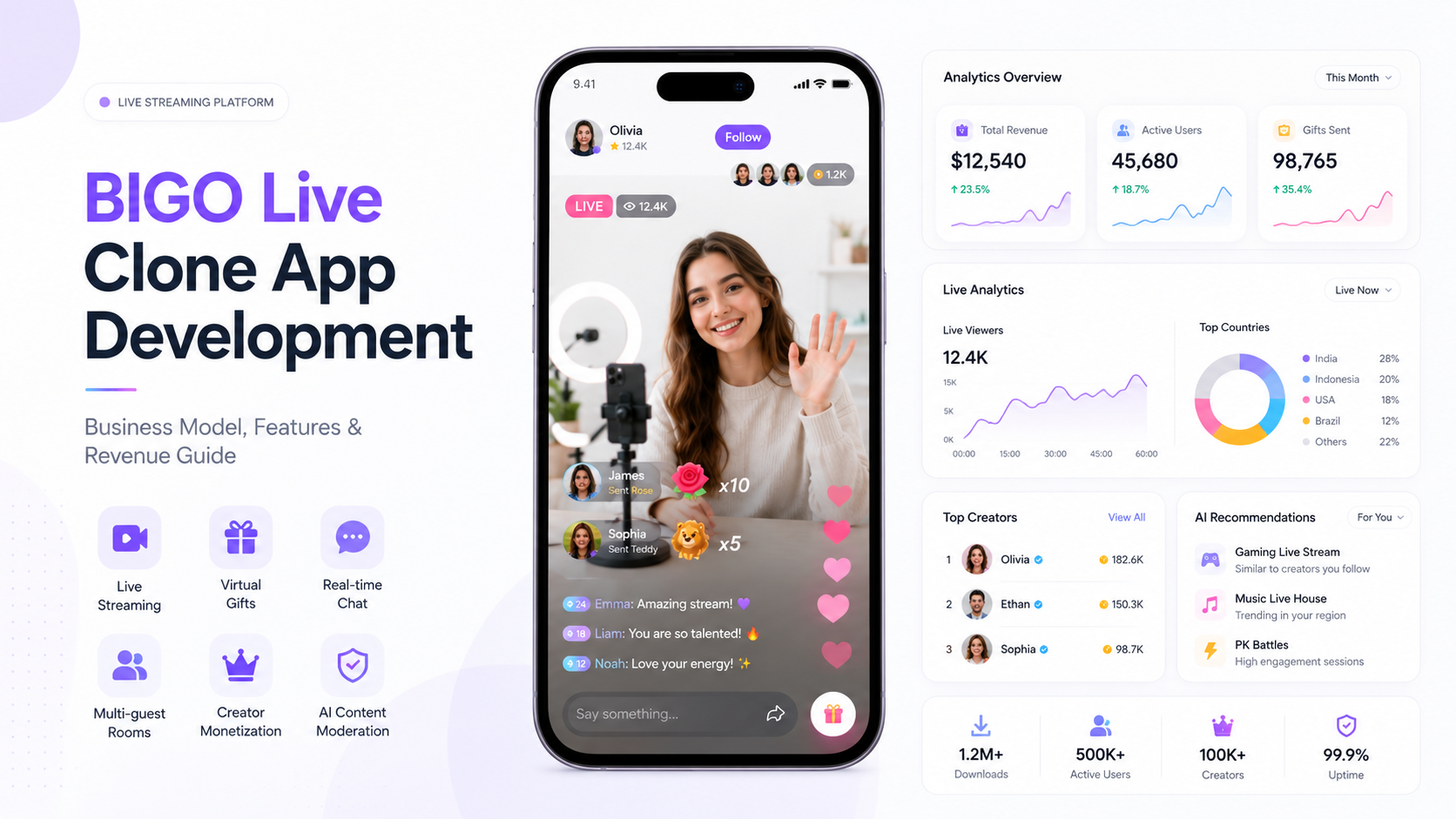

Live streaming is no longer just entertainment. It’s a billion-dollar digital business model that’s transforming how creators monetize their talent and how audiences engage with content.
Apps like BIGO Live transformed creators into businesses, generating massive revenue through virtual gifts, subscriptions, and live commerce. The creator economy is booming, and entrepreneurs who enter this space now have a unique opportunity to build profitable streaming platforms.
This guide covers everything you need to know about launching a BIGO Live clone app in 2026, from core features and monetization strategies to development costs and marketing tactics.
What is BIGO Live?
BIGO Live is a global live streaming platform that connects creators with audiences in real time. It’s not just a broadcasting tool but a complete social entertainment ecosystem.
Overview of the Platform
BIGO Live operates as a live broadcasting ecosystem where users can stream video content, interact with viewers through chat, and earn money through virtual gifts. The platform focuses on social entertainment rather than passive video watching.
Creators build fan communities, host multi-guest rooms, compete in PK battles, and monetize their content through direct audience support. The creator-audience interaction model makes it different from traditional video platforms like YouTube.
Core Functionalities
The platform includes several key features that drive engagement:
Live streaming lets creators broadcast video content instantly to global audiences.
Real-time chat enables immediate interaction between streamers and viewers.
Virtual gifting allows fans to support creators by sending digital gifts purchased with in-app coins.
Multi-host rooms let multiple creators stream together in the same broadcast.
PK battles create competitive gaming-style challenges between streamers.
Fan clubs help creators build dedicated communities with exclusive perks.
Understanding the BIGO Live Business Model
BIGO Live generates revenue through multiple streams, creating a sustainable and scalable business model that entrepreneurs can replicate.
How BIGO Live Makes Money
The platform’s revenue model combines several monetization strategies that work together seamlessly.
Virtual Gifts & Coins
Users purchase coins using real money. These coins are then used to buy virtual gifts that viewers send to their favorite creators during live streams. The platform takes a commission on every transaction, typically ranging from 30% to 50%.
This creates a win-win model where creators earn money, users get to support their favorites, and the platform profits from facilitating transactions.
Creator Economy Revenue Sharing
Creators earn through fan engagement, but the platform retains a percentage of all earnings. This revenue-sharing model incentivizes the platform to help creators succeed while maintaining profitability.
The more creators earn, the more the platform earns. This alignment of interests drives growth.
Premium Memberships
VIP features give paying users enhanced visibility, exclusive access to certain streams, and special badges that make them stand out in chat. These subscription-based features create recurring revenue.
Advertising Revenue
In-app ads, sponsored livestreams, and influencer promotions generate additional income. Brands pay to reach the platform’s engaged audience through native advertising formats.
Live Commerce Opportunities
Product selling during streams has become a major revenue driver. Creators showcase products, and viewers purchase directly through the app. Affiliate partnerships expand this revenue stream further.
Why Entrepreneurs Are Investing in BIGO Live Clone Apps
The live streaming market presents compelling opportunities for startup founders and investors.
Massive Market Growth
The creator economy is experiencing explosive growth. Gen Z prefers live interaction over pre-recorded content. Digital entertainers are building million-dollar businesses from their phones.
Global live streaming market valuation reached $70 billion in 2023 and is projected to exceed $200 billion by 2030. This growth creates space for new platforms targeting specific niches.
High Engagement Business Model
Live streaming apps achieve remarkably long user session durations. Users spend 30-60 minutes per session on average, far exceeding most social apps.
Community-based retention keeps users coming back daily. The recurring revenue structure from virtual gifts and subscriptions creates predictable cash flow.
Scalable Global Opportunity
Multi-language expansion allows platforms to enter new markets quickly. Cross-border creator communities form naturally around content types rather than geography.
Localization possibilities let entrepreneurs customize features for specific regions while maintaining core platform functionality.
Market Opportunity for Live Streaming Apps
Understanding market trends helps entrepreneurs identify profitable niches and positioning strategies.
Live Streaming Industry Statistics
The global live streaming market is growing at a compound annual growth rate of 21% through 2030. Mobile live streaming accounts for over 80% of total streaming traffic.
User adoption accelerated dramatically during 2020-2022 and has maintained strong growth momentum. Average revenue per user in live streaming apps ranges from $15 to $50 annually, with power users spending hundreds or thousands of dollars.
Trending Niches
Gaming Streaming remains the largest category, with platforms like Twitch dominating but leaving room for mobile-first alternatives.
Social Entertainment includes variety streaming, talent shows, and casual conversation streams that attract diverse audiences.
Dating Live Streams combine video chat with entertainment, creating new matchmaking experiences.
Music & Talent Streaming gives performers direct access to audiences without intermediaries.
Educational Streaming covers tutoring, language learning, and skill development through live interaction.
Fitness & Wellness Streaming brings personal training and group classes to users’ homes.
Essential Features of a BIGO Live Clone App
Building a competitive streaming platform requires implementing core features that users expect and advanced capabilities that differentiate your app.
User Features
User Registration & Profiles
Simple signup using email, phone number, or social media accounts. Profile customization with photos, bios, and interest tags helps users find relevant creators.
Live Video Broadcasting
One-tap streaming that works reliably on any connection speed. Adaptive bitrate streaming adjusts quality based on network conditions.
Real-Time Chat & Emojis
Instant messaging during streams with emoji reactions, stickers, and animated effects. Chat moderation tools let creators control their rooms.
Virtual Gifts & Stickers
Extensive gift catalog ranging from small tokens to premium animated effects. Gift animations play during streams, creating social proof and encouraging more gifting.
Follow & Fan System
Users follow favorite creators to get notified about new streams. Follower counts and fan levels create social status.
Push Notifications
Alerts when followed creators go live, when someone gifts you, or when your content gets featured. Customizable notification preferences prevent spam.
Filters & Beauty Effects
Real-time video enhancement with smoothing, makeup effects, and AR filters. These features are especially important in Asian markets.
Multi-Guest Streaming
Invite up to 4-9 guests into a single stream for collaborative content. Split-screen layouts and audio mixing happen automatically.
Video Recording & Replay
Automatic recording of streams for replay viewing. Creators can download or delete recordings, giving them content control.
Voice Chat Rooms
Audio-only rooms for casual conversation, reducing bandwidth requirements while maintaining engagement.
Creator Features
Earnings Dashboard
Real-time tracking of gifts received, coins earned, and withdrawal-ready balance. Historical analytics show earnings trends.
Live Analytics
View count, peak concurrent viewers, average watch time, gift conversion rate, and audience demographics during and after streams.
Audience Management
Block problematic users, create VIP viewer lists, and reward top supporters with special recognition.
Monetization Controls
Set minimum gift amounts for certain actions, create paid entry rooms, or offer subscription tiers with exclusive content.
Subscription Management
Manage fan club members, set subscription prices, and deliver exclusive perks to paying supporters.
Creator Verification
Blue check badges for verified accounts increase trust and help creators stand out in search and discovery.
Admin Panel Features
User Management
Search, view, edit, or delete user accounts. Monitor user activity and flag suspicious behavior patterns.
Creator Approval
Review and approve creator applications. Set quality standards and verify identity documents before granting broadcast permissions.
Revenue Analytics
Track total platform revenue, revenue by source, creator earnings, and commission collected. Financial reporting for accounting and tax purposes.
Content Moderation
Review reported streams and recorded content. AI flagging for explicit content, violence, or policy violations with human review workflow.
Fraud Detection
Identify fake gift transactions, stolen payment methods, and bot accounts. Automated systems flag anomalies for manual investigation.
Ban & Report System
Process user reports efficiently. Temporary or permanent bans with appeal process. IP blocking for severe violations.
Payment Management
Handle creator withdrawals, verify banking information, process payouts, and manage payment gateway relationships.
Advanced Features to Compete in 2026
Differentiation comes from implementing cutting-edge features that competitors lack.
AI-Based Content Moderation
Automated detection of nudity, violence, hate speech, and copyright violations in real time. Reduces moderation costs while improving safety.
AI Creator Recommendations
Machine learning algorithms that understand user preferences and suggest relevant creators. Improves discovery and retention.
AR/VR Filters
Advanced augmented reality effects that transform creators into characters or change their environment. Virtual reality streaming for immersive experiences.
Gamification & Leaderboards
Points, levels, achievements, and competitive rankings for both creators and viewers. Daily and weekly leaderboards drive engagement.
NFT or Web3 Integration
Limited edition digital collectibles that fans can purchase from favorite creators. Blockchain-based rewards and token economies.
AI Translation During Live Streams
Real-time subtitle translation breaks language barriers. Creators reach global audiences without speaking multiple languages.
Live Shopping Integration
Product catalogs, shopping carts, and checkout flows built directly into the streaming interface. One-click purchasing during streams.
Short Video Feed Integration
TikTok-style short videos alongside live streams. Creators post highlights to attract viewers to their next live session.
Technology Stack Required for BIGO Live Clone Development
Choosing the right technologies ensures your platform can scale reliably.
Frontend Technologies
Flutter enables building iOS and Android apps from a single codebase. Fast development and native performance make it popular for streaming apps.
React Native offers similar cross-platform benefits with strong community support and extensive libraries.
Swift for native iOS development provides maximum performance and access to latest Apple features.
Kotlin for native Android development ensures optimal performance on the world’s largest mobile platform.
Backend Technologies
Node.js handles real-time communications efficiently with non-blocking I/O. Popular choice for chat and notification systems.
Django provides robust security features and rapid development for Python-based backends.
Laravel offers elegant syntax and comprehensive features for PHP-based platforms.
Streaming Infrastructure
WebRTC enables peer-to-peer video streaming with low latency. Essential for interactive features like video calls.
RTMP protocol for broadcasting live video streams from mobile apps to servers. Industry standard for live streaming.
CDN Integration with services like Cloudflare, AWS CloudFront, or Akamai ensures fast video delivery worldwide with minimal latency.
Database & Cloud
AWS provides comprehensive cloud services including EC2, S3, RDS, and Lambda for scalable infrastructure.
Firebase offers real-time database, authentication, cloud messaging, and analytics with easy mobile integration.
Google Cloud delivers powerful computing resources and machine learning capabilities.
MongoDB handles flexible data structures and scales horizontally for growing user bases.
Payment Gateway Integration
Stripe processes international payments with support for 135+ currencies and various payment methods.
Razorpay dominates the Indian market with local payment method support.
PayPal provides trusted payment processing with global recognition.
Step-by-Step BIGO Live Clone Development Process
Successful platform launches follow a structured development approach.
Step One: Market Research & Validation
Identify your target audience and geographic focus. Research competitors and find gaps in their offerings. Survey potential users about desired features and pain points.
Validate demand through landing page signups, crowdfunding, or beta waitlists before investing heavily in development.
Step Two: Define Monetization Strategy
Decide which revenue streams to implement at launch. Balance user experience with monetization to avoid driving users away.
Calculate unit economics to ensure profitability at scale. Determine creator revenue share percentages and pricing for virtual goods.
Step Three: UI/UX Design
Create wireframes and user flows for all key scenarios. Design interfaces that work for both creators and viewers.
Focus on intuitive navigation, fast loading, and clear calls to action. Test designs with target users before development begins.
Step Four: MVP Development
Build the minimum viable product with only essential features. Include user registration, basic streaming, chat, and virtual gifts.
Launch quickly to gather real user feedback rather than building every possible feature upfront.
Step Five: Live Streaming Integration
Implement WebRTC or RTMP streaming with adaptive bitrate technology. Test across different network conditions and devices.
Optimize for low latency since delays ruin the live interaction experience. Set up CDN infrastructure for global content delivery.
Step Six: Payment & Virtual Gift Setup
Integrate payment gateways and handle different currencies. Design the virtual goods catalog with various price points.
Implement secure transaction processing and fraud detection. Create the creator payout system with tax compliance features.
Step Seven: Testing & Security Optimization
Conduct thorough testing across devices, operating systems, and network conditions. Load test with simulated traffic to ensure servers can handle peak usage.
Implement security measures including encryption, secure authentication, and DDoS protection. Perform penetration testing to identify vulnerabilities.
Step Eight: App Launch
Submit apps to Apple App Store and Google Play Store. Prepare marketing materials, press releases, and launch campaigns.
Seed the platform with initial creators who can produce quality content from day one.
Step Nine: User Acquisition & Scaling
Launch paid advertising campaigns on social platforms. Partner with influencers to promote the app.
Monitor metrics like install rate, activation rate, retention, and revenue per user. Scale infrastructure as user base grows.
How Much Does It Cost to Build a BIGO Live Clone App?
Development costs vary significantly based on features, team location, and platform complexity.
Cost Breakdown by Complexity
Basic MVP App
A minimal viable product with core streaming, chat, and gifting features costs $30,000 to $60,000 when built by an offshore development team.
This includes iOS and Android apps, basic backend, simple payment integration, and essential admin panel. Development takes 3-4 months.
Mid-Level Platform
Enhanced monetization features, better scalability, improved UI/UX, and additional features like multi-guest streaming cost $60,000 to $150,000.
This version includes more payment options, advanced analytics, content moderation tools, and optimization for handling thousands of concurrent users. Development takes 5-7 months.
Enterprise-Level Streaming Platform
Full-featured platforms with AI moderation, recommendation engines, AR filters, live shopping, and infrastructure for millions of users cost $150,000 to $500,000+.
Enterprise platforms include custom CDN setup, advanced security, blockchain integration, multiple languages, and dedicated DevOps. Development takes 9-12+ months.
Location of development team significantly impacts costs. US-based developers charge $100-$200/hour. Eastern European teams charge $40-$80/hour. Indian teams charge $20-$50/hour.
Key Challenges in Building a Live Streaming App
Understanding potential obstacles helps you prepare solutions in advance.
Video Latency Issues
Live streaming requires sub-second latency for real interaction. Network conditions, encoding speed, and geographic distance all affect delay.
Solution: Use WebRTC for ultra-low latency. Implement adaptive bitrate streaming. Deploy servers in multiple regions close to users.
Server Scalability
Sudden traffic spikes when popular creators go live can crash unprepared infrastructure. Video streaming consumes massive bandwidth.
Solution: Use auto-scaling cloud infrastructure. Implement CDN for content delivery. Design microservices architecture that scales components independently.
Real-Time Synchronization
Chat messages, gifts, and viewer counts must sync instantly across thousands of viewers. Database bottlenecks cause delays.
Solution: Use WebSocket connections for real-time communication. Implement message queues. Choose databases optimized for real-time operations.
Content Moderation
Manual moderation doesn’t scale. Illegal content, harassment, and inappropriate streams need immediate action.
Solution: Implement AI-based content detection. Create efficient reporting workflows. Hire moderation teams in cost-effective locations.
User Safety & Privacy
Protecting users from harassment, doxxing, and scams while maintaining platform openness is difficult.
Solution: Implement robust blocking and reporting features. Verify creator identities. Use AI to detect suspicious behavior patterns.
Payment Fraud Prevention
Stolen credit cards, chargebacks, and fake transactions hurt profitability and creator trust.
Solution: Use 3D Secure authentication. Implement fraud detection algorithms. Hold payments for new accounts temporarily.
High Infrastructure Costs
Video streaming bandwidth and storage costs grow linearly with user base, squeezing margins.
Solution: Negotiate volume pricing with cloud providers. Optimize video encoding for smaller file sizes. Delete old recordings automatically.
Monetization Strategies Beyond Virtual Gifts
Diversifying revenue streams creates more stable businesses.
Subscription Revenue
Monthly subscriptions give users ad-free experience, special badges, and exclusive access to certain creators. Predictable recurring revenue improves financial planning.
Paid Creator Rooms
Creators can charge admission to special streams like workshops, concerts, or exclusive content. Platform takes commission on ticket sales.
Live Shopping
Commerce integration where creators sell products during streams generates commission revenue. Partner with brands or let creators sell their own merchandise.
Sponsored Streams
Brands pay creators to feature products or run promotional streams. Platform facilitates partnerships and takes percentage of sponsorship deals.
Brand Collaborations
Direct partnerships between platform and major brands for sponsored categories, featured placements, or exclusive content.
Creator Marketplace
Charge creators to promote their profiles, boost visibility in recommendations, or advertise their streams to potential followers.
In-App Advertising
Display ads, video ads, and sponsored content generate revenue without relying on user spending.
Event Ticketing
Special platform-wide events, tournaments, or celebrity streams with paid access create revenue spikes.
How to Market a BIGO Live Clone App
Acquiring and retaining users requires strategic marketing across multiple channels.
User Acquisition Strategies
Influencer Marketing
Partner with existing creators on TikTok, Instagram, and YouTube. Offer them early access and revenue sharing to promote your platform to their followers.
Micro-influencers often deliver better ROI than celebrities. Focus on creators whose audiences match your target demographic.
TikTok & Instagram Promotion
Run ads showing entertaining streams and easy earning potential. User-generated content showcasing real earnings performs well.
Create viral challenges or trends that mention your app. Partner with meme pages and content aggregators.
Referral Programs
Reward users who invite friends with bonus coins or exclusive features. Two-sided incentives where both referrer and referee benefit increase conversion.
Creator Onboarding Campaigns
Attract quality creators first since they produce content that attracts viewers. Offer signing bonuses, featured placement, or better revenue share for early creators.
App Store Optimization (ASO)
Optimize app titles, descriptions, keywords, and screenshots for search visibility. Positive reviews improve rankings significantly.
Community Building
Create Discord servers, Telegram groups, or subreddits where users discuss streams and organize events. Community-driven growth is more sustainable than paid ads.
Retention Strategies
Gamification
Points, levels, badges, and achievements give users progression systems that encourage daily return. Streak bonuses reward consecutive days of activity.
Daily Rewards
Login bonuses, free coins, or special gifts for daily check-ins create habit formation.
Fan Loyalty Systems
Recognize and reward top supporters of creators. Fan levels, exclusive badges, and VIP perks make users feel valued.
Push Notifications
Strategic notifications about favorite creators going live, new content, or limited-time events bring users back without being annoying.
Exclusive Events
Platform-wide tournaments, celebrity guest streams, or holiday specials create anticipation and shared experiences.
Future Trends in Live Streaming Apps
Staying ahead of trends helps position your platform for long-term success.
AI-Powered Streaming
Artificial intelligence will enhance streams through real-time background replacement, voice modification, and automated highlight clip generation.
AI co-hosts and chatbots will engage with audiences when creators can’t respond to every message.
Virtual Influencers
Computer-generated creators will host streams, never tire, and maintain perfect consistency. Platforms that support virtual streamers gain competitive advantage.
Interactive Commerce
Shopping integration will become seamless with AR try-on features, one-click purchasing, and AI recommendations during streams.
Metaverse Integration
Virtual worlds where creators host streams as avatars in 3D environments will attract younger demographics.
Hyper-Personalized Content
Advanced recommendation algorithms will create unique homepages for each user, showing exactly the content they want.
Multi-Platform Creator Ecosystems
Creators will stream to multiple platforms simultaneously. Tools that help manage cross-platform presence will become essential.
Who Should Build a BIGO Live Clone?
Certain businesses are particularly well-positioned to succeed with live streaming platforms.
Startups with funding and technical talent can build from scratch and scale quickly.
Influencer Brands with existing audiences can launch platforms where their community already trusts them.
Media Companies can extend their content offerings into interactive live experiences.
Entertainment Platforms can add live streaming to existing services like music or video platforms.
Gaming Communities can create streaming platforms tailored to specific game genres.
Social Networking Businesses can enhance existing platforms with live streaming capabilities.
Why Building a BIGO Live Clone is a Strong Startup Opportunity
Multiple factors make this an attractive business venture for entrepreneurs.
Recurring monetization from virtual gifts and subscriptions creates predictable revenue. High engagement levels mean users spend significant time and money on platforms.
Global scalability allows platforms to grow internationally without physical infrastructure. The creator economy continues expanding as more people pursue online income.
Strong investor interest in social entertainment apps means funding opportunities exist for promising platforms with traction.
The market is large enough to support multiple successful platforms, especially those targeting specific niches or regions.
How Business Model Hub Helps Entrepreneurs Launch Streaming Platforms
Business Model Hub provides comprehensive support for founders building live streaming platforms.
Our startup-focused platform strategy helps you position your app competitively. Business model consultation ensures you choose the right monetization mix.
Feature planning guidance prevents over-building while ensuring you don’t miss critical capabilities. Development partner connections link you with vetted agencies experienced in streaming apps.
Cost estimation support helps you budget accurately and avoid surprise expenses. MVP launch roadmap breaks the development process into manageable milestones.
Scalable growth planning prepares you to handle rapid user growth without technical collapse.
Want to launch your own live streaming platform? Get a custom BIGO Live clone development roadmap. Talk with startup app consultants today. Connect with trusted development partners who understand the creator economy.
Conclusion
The live streaming market presents exceptional opportunities for entrepreneurs who act now. Apps like BIGO Live prove the business model works globally across different cultures and demographics.
Creator economy platforms generate sustainable recurring revenue through virtual gifts, subscriptions, and commerce integration. High user engagement translates to strong retention and monetization metrics that investors value.
Founders who enter the live streaming market early can establish brand recognition and network effects before competition intensifies. The technology stack is mature enough that development risk is manageable while the market is still growing rapidly.
Whether you’re a startup founder, media company, or entertainment business, building a BIGO Live clone offers a path to participating in the creator economy boom. Focus on solving real problems for creators and viewers rather than copying features blindly.
Success requires combining solid technology, effective monetization, quality content, and strategic marketing. Entrepreneurs who execute across all these dimensions build platforms that creators and audiences love.
The time to launch is now while the market growth trajectory remains steep and opportunities for differentiation still exist.
Ready to build your live streaming platform? Connect with development partners who understand the creator economy. Get expert guidance on features, costs, and launch strategy. Turn your vision into a profitable reality in 2026.
FAQs
A BIGO Live clone app is a live streaming platform built with similar features and business model as BIGO Live. It includes video broadcasting, real-time chat, virtual gifting, and creator monetization tools. Clones can be customized for specific niches or regions while maintaining core functionality.
Live streaming apps generate revenue through virtual gift commissions (30-50% of transactions), premium subscriptions, advertising, live commerce commissions, creator promotion fees, and sponsored content. Multiple revenue streams create more stable businesses than relying on a single source.
Basic MVP development costs $30,000 to $60,000. Mid-level platforms cost $60,000 to $150,000. Enterprise-level solutions cost $150,000 to $500,000+. Final costs depend on features, team location, development timeline, and infrastructure requirements. Ongoing operational costs for hosting, bandwidth, and maintenance also need budgeting.
Frontend technologies include Flutter, React Native, Swift, and Kotlin. Backend uses Node.js, Django, or Laravel. Streaming relies on WebRTC, RTMP, and CDN services. Cloud infrastructure from AWS, Google Cloud, or Firebase provides scalability. MongoDB or PostgreSQL handle data storage. Payment gateways like Stripe or PayPal process transactions.
Basic MVP takes 3-4 months. Mid-level platforms take 5-7 months. Enterprise platforms take 9-12+ months. Timeline depends on team size, feature complexity, and how much custom development versus using existing solutions. Post-launch improvements and new features require ongoing development.
Yes, if executed well. Successful platforms achieve 20-40% profit margins after reaching scale. Virtual gift transactions have high margins. The challenge is reaching critical mass of users and creators. Most platforms lose money initially but become profitable as user base grows and unit economics improve.
Start with one geographic market or content niche. Acquire quality creators who attract audiences. Optimize infrastructure costs through efficient encoding and CDN usage. Implement viral growth features like referrals. Expand to new markets once achieving product-market fit. Raise funding to accelerate growth once unit economics prove viable. Build network effects where more creators attract more viewers and vice versa.
Discover more from Business Model Hub
Subscribe to get the latest posts sent to your email.


[…] its platform, and what makes its business model so effective. Whether you’re planning to launch your own streaming app or simply curious about the economics of creator platforms, you’ll find everything you need […]