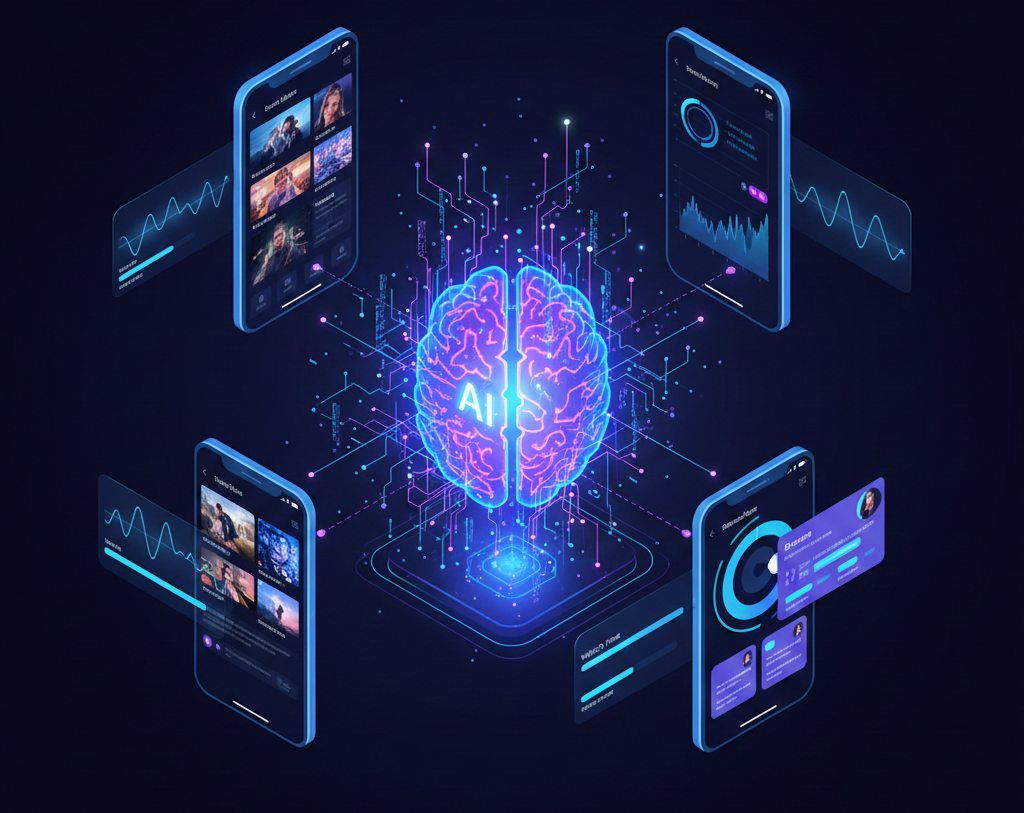

ByteDance’s biggest competitive advantage is its AI-driven recommendation system combined with a rapid experimentation culture, which allows it to understand user behaviour better and faster than any competitor.
In simple words, ByteDance doesn’t rely on followers, social graphs, or creator fame.
It relies on data, algorithms, and speed.
To understand why this is so powerful, we need to break down how ByteDance actually works behind the scenes.
Quick Overview: What Is ByteDance?
ByteDance is a Chinese technology company founded in 2012 by Zhang Yiming.
Most people know ByteDance because of TikTok, but TikTok is just one output of a much larger system.
Some of ByteDance’s key products include:
- TikTok / Douyin – short-video platforms
- CapCut – video editing software
- Toutiao – AI-powered news platform
Today, ByteDance operates some of the largest consumer apps in the world, used daily across Asia, Europe, and the US.
But here’s the key point most people miss:
ByteDance is not a social media company first.
It’s an AI and data company that builds consumer apps on top of that foundation.
Most People Get ByteDance’s Advantage Wrong
When people talk about TikTok’s success, they usually say things like:
- “TikTok is successful because of creators”
- “TikTok is successful because of short videos”
- “TikTok is just Instagram Reels, but earlier”
These explanations sound reasonable—but they’re incomplete.
Creators can move platforms.
Short videos can be copied.
UI features can be cloned in months.
What competitors can’t easily copy is the system underneath.
ByteDance didn’t win because of one feature.
It won because of how decisions are made at scale.
The Real Competitive Advantage: Recommendation Engine, Not Social Graph
How Traditional Social Platforms Work
Most social platforms are built on a social graph:
- Facebook prioritises friends and family
- Instagram prioritises followers
- YouTube prioritises subscriptions
This creates some clear limitations:
- Content discovery is slow
- New creators struggle to get visibility
- Users get stuck in echo chambers
If you don’t already have followers, your content barely gets a chance.
How ByteDance’s Recommendation Engine Works (High-Level Logic)
ByteDance flipped this model completely.
Instead of asking who posted this, the system asks:
How is this content performing right now?
The algorithm looks at signals like:
- Watch time
- Replays
- Scroll speed
- Pauses
- Micro-engagement behaviour
Popularity of the creator matters far less than how users react to the content itself.
That’s why a zero-follower creator can go viral overnight on TikTok.
The system doesn’t care who you are.
It cares how humans behave.
Why This Creates a Massive Advantage
This approach leads to:
- Faster content discovery
- Higher user retention
- Longer screen time
- Sharper ad targeting
Every swipe improves the system.
Every interaction feeds the algorithm.
This creates a self-reinforcing loop where the product keeps getting smarter automatically.
ByteDance’s Second Advantage: Data Feedback Loop at Scale
ByteDance benefits from a powerful flywheel:
More users → more behaviour data
More data → better recommendations
Better recommendations → even more users
This loop runs in real time, across millions of interactions every second.
Why this matters is simple:
You can’t buy this advantage.
You can’t copy it with a feature update.
It takes years of live user behaviour data to reach this level of intelligence.
Speed as a Competitive Weapon
Culture of Constant Experimentation
ByteDance treats product development like a continuous experiment.
- A/B test everything
- Launch fast
- Kill ideas quickly
- Scale winners aggressively
There’s very little emotional attachment to features.
If data says it’s not working, it’s gone.
Localised Execution at Scale
TikTok and Douyin may look similar, but they are not the same product.
ByteDance runs:
- Region-specific algorithms
- Local trend discovery
- Country-level content optimisation
What works in India doesn’t automatically get pushed in the US.
Local behaviour shapes local products.
That level of localisation is extremely hard to manage at global scale.
Why Meta, Google, and Others Still Struggle to Match ByteDance
Meta launched Reels.
YouTube launched Shorts.
On the surface, the products look similar.
But under the hood:
- Their algorithms are still tied to social graphs
- Legacy systems slow experimentation
- Organisational layers reduce speed
The important insight here is simple:
Copying UI is easy. Copying intelligence is not.
ByteDance Is an AI Company Disguised as a Media Company
At ByteDance, AI comes first.
Products come second.
Content is just input data.
Attention optimisation is the real product.
That’s why the same recommendation logic powers:
- Short-video platforms
- News feeds
- Editing tools like CapCut
Different surfaces.
Same intelligence engine.
Risks to ByteDance’s Competitive Advantage
ByteDance’s position is strong, but not bulletproof.
Some real risks include:
- Regulatory pressure
- Data privacy concerns
- Government bans in key markets
- Heavy dependence on recommendation algorithms
If regulation limits data usage or algorithmic reach, the advantage weakens.
Understanding these risks is important because no moat is permanent.
What Founders and Product Builders Can Learn from ByteDance
There are some clear lessons here:
- Focus on behaviour, not vanity metrics
- Build systems, not just features
- Let data decide, not opinions
- Move fast—speed beats perfection
ByteDance didn’t guess what users wanted.
It observed them at scale.
Final Take: Why ByteDance Is So Hard to Compete With
ByteDance didn’t win because of TikTok.
It didn’t win because of influencers.
It didn’t win because of short videos.
It won because of a rare combination of:
- AI-first thinking
- Massive real-time data
- Fast experimentation
- Product-led culture
ByteDance doesn’t compete on content.
It competes on understanding humans better than anyone else.
Discover more from Business Model Hub
Subscribe to get the latest posts sent to your email.
