Zoho Business Model Explained: How Zoho Builds Profitable Software Without Ads or VC Funding

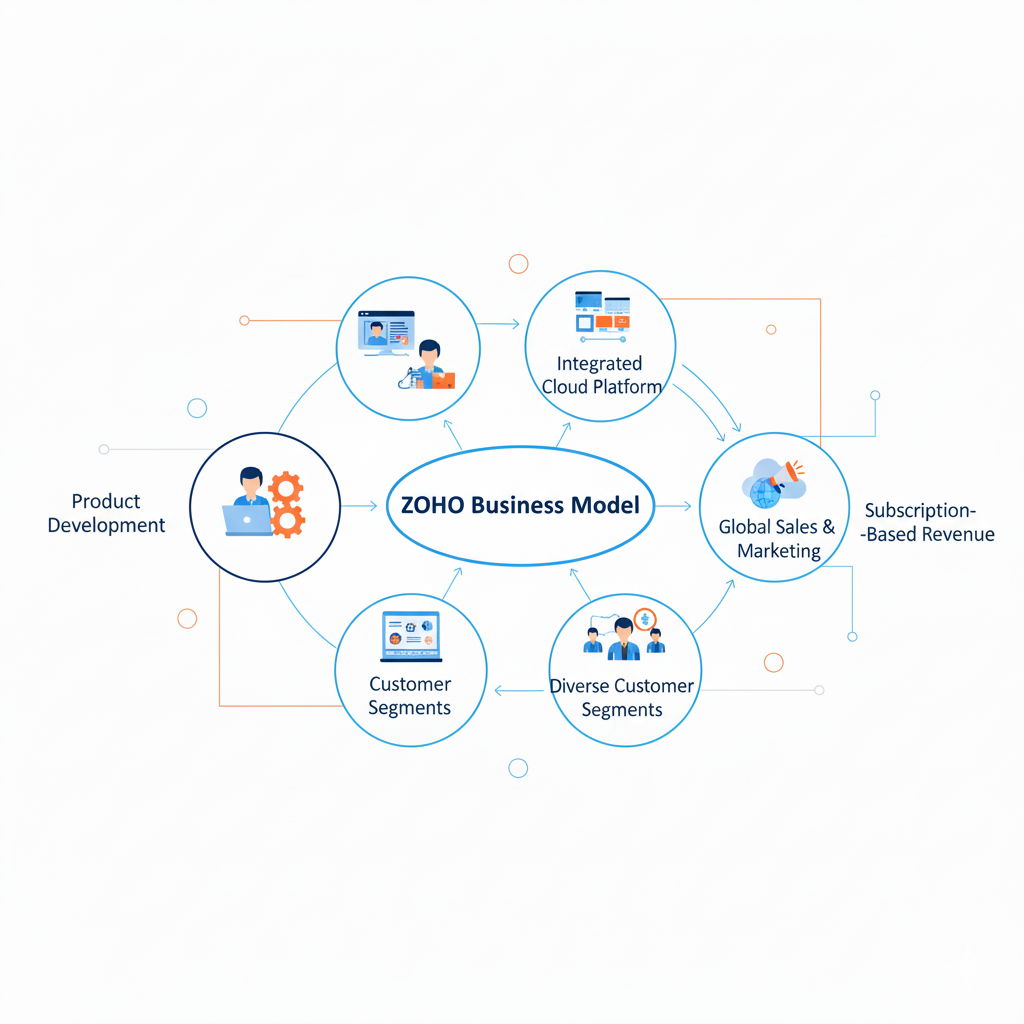
Zoho makes money by selling subscription-based business software directly to customers. It does not rely on ads, does not sell user data, and does not depend on venture capital. Its entire business is funded by paying customers.
Now let’s go deeper and understand how Zoho actually works, why its model is different from most SaaS companies, and what founders and businesses can learn from it.
What Is Zoho?
Zoho is a global SaaS (Software as a Service) company that builds cloud-based software for businesses of all sizes.
It offers tools for:
- Sales (Zoho CRM)
- Finance (Zoho Books)
- HR (Zoho People)
- Customer support (Zoho Desk)
- Marketing (Zoho Campaigns)
- Email (Zoho Mail)
- Analytics (Zoho Analytics)
In total, Zoho offers 50+ integrated business applications.
Zoho was founded by Sridhar Vembu and is one of the few large software companies that is fully bootstrapped meaning it has grown without external investors.
Zoho’s Core Business Philosophy
Zoho follows a very clear philosophy:
Build useful products, price them fairly, and let customers fund growth.
This single idea defines Zoho’s entire business model.
Zoho intentionally avoids:
- Display advertising
- Selling user data
- Aggressive venture-funded growth
Instead, it focuses on long-term customer trust.
Zoho Business Model Overview
| Element | Details |
|---|---|
| Business Type | SaaS (Subscription Software) |
| Target Customers | Small businesses, startups, enterprises |
| Revenue Source | Software subscriptions |
| Funding | 100% bootstrapped |
| Pricing Strategy | Affordable, tier-based |
| Growth Focus | Retention over hype |
How Zoho Makes Money (Revenue Model)
Zoho earns money primarily through recurring subscriptions.
There are no ads.
There are no commissions.
There is no data monetization.
Let’s break this down properly.
1. Subscription-Based Pricing Model
Zoho uses a monthly and yearly subscription model.
Customers pay:
- Per user
- Per application
- Per feature tier
This creates predictable and stable revenue, which is critical for SaaS sustainability.
Why subscriptions work for Zoho:
- Steady cash flow
- Low dependency on one-time sales
- Strong customer lifetime value
2. Individual Product Subscriptions
Zoho allows businesses to buy only the tools they need.
Examples:
- Zoho CRM for sales teams
- Zoho Books for accounting
- Zoho Mail for business email
Each app has:
- Free or low-cost entry plans
- Higher tiers for advanced needs
This makes Zoho attractive to:
- Small businesses
- Early-stage startups
- Solopreneurs
They can start small and scale gradually.
3. Zoho One: The All-in-One Ecosystem
Zoho One is one of the strongest pillars of Zoho’s business model.
What is Zoho One?
- A single subscription
- Access to 45+ Zoho apps
- Unified data across tools
Instead of buying tools separately, businesses get:
- CRM
- Finance
- HR
- Marketing
- Operations
—all under one system.
Why Zoho One is powerful:
- Increases customer lock-in
- Reduces churn
- Boosts long-term revenue
Once a company adopts Zoho One, switching becomes difficult — in a good way.
4. Tiered Pricing Strategy
Zoho uses simple tier-based pricing, such as:
- Free
- Standard
- Professional
- Enterprise
As a business grows:
- More employees are added
- More features are required
- Higher plans become necessary
This creates natural upselling without aggressive sales tactics.
Zoho’s Customer Retention Strategy
Zoho focuses heavily on keeping customers, not just acquiring them.
How Zoho reduces churn:
- No sudden price hikes
- Transparent pricing
- Reliable customer support
- Frequent product improvements
Retention is cheaper than acquisition — and Zoho understands this very well.
Zoho’s Cost Structure (How Zoho Stays Profitable)
One major reason Zoho stays profitable is cost discipline.
Zoho’s main costs:
- Software development
- Research & innovation
- Customer support
- Infrastructure
What Zoho avoids:
- Heavy paid advertising
- Influencer marketing
- Expensive city offices
Zoho even runs its own data centers, reducing dependency on third-party cloud providers and lowering long-term costs.
Bootstrapped Business Model: No VC Pressure
Zoho is completely bootstrapped.
This gives Zoho:
- Full decision control
- Freedom from growth pressure
- Ability to focus on product quality
Most SaaS companies are forced to:
- Chase fast growth
- Increase prices
- Push aggressive sales
Zoho doesn’t need to do that.
Zoho’s Global Expansion Strategy
Zoho operates in multiple countries, including:
- India
- USA
- Europe
- Southeast Asia
Instead of aggressive marketing, Zoho expands through:
- Local offices
- Regional data centers
- Localized support
- Partner networks
This builds regional trust, especially in regulated markets.
Zoho’s Partner & Reseller Ecosystem
Zoho works with:
- Implementation partners
- Consultants
- IT service providers
Partners help businesses:
- Set up Zoho tools
- Customize workflows
- Train teams
Zoho benefits because:
- Sales scale without huge internal teams
- Subscriptions grow organically
Zoho vs Competitors (Business Model Comparison)
| Factor | Zoho | Salesforce |
|---|---|---|
| Pricing | Affordable | High |
| Funding | Bootstrapped | VC-backed |
| Ads | No | Yes |
| Ecosystem | Fully integrated | Modular |
Zoho competes on value and trust, not branding hype.
Why Zoho Doesn’t Use Ads or Sell Data
This is a core trust strategy.
Zoho earns money only when:
- Customers pay
- Customers stay
That alignment builds:
- Long-term relationships
- Strong brand loyalty
- Ethical data handling
For many businesses, this is a big reason to choose Zoho.
Is Zoho Profitable?
Yes — and that’s what makes Zoho special.
Zoho has been consistently profitable while:
- Expanding products
- Growing globally
- Keeping prices low
Very few SaaS companies achieve this balance.
Key Lessons from Zoho’s Business Model
Founders and SaaS builders can learn a lot from Zoho:
- Subscriptions create stability
- Bootstrapping builds discipline
- Ecosystems increase customer lifetime value
- Fair pricing builds trust
- Long-term thinking beats fast growth
Wrap Up
Zoho’s business model proves that:
You don’t need ads, venture capital, or hype to build a global SaaS company.
What you need is:
- Strong products
- Honest pricing
- Customer-first thinking
- Cost control
- Long-term vision
That’s why Zoho continues to grow quietly but powerfully.
Discover more from Business Model Hub
Subscribe to get the latest posts sent to your email.