
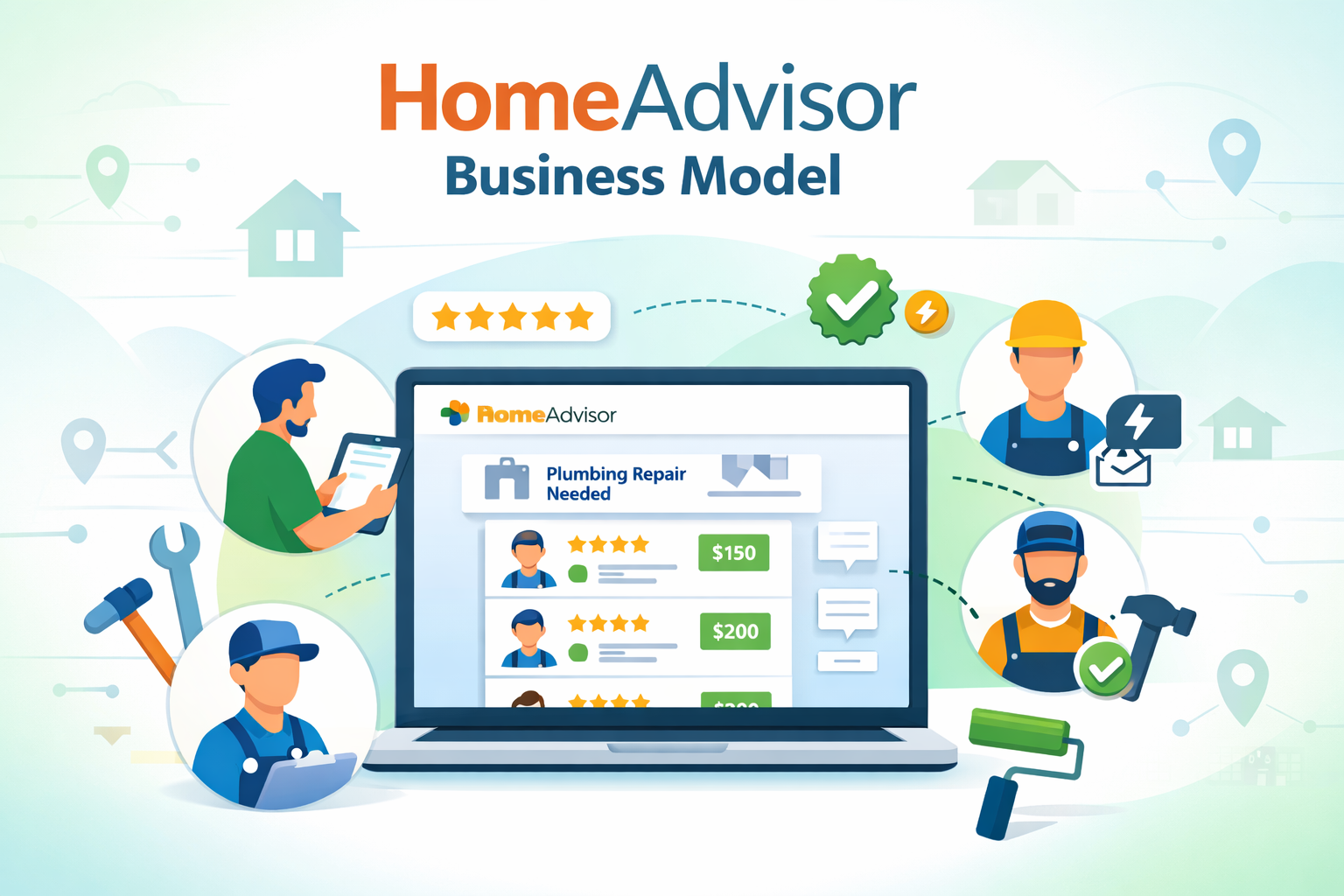
HomeAdvisor operates a two-sided marketplace business model. It connects homeowners with local service professionals like plumbers, electricians, and general contractors. The platform earns revenue primarily through lead generation fees charged to professionals, monthly subscription plans, and paid advertising placements.
What Is HomeAdvisor
HomeAdvisor is an online platform that helps homeowners find and hire local home service professionals. It covers a wide range of services including:
- Plumbing repairs and installations
- Roofing and siding work
- HVAC installation and maintenance
- Landscaping and lawn care
- Kitchen and bathroom renovation
- Electrical services
- Painting and flooring
The platform operates mainly in the United States. It started as a simple service directory and evolved into a full digital marketplace where homeowners can request services, compare professionals, read reviews, and get multiple quotes.
HomeAdvisor is part of the Angi ecosystem, which is owned by IAC, one of the largest internet conglomerates in the world. The merger of HomeAdvisor and Angie’s List under the Angi brand created one of the most powerful home services platforms in the country.
The shift from directory listing to active marketplace was a key turning point. Instead of just showing homeowners a list of contractors, HomeAdvisor started actively matching them with professionals and charging for that connection. That change is the foundation of how the business makes money today.
Who Founded HomeAdvisor
HomeAdvisor was founded in 1998 by Rodney Rice under the original name ServiceMagic. The company rebranded to HomeAdvisor in 2012 to better reflect its focus on the home services industry.
IAC acquired ServiceMagic early on and helped grow it into a national platform. Over the years, HomeAdvisor expanded through strategic acquisitions and partnerships.
The most significant move came when HomeAdvisor merged with Angie’s List in 2017. The combined entity was eventually rebranded as Angi in 2021. Today, HomeAdvisor operates as part of the Angi family of brands, which also includes Handy and other home services tools.
This ownership structure under IAC gives the platform significant financial resources, technology infrastructure, and marketing power to compete in the fragmented home services market.
How HomeAdvisor Works
HomeAdvisor follows a clear step-by-step process that benefits both homeowners and service professionals.
Step One: Homeowner Submits a Service Request
A homeowner visits HomeAdvisor and fills out a short form describing what they need. They provide details like the type of work, timeline, and location. For example, they might request a plumber for a leaking pipe or a roofer for storm damage repair.
Step Two: Platform Matches Professionals
HomeAdvisor uses the homeowner’s information to identify relevant professionals in their area. The matching system considers:
- Geographic location
- Type of service needed
- Contractor availability
- Ratings and reviews
- Membership status on the platform
Step Three: Contractors Receive the Lead
Matched professionals receive the homeowner’s contact details as a lead. They are notified immediately so they can act fast. Multiple contractors can receive the same lead, which creates competition.
Step Four: Contractor Contacts the Homeowner
The contractor reaches out directly to the homeowner. They provide quotes, ask follow-up questions, or schedule an in-person visit to assess the job.
Step Five: Service Is Completed
The homeowner selects a contractor, the work gets done, and both parties can leave reviews. This builds the reputation system that powers future matching.
This process creates value on both sides. Homeowners get fast access to vetted professionals without spending hours searching. Contractors get direct access to customers who are ready to hire.
HomeAdvisor Business Model Explained
HomeAdvisor operates a two-sided marketplace. This means it serves two distinct customer groups at the same time and creates value by connecting them.
The Demand Side: Homeowners
Homeowners are the demand side of the marketplace. They come to HomeAdvisor because:
- They need a professional quickly
- They want verified reviews before hiring
- They prefer getting multiple quotes in one place
- They want protection against unqualified contractors
HomeAdvisor does not charge homeowners to use the platform. The service is free for the people requesting work. This keeps the demand side large and active.
The Supply Side: Service Professionals
Contractors and service professionals are the supply side. They pay to be on the platform because:
- They get direct access to homeowners looking to hire
- They receive pre-qualified leads with specific job details
- They can build an online reputation through reviews
- They reduce their reliance on expensive traditional advertising
The platform charges professionals for the access it provides. This is where the revenue comes from.
The Network Effect
The business gets stronger as it grows. More homeowners attract more contractors. More contractors improve the quality of matches. Better matches bring more homeowners back to the platform. This self-reinforcing loop is called a network effect, and it is a key competitive advantage for HomeAdvisor.
How HomeAdvisor Makes Money
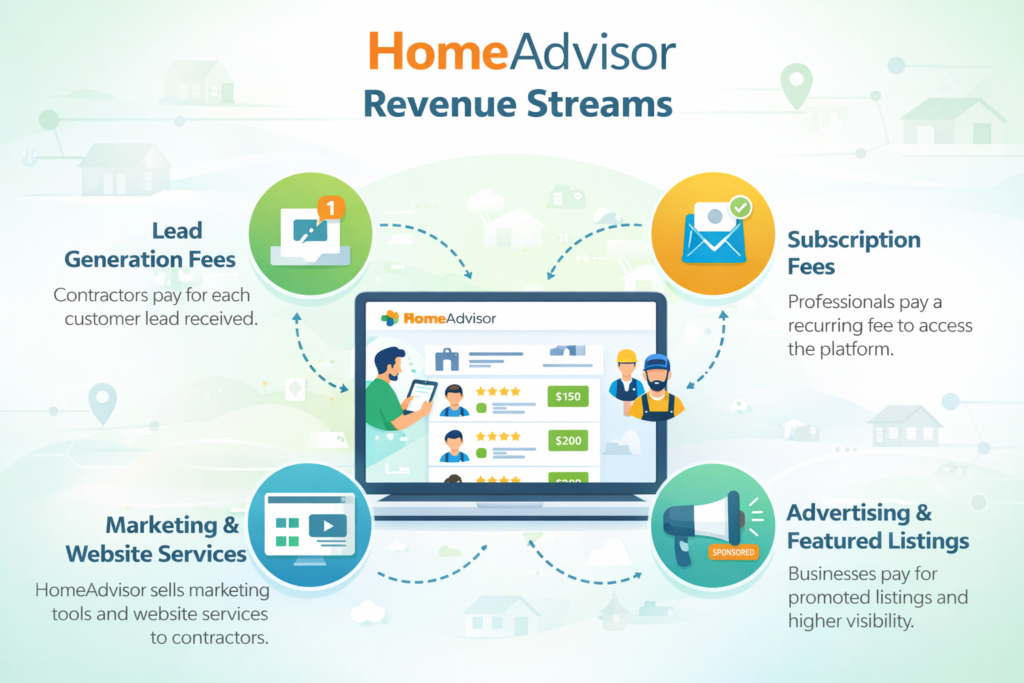
This is the core of the business model. HomeAdvisor has several revenue streams, all focused on the supply side of the marketplace.
Lead Generation Fees
Lead fees are the primary revenue driver. Every time HomeAdvisor sends a contractor a homeowner’s contact information, the contractor pays a fee.
Key facts about lead fees:
- Fees vary by service category and geographic location
- A roofing lead typically costs more than a lawn care lead
- Fees can range from a few dollars to over a hundred dollars per lead
- Contractors are charged whether or not they win the job
This model creates consistent income for HomeAdvisor because fees are generated every time a match is made, regardless of the outcome for the contractor.
Some contractors complain about paying for leads that do not convert into jobs. This is a known tension in the model. However, because the homeowner expressed genuine interest in hiring, HomeAdvisor argues the lead has real value.
Examples of lead categories:
- Plumbing: fixing leaks, installing fixtures, emergency repairs
- Roofing: installation, repair, inspection
- Electrical: wiring, panel upgrades, outlet installation
- HVAC: installation, maintenance, emergency service
- Remodeling: kitchens, bathrooms, basements
- Landscaping: lawn care, tree removal, irrigation
Each category has its own pricing structure. High-ticket services like full roof replacements generate higher lead fees because the potential job value for the contractor is much larger.
Subscription Fees
Contractors who want to be active on HomeAdvisor must pay a monthly or annual membership fee. This fee gives them access to the platform’s tools and lead flow.
What subscription fees typically include:
- A listed profile on the HomeAdvisor directory
- Access to incoming leads in their service area
- Review and rating management tools
- Visibility in search results on the platform
Subscription fees create a predictable, recurring revenue stream. Even in months when a contractor receives fewer leads, HomeAdvisor still collects the membership fee. This recurring structure is valuable for financial planning and investor confidence.
Advertising and Featured Listings
Beyond subscriptions and lead fees, HomeAdvisor offers paid advertising placements. Contractors can pay to appear in premium positions in search results and on contractor listing pages.
These paid placements include:
- Sponsored search results at the top of homeowner queries
- Featured contractor profiles with higher visibility
- Promoted listings in specific service categories or geographic areas
This works similarly to Google Ads or Amazon Sponsored Products. Contractors who pay more get seen first. For businesses that depend on HomeAdvisor as a primary lead source, these premium placements are worth the additional spend.
Website Services and Marketing Tools
HomeAdvisor also generates revenue by selling business tools directly to contractors. These tools help professionals manage their business more effectively.
Services in this category include:
- Website design and hosting for contractors who lack an online presence
- Customer relationship management (CRM) tools
- Lead tracking and follow-up systems
- Review generation tools
- Online booking and scheduling software
These services extend HomeAdvisor’s relationship with contractors beyond the lead marketplace. They create additional revenue and increase contractor dependency on the platform, which reduces churn.
Value Proposition of HomeAdvisor
A business model only works if it delivers real value to both sides. HomeAdvisor succeeds because it solves genuine problems for homeowners and contractors.
Value for Homeowners
- Saves hours of research by surfacing local, vetted professionals instantly
- Provides verified reviews from real customers to reduce hiring risk
- Allows comparison of multiple quotes in one place
- Offers some level of screening and background checks on listed professionals
- Makes it easy to find help for urgent or specialized jobs
Value for Contractors
- Delivers a consistent flow of leads without requiring a large marketing budget
- Builds online reputation through the review system
- Provides access to homeowners who are actively ready to hire, not just browsing
- Reduces the need for cold calling or door-to-door sales
- Offers tools to manage leads and customer relationships
The strongest marketplace businesses create what is called a win-win dynamic. HomeAdvisor works because both sides benefit from participating.
Key Partners in the HomeAdvisor Ecosystem
HomeAdvisor does not operate in isolation. Several key partners make the platform function.
Local Contractors and Service Professionals
These are the most critical partners. Without a large, quality network of service providers, the platform cannot serve homeowners effectively. HomeAdvisor invests in recruiting contractors across all 50 states and dozens of service categories.
Home Service Businesses
Larger home service companies also use HomeAdvisor as a lead source. National chains and regional operators pay for leads in bulk, making them high-value partners on the supply side.
Advertising Networks
HomeAdvisor uses external advertising networks to drive homeowner traffic to the platform. Google, Meta, and other digital ad platforms are important partners for customer acquisition.
Payment Processors
To handle lead fees, subscriptions, and service transactions, HomeAdvisor relies on payment infrastructure partners. Reliable billing and payment processing is essential to the business model.
Angi Ecosystem Platforms
As part of the Angi family, HomeAdvisor shares infrastructure, data, and customers with related platforms including Angi, Handy, and others. This ecosystem approach increases the overall value of being part of the network.
HomeAdvisor Competitors
The home services marketplace is competitive. Several platforms compete directly with HomeAdvisor for both homeowners and contractors.
Thumbtack
Thumbtack operates a similar lead generation model. Professionals pay for leads when homeowners reach out. It covers a broader range of services beyond home repair, including events and personal services.
TaskRabbit
TaskRabbit focuses on smaller, on-demand tasks like furniture assembly, moving help, and handyman work. It uses an hourly booking model rather than lead fees.
Houzz
Houzz combines a home design inspiration platform with a pro directory. It targets higher-end renovation projects and connects homeowners with architects, designers, and contractors.
Porch
Porch focuses on home services and is particularly active with homebuyers. It partners with moving companies and home inspectors to reach homeowners at key transition points.
Google Local Services Ads
Google has entered the space directly with Local Services Ads, which lets contractors appear at the top of search results with a Google Guaranteed badge. This is arguably the biggest long-term competitive threat to HomeAdvisor.
Yelp and Angi
Yelp offers business listings with reviews and some lead generation tools. Angi, as a sibling platform to HomeAdvisor, also competes in the same space while sharing some infrastructure.
The key differentiator for HomeAdvisor is its scale, its matching technology, and its integration into the broader Angi ecosystem.
Strengths of the HomeAdvisor Business Model
The model has several structural advantages that make it durable.
Large Contractor Network
HomeAdvisor has one of the largest networks of screened home service professionals in the United States. This scale means homeowners almost always find a match, which keeps demand strong.
High and Consistent Demand
Homes always need maintenance and repair. Demand for home services is not a trend. It is a baseline need that continues regardless of economic cycles.
Recurring Revenue From Professionals
Subscription fees create stable, predictable revenue. Combined with per-lead fees, the model generates income from multiple touchpoints with each contractor.
Marketplace Network Effects
As more contractors join, the quality of matches improves. As more homeowners use the platform, contractors get more value from their membership. This loop makes the platform harder to displace over time.
Brand Recognition
After more than two decades in the market, HomeAdvisor has strong consumer brand awareness. Homeowners often think of it immediately when they need a contractor.
Challenges in the Business Model
No business model is without flaws. HomeAdvisor faces several real challenges.
Lead Quality Complaints
Many contractors complain that HomeAdvisor leads are low quality. They report paying for leads where the homeowner is unresponsive, has already hired someone else, or was just browsing for prices. This frustration drives contractor churn.
Competition From Local and Vertical Marketplaces
Niche platforms that focus on specific services or cities can outperform HomeAdvisor in those segments. A local roofing-focused platform may deliver better-quality leads to roofers than a general marketplace.
Dependence on Service Professional Participation
If contractors stop paying for leads or cancel subscriptions, the supply side weakens. Some experienced contractors build enough reputation over time to stop relying on HomeAdvisor, reducing their spend on the platform.
Customer Trust Issues
Despite screening processes, homeowners occasionally report bad experiences with contractors found through the platform. These incidents damage trust and can drive homeowners to competitors or referral-based hiring instead.
Google as a Competitor
Google Local Services Ads puts Google directly in the lead generation space. Since most homeowners start their search on Google anyway, the search giant has a structural advantage that threatens HomeAdvisor’s position at the top of the funnel.
Future Growth Opportunities
Despite its challenges, HomeAdvisor has meaningful opportunities to grow and evolve.
AI-Based Contractor Matching
Better machine learning models can improve match quality, which is the single biggest complaint from both homeowners and contractors. Smarter matching reduces wasted leads and improves outcomes on both sides of the marketplace.
Integrated Booking and Payments
Moving beyond lead generation into full job booking and payment processing would allow HomeAdvisor to capture more value from each transaction. Platforms like Handy already do this for smaller tasks, and expanding it to larger projects is a natural next step.
Smart Home Service Integration
As smart home devices become more common, there is an opportunity to connect homeowners with professionals through device data. For example, an HVAC sensor that detects a problem could automatically trigger a service request through the platform.
Expanding Service Categories
There is room to grow into adjacent services like pest control, home security installation, interior design consultations, and energy efficiency upgrades. Each new category brings new contractors and new homeowner demand.
International Expansion
HomeAdvisor is primarily a United States platform. The global home services market is massive. Expanding into Canada, Europe, or other markets with similar infrastructure and homeownership rates could significantly increase the addressable market.
Subscription Models for Homeowners
Introducing a paid tier for homeowners that includes features like priority matching, extended warranties on contractor work, or discounted service rates could create a new revenue stream beyond the contractor-side model.
Conclusion
HomeAdvisor built a strong and durable business by solving a simple but frustrating problem. Finding a trustworthy contractor has always been difficult for homeowners. HomeAdvisor made it easier by creating a searchable, reviewed, and verified network of professionals.
The lead generation model is the engine of the business. Contractors pay for access to customers who are ready to hire. That creates consistent revenue for the platform and a steady flow of business for professionals who use it well.
The model is not perfect. Lead quality complaints are real. Competition is increasing, especially from Google. Contractor churn is a recurring challenge.
But the fundamentals remain strong. Homes will always need maintenance, repair, and improvement. Homeowners will always need help finding qualified professionals. As long as HomeAdvisor continues to improve match quality and deliver real value to both sides of the marketplace, it remains a powerful player in the home services industry.
The future of the platform likely depends on how well it can use technology to improve lead quality, expand into full-service booking, and defend its position against the growing threat of platform competition from Google and niche vertical marketplaces.
For now, HomeAdvisor remains one of the most recognized names in home services, backed by the scale of the Angi ecosystem and the financial strength of IAC.
FAQs
HomeAdvisor primarily earns money through lead generation fees, subscription plans, and advertising services paid by contractors.
Yes, HomeAdvisor operates under Angi, which is part of IAC.
Yes, homeowners can search for professionals and request quotes for free. Contractors pay to receive leads.
HomeAdvisor uses a two-sided marketplace and lead generation business model connecting homeowners with service professionals.
Discover more from Business Model Hub
Subscribe to get the latest posts sent to your email.








[…] HomeAdvisor – Closely related to Angi (they are owned by the same parent company), focused on home improvement leads […]