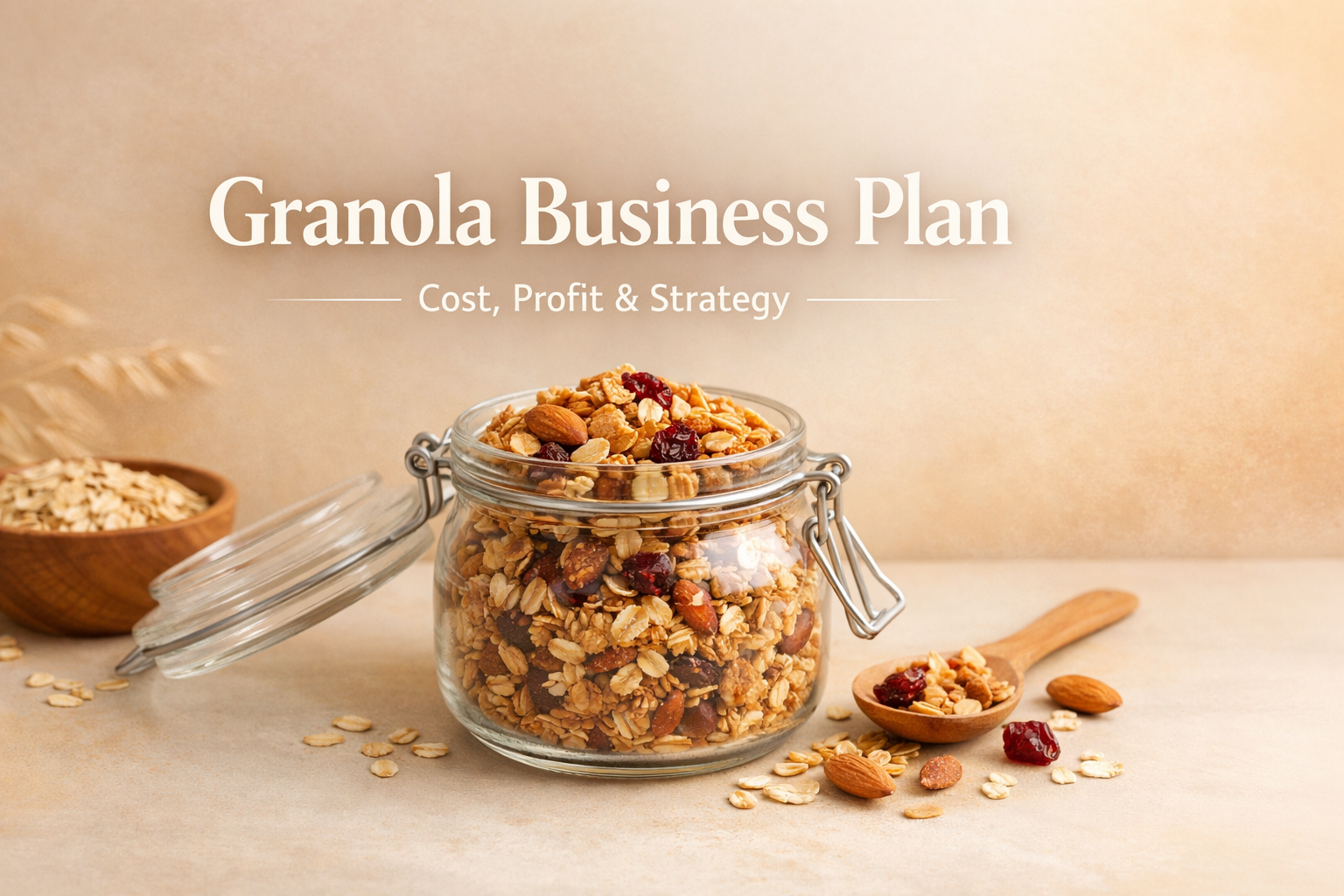
A granola business is one of the most beginner-friendly food startups you can launch today. You make and sell healthy granola products through online platforms, retail stores, or direct-to-consumer channels. The key to success lies in product quality, branding, pricing strategy, and distribution.
Low investment. High repeat purchases. Real brand potential.
What Is a Granola Business?
At its core, a granola business involves producing and selling:
- Granola mixes (loose, bagged)
- Granola snack bars
- Healthy breakfast packs and bundles
The target audience is not random. You are speaking to:
- Fitness enthusiasts looking for clean fuel
- Busy professionals who want a quick, healthy breakfast
- Health-conscious consumers reading every ingredient label
Here is the important reframe: this is not just a food business. It is a health and lifestyle brand opportunity. That distinction changes how you price, package, and position everything.
Why Start a Granola Business in 2026?
The timing is genuinely good. Here is what the market looks like right now:
- Demand for healthy snacks is rising steadily across urban India
- Fitness culture has gone mainstream, not niche
- Consumers are actively shifting toward clean-label, minimal-ingredient foods
- Granola has a high repeat purchase rate because it fits into daily habits
Breakfast and snacking are not occasional occasions. They happen every single day. That is why granola works as a business, not just as a product.
Business Model Overview
Before you make a single batch, you need to understand how the money flows.
Revenue Streams
- Direct product sales (per pack or bundle)
- Subscription boxes (weekly or monthly delivery)
- Bulk and wholesale supply to cafes or gyms
- Private labeling for other brands
Sales Channels
- Your own D2C website
- Marketplaces like Amazon and Flipkart
- Local stores, gyms, and organic shops
- Instagram and WhatsApp (often underestimated, extremely effective)
Start with one or two channels. Master them before expanding.
Types of Granola Products You Can Sell
The product variety is real, but do not let it overwhelm you at launch.
- Classic granola (oats, honey, nuts)
- Protein granola (added whey or plant protein)
- Keto granola (low carb, nut-heavy)
- Vegan granola (no dairy, no honey)
- Granola bars (portable, snack-format)
- Custom mixes (personalized or seasonal)
Founder tip: Start with two or three SKUs only. Complexity kills early-stage businesses. Nail a small range before you expand.
Step-by-Step Granola Business Plan
Market Research First
Do not skip this step. Before you spend a rupee:
- Study who your competitors are and what they charge
- Read customer reviews on Amazon and Flipkart for existing granola brands
- Understand what buyers complain about (taste, packaging, price, quantity)
That gap in complaints is your opportunity.
Product Development
- Test your recipe multiple times, not just once
- Run shelf-life testing (crucial for food safety and retail)
- Choose packaging that preserves freshness and looks premium
Branding and Positioning
This is where most small food businesses underinvest.
- Choose a brand name that is clean, memorable, and health-adjacent
- Invest in a proper logo and packaging design
- Pick a health positioning and own it: “no refined sugar,” “high protein,” “made with real nuts”
Your branding is your first salesperson.
Legal and Licensing
In India, you need:
- FSSAI license (mandatory for any food business)
- GST registration if your turnover crosses the threshold
- Local municipal or shop license if selling from a premises
Do not delay licensing. It builds trust and protects you.
Pricing Strategy
Use a cost-plus-margin model:
- Calculate your total cost per unit (ingredients, packaging, labor, overhead)
- Add your desired margin (typically targeting 40% to 60% gross margin)
- Check if that final price fits your positioning (premium vs. budget)
Do not race to the bottom on price. Granola sells on perceived value, not lowest cost.
Sales Setup
- Build a basic website or landing page (even a simple one works)
- List on Amazon or Flipkart with strong product photos
- Set up an Instagram page with consistent, health-focused content
Cost Breakdown
Initial Costs to Expect
- Raw materials (oats, nuts, seeds, sweeteners)
- Packaging (pouches, labels, boxes)
- Branding and design (logo, label design)
- FSSAI and business licensing
- Equipment (oven, mixing bowls, weighing scale, sealer)
You can realistically start at a small scale for between Rs. 20,000 and Rs. 50,000.
Monthly Operating Costs
- Ingredients (scales with production volume)
- Marketing (Instagram ads, influencer collaborations)
- Delivery and logistics
- Marketplace platform fees
Keep fixed costs low in the early months. Work from a home kitchen legally before moving to a commercial setup.
Profit Margin and Revenue Potential
Here is what the numbers can look like:
- Typical gross margins: 30% to 60%
- Premium positioned brands: Often higher due to perceived value
A simple example:
| Item | Amount |
|---|---|
| Cost to produce one pack | Rs. 120 |
| Selling price | Rs. 299 |
| Gross profit per pack | Rs. 179 |
The margin holds only if your branding justifies the price. Weak branding forces discounts. Strong branding lets the price stand.
Marketing Strategy
Instagram-First Branding
Instagram is the primary discovery channel for food brands in India right now.
- Post Reels showing your preparation process (behind the scenes works)
- Share health-focused content (recipes, nutritional tips, breakfast ideas)
- Be consistent. Three to four posts per week minimum.
Influencer Marketing
- Partner with fitness creators who align with your brand values
- Work with dieticians and nutritionists for credibility
- Micro-influencers (10k to 100k followers) often deliver better ROI than large accounts
Content Marketing
- Write blogs on healthy eating, breakfast habits, and clean nutrition
- Optimize for search terms your customers are already typing
- This builds long-term organic traffic you do not have to pay for
Sampling Strategy
Physical sampling builds trust faster than any ad.
- Approach local gyms and offer free samples
- Set up at yoga studios or wellness events
- Let the product speak first. Purchase follows.
WhatsApp Selling
This channel is underrated.
- Build a customer contact list from day one
- Send new flavor launches, offers, and restocks directly
- Repeat buyers are your most valuable customers. WhatsApp keeps them close.
Founder insight: Granola sells through trust and visuals, not paid ads alone. Build both before scaling spend.
Packaging and Branding Strategy
Packaging is not decoration. It is a sales tool.
- Use eco-friendly packaging where possible (it adds perceived value)
- Keep the design minimal and premium-looking
- Display nutritional information clearly and honestly
- Use resealable pouches for convenience
Reality check: a brilliant product in poor packaging will lose to a good product in great packaging. Every single time.
Distribution Strategy
Start close, then scale outward.
Phase one: Local
- Supply to nearby cafes and coffee shops
- Approach fitness centers and gyms
- Stock at organic and health food stores
Phase two: Online
- Launch on your own website
- List on Amazon, Flipkart, and health-focused platforms
Why this order matters: Offline trust and word of mouth fuel online growth. When someone buys your granola at their gym, they often look you up online later.
Challenges to Prepare For
Be honest with yourself about what is hard:
- High competition from established D2C brands and large FMCG players
- Shelf-life management requires proper testing and packaging
- Pricing pressure especially on marketplaces with heavy discounting
- Customer retention is harder than first acquisition
Most granola brands do not fail because of a bad product. They fail because of weak branding and no clear reason for a customer to come back.
Growth Strategy
Once your foundation is stable, here is how to scale:
- Launch a subscription model (weekly or monthly granola delivery)
- Expand your product line into bars, trail mixes, or overnight oat kits
- Enter quick commerce platforms like Blinkit and Zepto for impulse purchases
- Build and communicate a strong brand story (who started it, why, what you stand for)
Story sells. Especially in the health food space.
A Simple Starting Model That Works
You do not need a factory to begin. Here is a practical path:
- Produce from your home kitchen (with FSSAI registration)
- Sell via Instagram DMs and WhatsApp first
- Grow to Amazon and your own website as orders increase
- Move to a commercial kitchen once production volume demands it
This is not theory. Many successful Indian food brands started exactly this way.
Conclusion
Granola is not just a product. It is a brand play.
The founders who succeed in this space are not necessarily the best bakers. They are the ones who understand positioning, build visual brands, and stay consistent long enough to earn customer trust.
Start small. Focus obsessively on quality. Price with confidence. The biggest opportunity in this market is not in production, it is in how you present and position what you make.
Frequently Asked Questions
Yes, with margins between 30% and 60%, it can be highly profitable. The key is strong branding that justifies your price point.
You can begin for Rs. 20,000 to Rs. 50,000 at home-kitchen scale. Costs increase as you professionalize packaging and production.
Yes. An FSSAI license is mandatory for any food business, even home-based ones.
Proper roasting, airtight resealable packaging, moisture-control sachets, and avoiding fresh ingredients that spoil quickly.
Start with Instagram and WhatsApp for direct sales. Then expand to Amazon, Flipkart, and your own website.
Discover more from Business Model Hub
Subscribe to get the latest posts sent to your email.