
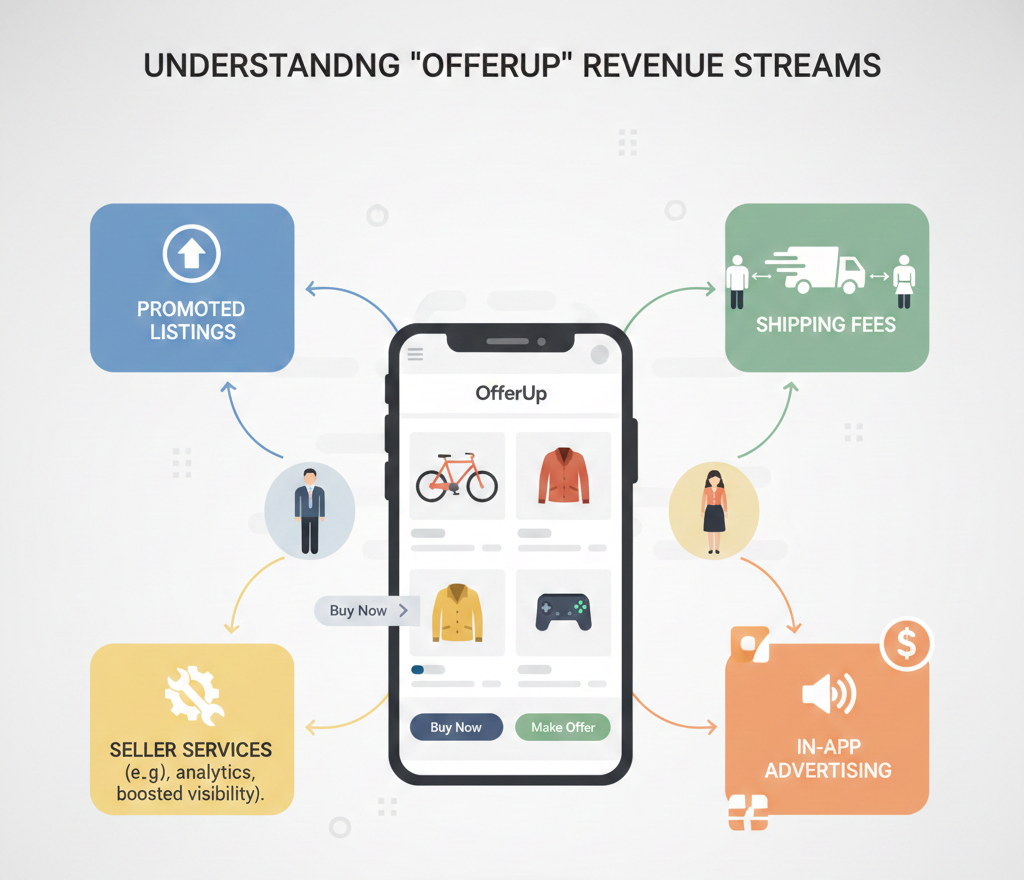
Short answer: OfferUp operates on a local peer-to-peer marketplace business model, connecting buyers and sellers within nearby locations. The platform is free to use for basic listings and earns revenue through promoted listings, shipping fees, and seller services.
To understand how OfferUp turned local classifieds into a scalable marketplace, we need to look at how trust, proximity, and optional monetisation power its business model.
What Is OfferUp?
OfferUp launched in 2011 as a mobile-first alternative to Craigslist, founded by Nick Huzar and Arean van Veelen in Bellevue, Washington. The app emerged from a simple frustration: selling items locally was clunky, unsafe, and outdated.
What problem does OfferUp solve? Traditional classifieds like Craigslist were web-based, text-heavy, and often sketchy. OfferUp brought local selling into the smartphone era with photo-first listings, built-in messaging, and user ratings that made transactions feel safer and faster.
Core users include everyday people decluttering their homes, side hustlers flipping goods, and small business sellers looking for local customers. Whether it’s a couch, a bicycle, or baby clothes, OfferUp connects people who live nearby.
The core promise is straightforward: list an item in seconds, connect with local buyers instantly, and complete transactions without the hassle of shipping or dealing with strangers online. It’s Craigslist meets Instagram, designed for your neighborhood.
OfferUp’s Core Business Model Explained
Peer-to-Peer Marketplace Model
OfferUp operates as a two-sided marketplace, meaning it doesn’t buy or sell anything itself. Instead, it provides the platform where local buyers and sellers find each other. The company owns no inventory, handles no warehousing, and doesn’t manage shipping logistics for local pickups.
Proximity is the secret sauce. Unlike Amazon or eBay, OfferUp focuses on location-based discovery. When you open the app, you see items within a few miles of your current location. This hyperlocal approach reduces shipping costs, speeds up transactions, and builds community-level trust.
The model works because both sides benefit immediately: sellers get fast cash without shipping headaches, and buyers score deals on items they can inspect in person before paying.
Free-First Platform Strategy
OfferUp’s growth strategy relies on free access as the default. Anyone can download the app, list unlimited items, browse thousands of listings, and message sellers without paying a cent. This removes friction and encourages rapid user growth.
Monetisation comes later, layered on top as optional services that enhance visibility or convenience. This approach prioritizes liquidity over immediate revenue—more users mean more listings, which attract more buyers, creating a self-reinforcing cycle. Free access builds the marketplace; paid features extract value from those who want an edge.
How OfferUp Makes Money
Promoted Listings
Promoted listings are OfferUp’s primary revenue driver. Sellers pay to boost their items to the top of search results and category feeds, increasing visibility among local buyers. Think of it as a fast pass for your listing.
For someone selling a high-value item like a car or furniture set, spending $5–$20 to promote the listing can mean the difference between selling in hours versus weeks. The promoted post appears above organic listings, catching buyers’ attention immediately.
This model works because it’s optional and performance-based. Casual sellers can still succeed without paying, while motivated sellers who want faster results can invest in promotion. OfferUp benefits from both: free listings fill the marketplace, while promoted listings generate revenue.
Shipping and Transaction Fees
OfferUp expanded beyond local-only transactions by adding a nationwide shipping option. When sellers choose to ship items, OfferUp charges transaction fees (typically around 12.9% of the sale price plus payment processing fees).
This revenue stream includes:
- Payment processing fees for handling secure transactions
- Buyer and seller protection services that cover fraud or disputes
- Shipping label integration that simplifies logistics
Shipping fees represent a significant revenue opportunity because they apply to every shipped transaction, creating predictable, scalable income as the platform grows.
Seller Services and Tools
OfferUp offers premium tools for serious sellers, especially those running small businesses or selling regularly. These services include:
- Listing enhancements like additional photos or featured placement
- Business seller features such as bulk listing tools and analytics dashboards
- Performance insights showing view counts, engagement rates, and market pricing data
These paid services target power users who treat OfferUp as a business channel rather than a one-off garage sale. By catering to this segment, OfferUp captures higher lifetime value from its most active sellers.
Advertising Opportunities
Like most marketplace apps, OfferUp monetizes through in-app advertising. Local businesses, dealerships, and national brands pay to reach OfferUp’s engaged audience through:
- Category-based ads targeting users browsing specific items (e.g., car ads for auto shoppers)
- Local promotions from nearby businesses looking for foot traffic
- Brand placements within the app’s discovery feeds
Advertising works particularly well on OfferUp because users signal clear purchase intent by browsing specific categories. A person searching for baby gear is likely in-market for related products, making ad targeting highly effective.
Trust and Safety as Core Infrastructure
Trust isn’t just a feature on OfferUp—it’s the foundation of the entire business model. Without trust, people won’t meet strangers to buy used goods, and the marketplace collapses.
OfferUp invests heavily in trust mechanisms:
- User profiles and ratings create reputation systems where buyers and sellers review each other after transactions
- Identity verification through phone numbers, email, and optional government ID checks
- In-app messaging keeps communication on-platform, reducing scams that happen via off-site contact
- Secure payment options protect both parties and create transaction records
- Fraud prevention systems flag suspicious listings, fake accounts, and common scam patterns
These safety features aren’t just nice-to-have—they’re essential infrastructure that enables monetisation. People won’t pay to promote listings on a platform they don’t trust, and they won’t use shipping features without buyer protection. Trust converts casual browsers into active participants.
Buyer and Seller Experience Flow
The OfferUp experience is designed for speed and simplicity:
For sellers:
- Snap a photo of the item
- Add a quick description and price
- Post in seconds
- Respond to buyer messages in-app
- Arrange pickup or shipping
For buyers:
- Browse local listings by category or search
- Filter by distance, price, and condition
- Message sellers with questions
- Negotiate price through chat
- Meet locally or pay for shipping
The chat-first approach is critical. Unlike Craigslist’s email system, OfferUp’s real-time messaging feels like texting a friend. Negotiations happen faster, reducing the time from listing to sale. This speed benefits everyone: sellers get cash quickly, buyers snag items before someone else does, and OfferUp captures more completed transactions.
Technology and Platform Logic (Non-Technical)
Behind OfferUp’s simple interface sits sophisticated technology:
Location-based search uses GPS data to show you items nearby first, automatically ranking results by distance. The closer an item, the higher it appears in your feed.
Feed ranking algorithms don’t just sort by proximity. They factor in listing quality (better photos rank higher), seller reputation, recency, and engagement signals like how many people viewed or favorited an item.
Image recognition helps categorize items automatically. Upload a photo of a couch, and OfferUp’s AI suggests “Furniture > Sofas” as the category, reducing listing friction.
Smart notifications alert buyers when items in their saved searches drop in price or when sellers post new inventory. These nudges drive engagement and close deals faster.
Customer Acquisition Strategy
OfferUp’s growth engine runs on organic, network-driven acquisition:
Word-of-mouth is the primary channel. When someone buys a great item on OfferUp, they tell friends. When a seller makes $500 cleaning out their garage, they encourage others to try it. Each successful transaction creates new advocates.
App store optimization ensures OfferUp appears when people search for “sell stuff near me” or “local marketplace.” High ratings and millions of downloads create a virtuous cycle of visibility.
Local network effects are powerful. Once OfferUp reaches critical mass in a city, it becomes the default platform for local buying and selling. Sellers go where buyers are; buyers go where listings are. First-mover advantage in a metro area creates a moat.
Trust-led retention loops mean that verified, highly-rated users become sticky. They’ve built reputation capital on the platform, making it costly to switch to competitors.
Cost Structure (Where OfferUp Spends Money)
Running a marketplace isn’t cheap. OfferUp’s major expenses include:
Platform development: Engineers constantly improve the app, add features, fix bugs, and optimize performance. Mobile-first platforms require ongoing investment to stay competitive.
Trust and safety operations: Human moderators review flagged listings, investigate fraud reports, and handle disputes. AI helps, but high-stakes decisions require human judgment.
Customer support: Users need help with account issues, transaction problems, and technical bugs. Support teams handle tickets, emails, and in-app inquiries.
Marketing and partnerships: While word-of-mouth drives growth, OfferUp still invests in brand awareness campaigns, influencer partnerships, and local community events.
Payment and fraud management: Processing payments securely, preventing chargebacks, and detecting fraudulent transactions all cost money and require specialized infrastructure.
Unit Economics Explained Simply
OfferUp’s profitability depends on a few key metrics:
Revenue per active seller: How much does the average seller spend on promoted listings, shipping fees, or premium features over their lifetime?
Cost of moderation and safety: How much does it cost to keep the platform safe and functional per user or per transaction?
Promoted listing efficiency: Do promoted listings generate enough incremental revenue to justify the platform’s investment in ad infrastructure?
Local scale matters because dense marketplaces are more efficient. In a city with 100,000 active users, one moderator can oversee more activity than in ten cities with 10,000 users each. Network density improves unit economics.
OfferUp vs Competitors (Quick Comparison)
OfferUp vs Facebook Marketplace
Facebook Marketplace leverages an existing social network with billions of users, giving it instant distribution. However, OfferUp offers a more focused, purpose-built experience. On Facebook, buying and selling competes with news feeds, group posts, and friend updates. OfferUp users open the app specifically to transact, creating higher intent.
OfferUp also has stronger trust systems. Facebook profiles can be fake or minimal. OfferUp’s ratings and verification create clearer reputation signals.
OfferUp vs Craigslist
Craigslist is free, simple, and established, but it’s stuck in web 1.0. Text-heavy listings, anonymous email exchanges, and minimal trust mechanisms make transactions risky. OfferUp’s mobile-first design, in-app messaging, and user ratings feel modern and safer.
Craigslist’s advantage? Zero monetization pressure means no promoted listings or fees. For some users, especially those comfortable with its quirks, Craigslist remains the go-to.
App-Based UX vs Web Classifieds
OfferUp’s mobile-first approach isn’t just aesthetic—it’s strategic. Smartphones enable GPS-based search, push notifications, and instant messaging. You can browse listings on your couch, message a seller, and drive to pick up an item within an hour. Web classifieds can’t match that convenience.
Challenges in OfferUp’s Business Model
Fraud and scam prevention is an endless battle. Scammers evolve tactics, from fake listings to phishing schemes. OfferUp must constantly invest in detection systems and education to protect users.
Monetizing casual sellers is tricky. Most users sell occasionally—a few times per year when moving or decluttering. They’re unlikely to pay for promoted listings. OfferUp’s revenue depends on converting a small percentage of users into frequent, paying sellers.
Competition from free platforms puts pricing pressure on OfferUp. Facebook Marketplace charges nothing for local listings. If OfferUp pushes too hard on monetization, users might migrate to completely free alternatives.
Balancing growth with trust creates tension. Rapid user acquisition can flood the platform with low-quality listings or bad actors. Slower, more controlled growth preserves trust but limits short-term revenue.
What You Can Learn from OfferUp
Local network effects are powerful. Once a marketplace dominates a geography, it’s hard to displace. Focus beats breadth in early stages.
Trust enables monetization. Users won’t pay for features on platforms they don’t trust. Invest in safety and reputation systems before pushing revenue.
Free access drives liquidity. Charging for basic listings would kill OfferUp’s growth. Free participation builds the marketplace; paid enhancements monetize it.
Optional monetization scales better than mandatory fees. Let users choose when and how to pay, and they’ll stick around longer.
Future of OfferUp’s Business Model
Expansion of shipping features will likely continue. As OfferUp competes with national marketplaces like eBay and Poshmark, robust shipping infrastructure becomes essential.
More tools for business sellers could unlock higher revenue per user. Small businesses and resellers represent OfferUp’s most valuable segment. Premium analytics, bulk tools, and inventory management features could justify subscription models.
Improved discovery algorithms using AI will surface better recommendations, increasing conversion rates and user satisfaction. Personalized feeds keep people browsing longer.
Stronger trust and verification layers, like integrated ID checks or escrow services, could expand into higher-value categories like cars and electronics, where trust barriers currently limit transactions.
Conclusion
Why OfferUp works: It recognized that local commerce needed a mobile-first, trust-enabled platform. By focusing on proximity, simplicity, and safety, OfferUp carved out a defensible niche in a crowded market.
Marketplace discipline over aggressive monetization keeps users loyal. OfferUp resists the temptation to extract maximum short-term revenue, instead building long-term value through network effects and user trust.
Trust and simplicity as long-term advantages create a moat. Competitors can copy features, but they can’t easily replicate years of user reviews, verified accounts, and community reputation. OfferUp’s patient approach to monetization letting the marketplace grow first, then layering in revenue streams—demonstrates how to build a sustainable platform business in an age of free alternatives.
Discover more from Business Model Hub
Subscribe to get the latest posts sent to your email.






[…] an auction model, while Facebook Marketplace leveraged social connections and community groups. OfferUp competed most directly with Letgo, also targeting local C2C resale before the two eventually merged. […]