
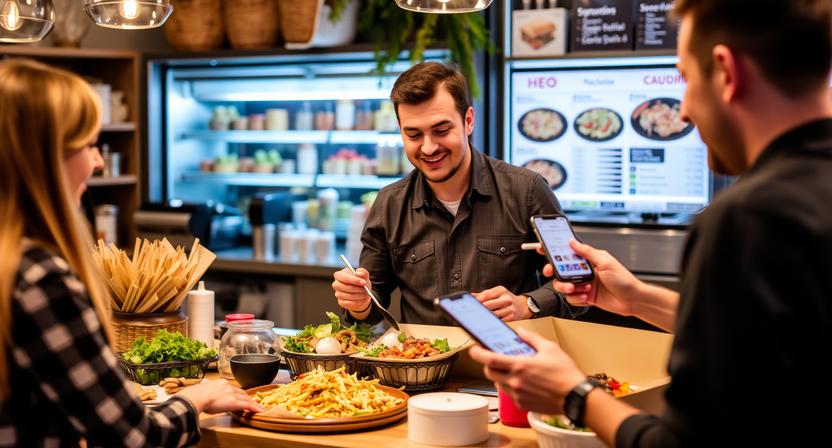
If you’ve ever ordered food online in the United States, chances are you’ve encountered Grubhub. What appears as a straightforward app experience browse restaurants, select dishes, place an order is actually backed by a sophisticated marketplace business model that orchestrates connections between restaurants, customers, and delivery partners.
This article examines Grubhub’s business model in depth, exploring how the platform generates revenue, the services it provides to different stakeholders, and why it remains relevant in an increasingly competitive food delivery landscape.
Understanding Grubhub: More Than Just a Delivery App
Grubhub operates as an online food ordering and delivery platform that serves the United States market. The platform enables customers to browse nearby restaurants, place orders online, and choose between delivery or pickup options. What distinguishes Grubhub from traditional restaurant operations is its role as an intermediary it doesn’t prepare food or operate restaurants. Instead, it facilitates transactions and creates value by connecting different parties in the food delivery ecosystem.
Founded in 2004, Grubhub established itself during the early days of online food ordering. The company later became part of Just Eat Takeaway, one of the world’s largest food delivery conglomerates, reflecting the global consolidation trend in the industry.
The Three-Sided Marketplace Model
At its core, Grubhub operates a three-sided marketplace business model. This structure connects three distinct groups, each with different needs and motivations:
Customers who want convenient access to restaurant food without leaving their homes or offices. They seek variety, speed, and reliability in the ordering process.
Restaurants that want to expand their reach beyond walk-in customers and phone orders. They need access to a larger customer base and the technology infrastructure to manage online orders efficiently.
Delivery partners who want flexible earning opportunities by transporting food from restaurants to customers.
The genius of this model lies in how Grubhub creates value for all three sides simultaneously. Customers get convenience and choice, restaurants get more orders and visibility, and delivery partners get income opportunities. Grubhub positions itself at the center of these interactions, facilitating transactions and earning revenue in the process.
How the Grubhub Ecosystem Functions
The operational flow of Grubhub demonstrates the platform’s efficiency and scalability. Here’s how a typical transaction unfolds:
A customer opens the Grubhub app or website and browses available restaurants in their area. After selecting a restaurant and building their order, they submit it through the platform. Grubhub immediately transmits this order to the restaurant, which begins food preparation.
At this point, the delivery logistics branch into two pathways. Either the restaurant handles delivery using its own staff, or Grubhub coordinates delivery through its network of independent delivery partners. This flexibility allows Grubhub to work with restaurants of all sizes and operational capabilities.
The customer pays through the platform, and Grubhub processes the transaction, takes its commission and fees, and remits the remainder to the restaurant. This seamless flow, repeated millions of times across thousands of restaurants, demonstrates why platform businesses can scale so effectively.
Revenue Streams: How Grubhub Generates Income
Grubhub’s financial model relies on multiple revenue streams rather than a single income source. This diversification provides stability and increases the platform’s overall profitability potential.
Restaurant Commissions: The Primary Revenue Driver
The foundation of Grubhub’s revenue comes from commissions charged to restaurants on every order processed through the platform. These commissions typically range from 10% to 30% of the order value, with the exact percentage depending on several factors.
Restaurants that use Grubhub’s delivery services pay higher commissions than those handling their own delivery. Additionally, restaurants can opt for enhanced visibility and promotional features, which command premium commission rates. The contract type and negotiated terms also influence the final commission structure.
This model ensures that Grubhub’s revenue scales directly with order volume. As restaurants receive more orders through the platform, Grubhub’s earnings grow proportionally, creating aligned incentives between the platform and its restaurant partners.
Delivery Fees: Monetizing Logistics
When Grubhub manages the delivery process, it generates revenue from both sides of the transaction. Customers pay a delivery fee that varies based on factors like distance, order value, and time of day. Simultaneously, restaurants contribute through delivery-related commissions that cover the cost of logistics coordination.
This dual-revenue approach allows Grubhub to offset the significant expenses associated with managing a delivery network while maintaining competitive pricing for customers.
Grubhub+: The Subscription Advantage
Grubhub offers a subscription service called Grubhub+, which represents a strategic move toward recurring revenue. Subscribers pay either a monthly or annual fee in exchange for benefits including free delivery on eligible orders, reduced service fees, and exclusive promotional offers.
Subscription models are particularly valuable for platform businesses because they provide predictable, recurring revenue streams. Subscribers also tend to order more frequently, increasing overall platform engagement and transaction volume.
Restaurant Marketing and Sponsored Placements
Grubhub has developed an advertising ecosystem within its platform, similar to how Amazon and Google monetize search visibility. Restaurants can pay for premium placement in search results, featured listings on the homepage, and the ability to run targeted promotions and discounts.
This marketing revenue stream benefits both Grubhub and participating restaurants. Restaurants gain increased visibility and order volume, while Grubhub generates income without processing additional orders or handling additional deliveries.
Corporate and Group Ordering Services
Grubhub serves business customers through corporate catering and large-order services. Companies use the platform to manage office lunches, cater events, and provide meal benefits to employees. These corporate orders typically have higher average values than individual consumer orders, making them particularly profitable despite potentially requiring more coordination.
Comprehensive Service Portfolio
Grubhub has evolved beyond simple food ordering to offer a comprehensive suite of services for both restaurants and customers.
The core online ordering platform provides restaurants with menu listing capabilities, order management systems, secure payment processing, and mobile and web accessibility. These tools allow restaurants to establish an online presence without investing in their own technology infrastructure.
For delivery, Grubhub offers flexibility through both restaurant-managed and platform-managed options. This accommodates restaurants with existing delivery capabilities while providing support to those without.
The platform also provides sophisticated analytics and business intelligence tools. Restaurants receive data on order patterns, customer preferences, peak ordering times, and menu performance. These insights enable data-driven decision-making around pricing, menu optimization, and operational efficiency.
Marketing tools allow restaurants to run targeted campaigns, offer time-sensitive promotions, create loyalty programs, and reach previous customers with new offerings. This transforms Grubhub from a passive listing service into an active growth partner for restaurants.
Diverse Customer Segments
Grubhub’s market includes multiple customer segments, each with distinct needs and behaviors. Individual consumers represent the largest segment, including people ordering meals at home, students seeking convenient and affordable options, and working professionals looking for quick lunch solutions.
Restaurant partners range from independent local establishments to national chains and modern cloud kitchens that operate exclusively through delivery platforms. This diversity ensures that Grubhub can serve various cuisines, price points, and dining preferences.
Business customers, including companies ordering for offices, event organizers, and enterprises with regular catering needs, provide stable, high-value order volume that balances the variability of consumer demand.
Why Restaurants Continue Using Grubhub
Given the substantial commissions Grubhub charges, many observers question why restaurants maintain these partnerships. The answer lies in practical business considerations.
Grubhub provides access to a massive customer base that restaurants couldn’t reach independently. The platform handles all marketing, technology, and customer acquisition costs, allowing restaurants to focus on food preparation and quality. For many establishments, orders through Grubhub represent incremental revenue that wouldn’t exist without the platform’s reach and convenience.
The technology infrastructure Grubhub provides would cost restaurants significantly to build and maintain independently. Additionally, the brand visibility and discoverability that comes from being listed on a major platform helps restaurants compete in crowded markets.
Competitive Landscape and Challenges
Grubhub faces intense competition from DoorDash, Deliveroo, and other delivery platforms. Its competitive advantages include strong existing relationships with restaurants, early market presence that established brand recognition, comprehensive restaurant management tools, and robust corporate ordering capabilities.
However, competitive pressure has forced adaptations. Grubhub has reduced commission rates in some markets, enhanced its subscription offering to improve customer retention, and focused more heavily on maintaining existing restaurant partnerships rather than purely pursuing growth.
Profitability remains challenging due to high delivery costs, driver compensation, aggressive competition requiring marketing spending, and the need to balance commission rates with restaurant satisfaction. These challenges are common across the food delivery industry, where most platforms prioritize market share and scale over immediate profitability.
Key Insights from Grubhub’s Business Model
Examining Grubhub from a business strategy perspective reveals several important lessons. Successful marketplace models require multiple revenue streams to remain sustainable. Grubhub demonstrates that in platform businesses, supply-side partners (restaurants) can be more valuable revenue sources than demand-side customers.
Subscription services provide stability and predictability that transaction-based models alone cannot deliver. Managing logistics, while expensive, provides greater control over customer experience and creates additional revenue opportunities. Finally, retention and lifetime value matter more than raw user acquisition numbers, particularly in competitive markets.
Conclusion
Grubhub exemplifies how platform-based business models can operate at massive scale. Without owning a single restaurant or preparing any food, the company facilitates millions of transactions by efficiently connecting supply and demand.
For entrepreneurs, marketers, and business strategists, Grubhub demonstrates how convenience can be monetized, how marketplaces grow through strategic partnerships, and how services naturally evolve beyond initial core offerings. As digital platforms continue reshaping traditional industries, Grubhub’s model provides valuable lessons in building, scaling, and sustaining marketplace businesses in competitive environments.
Discover more from Business Model Hub
Subscribe to get the latest posts sent to your email.



[…] that lives entirely in the digital world. Customers discover you on food delivery apps like Grubhub, DoorDash, Uber Eats, or Swiggy, place their orders online, and your food gets delivered to their […]
[…] an “anything delivery” platform not just food competing head-to-head with DoorDash and Grubhub in America’s most densely packed urban […]