Haidilao Business Model: How Haidilao Turns Hot Pot Into a Service Empire

Haidilao makes money by operating premium hot pot restaurants that combine affordable food pricing with exceptional customer service, high table turnover, and strong brand loyalty turning dining into an experience rather than just a meal.
Why it works: Haidilao doesn’t compete on food alone. It competes on service obsession, staff empowerment, and operational efficiency that creates memorable experiences customers happily pay for and eagerly recommend.
What Is Haidilao?
Haidilao International Holding is a Chinese hot pot restaurant chain that has revolutionized the dining industry through its legendary customer service. Founded in 1994 by Zhang Yong in Jianyang, Sichuan Province, what started as a small four-table restaurant has grown into a global empire with hundreds of locations across China, Asia, North America, Europe, and Australia.
Unlike typical restaurant chains that compete primarily on food quality or price, Haidilao has built its reputation on creating unforgettable dining experiences. The brand has become synonymous with service excellence in China and is frequently studied in business schools worldwide as a case study in customer experience design, employee empowerment, and operational efficiency.
Today, Haidilao is listed on the Hong Kong Stock Exchange and serves millions of customers annually, proving that exceptional service can transform a traditional restaurant business into a premium brand with fierce customer loyalty.
Haidilao’s Core Value Proposition
Haidilao’s success stems from a distinctive value proposition that goes far beyond serving hot pot. The company has mastered the art of creating emotional connections with customers through several key elements.
Extreme customer-centric service sits at the heart of everything Haidilao does. From the moment customers arrive—often before they even enter the restaurant they’re treated to a level of attention rarely seen in casual dining. Free manicures while waiting, complimentary snacks and beverages, phone screen cleaning, and even entertainment for children transform what could be a frustrating wait into an enjoyable experience.
The company delivers a consistent dining experience across all locations, whether you’re eating in Beijing, Singapore, or Los Angeles. This consistency builds trust and reduces customer risk when trying new locations, creating a reliable brand promise that travels with expansion.
Haidilao occupies an affordable luxury positioning that makes premium service accessible. While prices are slightly higher than average hot pot restaurants, they remain within reach of middle-class diners who appreciate the value of exceptional service without breaking the bank.
Perhaps most importantly, Haidilao creates emotional connections with customers through genuine care and attention. Staff members remember regular customers, celebrate birthdays with enthusiasm, and go out of their way to accommodate special requests building loyalty that transcends rational price comparisons.
The brand has even turned waiting time into entertainment, recognizing that in busy urban markets, waits are inevitable. Rather than viewing this as a problem, Haidilao transformed it into an opportunity to delight customers before they even sit down.
How Haidilao Makes Money
Haidilao’s revenue model is straightforward but executed with exceptional efficiency across multiple streams that work together to maximize profitability.
Dine-In Restaurant Sales
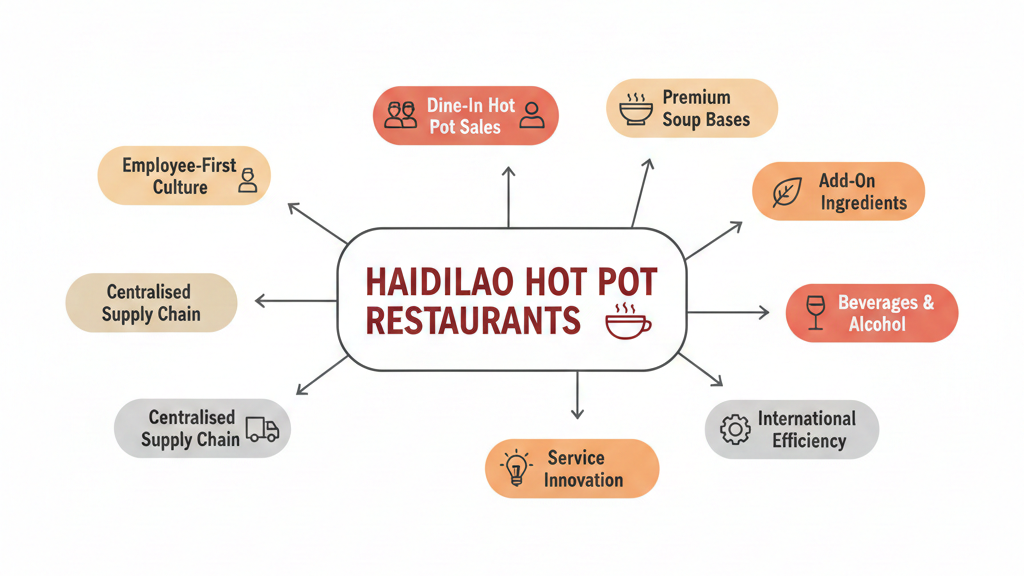
The core revenue driver remains traditional dine-in service, where customers pay for their hot pot experience. This includes the main hot pot meals, premium soup bases that form the foundation of the dining experience, and custom ingredients and add-ons that allow personalization. Unlike all-you-can-eat competitors, Haidilao uses an à la carte model that encourages customers to order exactly what they want while creating opportunities for upselling premium ingredients.
Value-Added Services
Beyond basic meals, Haidilao generates additional revenue through paid private rooms that offer more intimate dining experiences, special soup upgrades featuring rare or premium ingredients, and premium ingredient selections like wagyu beef, fresh seafood, and specialty vegetables that carry higher margins.
Alcohol and Beverages
Like most restaurants, beverages represent a high-margin category for Haidilao. The company offers an extensive selection of alcohol and soft drinks, often creating bundled dining offers that increase average transaction values while enhancing the overall experience.
International Expansion Revenue
As Haidilao expands globally, international outlets contribute an increasing share of revenue. The company maintains a company-owned model rather than franchising, allowing it to capture full margins while controlling quality. Overseas markets often support higher pricing due to the novelty of authentic Sichuan hot pot and the premium positioning of the brand in international markets.
Haidilao’s Cost Structure
Understanding Haidilao’s costs reveals how the company balances premium service with profitability.
Raw food ingredients represent a significant but controlled expense. Through centralized procurement and supply chain efficiency, Haidilao manages ingredient costs while maintaining quality standards that support its premium positioning.
Employee salaries and benefits constitute one of the largest cost categories, but this is a strategic investment rather than a burden. Haidilao pays above-market wages and provides comprehensive benefits, recognizing that happy, well-compensated employees deliver the service quality that differentiates the brand.
Training and service costs are substantial and ongoing. New employees undergo extensive training in service standards, food safety, and the company’s unique culture of empowerment. This upfront investment pays dividends through better customer experiences and lower staff turnover.
Rent and restaurant operations follow typical restaurant industry patterns, though Haidilao’s high table turnover rates allow the company to generate more revenue per square foot than competitors, making even expensive locations profitable.
Technology and logistics support represent growing investments as Haidilao modernizes operations. The company has invested heavily in supply chain technology, inventory management systems, and even robotic kitchens in some locations to improve efficiency and consistency.
Haidilao’s Customer Experience Strategy
What truly sets Haidilao apart is how it reimagines every touchpoint of the customer journey. The experience begins before customers even enter the restaurant. Those waiting for tables receive free snacks, drinks, and entertainment options including board games, manicures, and shoe shines. Children can play in dedicated areas while parents relax, transforming wait time from a frustration into a value-added experience.
Inside the restaurant, the service intensifies. Staff offer phone screen cleaning services, provide hair ties and aprons, and constantly refill drinks and snacks without being asked. Birthdays are celebrated with songs and special treats. Customers dining alone receive a stuffed animal companion at their table to keep them company.
The most revolutionary aspect is staff empowerment to resolve complaints instantly. Haidilao employees at all levels have authority to comp meals, offer discounts, or provide free dishes without manager approval. This empowerment creates genuine problem-solving rather than scripted responses, turning potential negative experiences into loyalty-building moments.
This personalized service culture extends to remembering regular customers’ preferences, dietary restrictions, and special occasions. The goal isn’t just satisfaction—it’s creating memorable experiences that customers actively want to share with others.
Employee-First Business Model
Haidilao’s service excellence doesn’t happen by accident—it’s the direct result of how the company treats its employees. This employee-first philosophy represents a fundamental departure from typical restaurant industry practices and explains why Haidilao can consistently deliver exceptional service at scale.
The company pays high staff salaries compared to industry average, often 20-30% above market rates for similar positions. But compensation goes beyond base pay. Employees receive performance bonuses, profit-sharing opportunities, and clear pathways to advancement that make restaurant work a viable career rather than a temporary job.
Haidilao’s internal promotion system ensures that nearly all managers are promoted from within, creating powerful incentives for frontline staff to excel. Success stories of employees rising from dishwashers to restaurant managers are celebrated and shared, making advancement feel achievable rather than theoretical.
The company provides housing and welfare support unusual in the restaurant industry. Many locations offer employee dormitories or housing subsidies, particularly valuable in expensive urban markets. Healthcare benefits, paid time off, and family support programs demonstrate genuine investment in employee wellbeing.
This comprehensive approach produces low attrition compared to competitors. While the restaurant industry typically sees annual turnover rates of 70-100%, Haidilao maintains significantly lower rates, reducing recruitment and training costs while building institutional knowledge and service expertise.
The connection is clear: happy staff leads to loyal customers. Employees who feel valued and fairly compensated naturally provide better service. They stay longer, accumulate experience, and develop genuine relationships with regular customers—creating a virtuous cycle that competitors struggle to replicate.
Operational Efficiency Behind the Scenes
While Haidilao is famous for customer-facing service, operational excellence behind the scenes makes the entire model sustainable and scalable.
The company operates a centralized supply chain that sources ingredients, processes them to exact specifications, and distributes to restaurants with remarkable consistency. This central kitchen model ensures that soup bases taste identical whether you’re in Shanghai or San Francisco while capturing economies of scale in procurement and preparation.
Standardized cooking processes reduce variability and training time. Since hot pot involves customers cooking their own food, Haidilao focuses on perfecting soup bases, ingredient preparation, and timing rather than complex kitchen techniques. This standardization allows for faster staff training and more consistent quality.
Technology-driven inventory management minimizes waste while ensuring availability. Sophisticated forecasting systems predict demand patterns, automated ordering maintains optimal stock levels, and real-time tracking reduces spoilage—all critical in a business dealing with fresh, perishable ingredients.
Perhaps most importantly, Haidilao achieves high table turnover rates that maximize revenue per seat. Through efficient service, strategic waiting area design that makes delays tolerable, and subtle encouragement of appropriate dining pace, the company serves more customers per table per day than competitors without making diners feel rushed.
Haidilao’s Marketing Strategy
Remarkably, Haidilao has built a globally recognized brand with minimal traditional advertising spend. The company’s marketing success demonstrates that exceptional experiences create more powerful promotion than paid campaigns.
Word-of-mouth driven growth fuels expansion. Customers naturally share remarkable service experiences with friends, family, and colleagues. In Chinese culture particularly, restaurant recommendations carry significant weight, and Haidilao’s consistent delivery on its service promise makes it a frequent recommendation.
Social media virality amplifies this organic sharing. Customers photograph and video their experiences—the tableside noodle dance performance, the surprise birthday celebration, the complimentary manicure—and share across platforms like WeChat, Weibo, Instagram, and TikTok. This user-generated content reaches millions without Haidilao spending on advertising.
Customer-generated content provides authentic marketing that paid campaigns can’t match. Genuine enthusiasm from real customers carries more credibility than branded messages. Food bloggers, influencers, and everyday diners create countless reviews, videos, and posts that maintain Haidilao’s visibility and reinforce its reputation.
The company maintains no heavy reliance on paid advertising, instead investing those resources into the service experience itself. Every dollar spent improving service generates more authentic marketing than traditional advertising could buy, creating a sustainable competitive advantage built on experience rather than brand messaging.
Global Expansion Strategy
Haidilao’s international growth demonstrates both ambition and careful strategy. Unlike many restaurant chains that expand through franchising, Haidilao maintains direct ownership and control of virtually all locations globally.
The company-owned outlets over franchising model requires more capital but preserves quality control and service standards. Haidilao’s leadership believes the service culture is too complex and critical to trust to franchisees who might prioritize short-term profits over long-term brand building.
Adaptation to local tastes occurs while maintaining core identity. International menus include familiar ingredients alongside traditional offerings, soup base spice levels adjust to local preferences, and operating hours reflect regional dining patterns. However, the fundamental service approach remains consistent—customers anywhere should recognize the Haidilao experience.
Maintaining service standards internationally presents significant challenges. Language barriers, different labor markets, varying customer expectations, and cultural differences in service norms require careful navigation. Haidilao addresses this through extensive training, expat managers who can transfer culture, and willingness to invest in market education.
Challenges in non-Asian markets remain substantial. Hot pot is unfamiliar to many Western diners, the do-it-yourself cooking model can feel uncomfortable, and the collectivist dining style contrasts with more individualistic Western preferences. Success in these markets requires educating consumers while adapting to local preferences without compromising core identity.
Competitive Advantage
Haidilao’s success naturally attracts imitators, but several factors make the business model extremely difficult to replicate.
Service culture takes years to build and cannot be copied overnight. Competitors can offer free manicures and snacks, but creating the genuine empowerment, employee satisfaction, and cultural commitment that produces exceptional service requires sustained investment and cultural transformation that most organizations struggle to achieve.
Employee incentive alignment at Haidilao runs deeper than simple wages. The comprehensive benefits, advancement opportunities, and profit-sharing create genuine stakeholder mindset among employees rather than transactional employment. Replicating this system requires restructuring compensation, promotion, and culture—expensive and disruptive changes most competitors avoid.
Strong operational discipline ensures consistency across hundreds of locations. Supply chain efficiency, training systems, quality control, and performance management all require sophisticated systems and processes developed over decades. Building equivalent capabilities demands time, expertise, and capital investment that shortcuts can’t overcome.
Emotional brand loyalty represents perhaps the most defensible advantage. Customers don’t just prefer Haidilao—they love it, recommend it enthusiastically, and pay premium prices for it. This emotional connection transcends rational comparison shopping and creates pricing power competitors can’t match simply by copying surface features.
Key Metrics That Drive Haidilao’s Business
Understanding Haidilao’s success requires examining the specific metrics the company optimizes.
Average spend per customer balances accessibility with profitability. Haidilao targets a sweet spot where prices feel reasonable for the experience delivered while generating sufficient margin to fund the service model. Tracking this metric helps ensure pricing remains aligned with value perception.
Table turnover rate drives revenue density. Since fixed costs like rent don’t vary with usage, serving more customers per table per day directly improves profitability. Haidilao carefully manages this through efficient service and waiting area design without compromising the relaxed dining experience.
Customer repeat rate measures loyalty and satisfaction. New customer acquisition costs far exceed retention costs, so high repeat rates dramatically improve economics. Haidilao’s focus on memorable experiences specifically targets this metric, creating customers who return regularly rather than trying the brand once.
Staff retention rate impacts both costs and service quality. High retention reduces recruitment and training expenses while building expertise and institutional knowledge. Tracking this metric helps Haidilao validate that employee investments produce the desired engagement and commitment.
Risks and Challenges in Haidilao’s Business Model
Despite its success, Haidilao faces several significant challenges that could impact future performance.
Rising labor costs threaten the fundamental economics of the service model. As Chinese wages increase and international labor markets tighten, maintaining above-market compensation while preserving margins becomes increasingly difficult. Automation can help but cannot fully replace the human service that defines the brand.
Service consistency at scale becomes harder as the company grows. Cultural dilution, training challenges, quality control, and maintaining standards across diverse markets all pressure consistency. Each new market and location increases complexity, and eventually organizational size may compromise the nimbleness and culture that created success.
Economic slowdowns impacting dine-out spending create cyclical risk. Hot pot dining is discretionary spending that often decreases during recessions. While loyal customers may continue visiting, frequency typically declines, and new customer acquisition becomes harder when household budgets tighten.
International market adaptation risks involve both operational and strategic dimensions. Misreading local preferences, regulatory challenges, supply chain complexity, and cultural misunderstandings can all derail expansion. International failures could damage the brand while consuming capital that could be deployed more productively in core markets.
What Startups Can Learn From Haidilao
Haidilao’s journey offers powerful lessons for entrepreneurs across industries, not just restaurants.
Service is a growth lever, not a cost. Most businesses view service as an expense to minimize, but Haidilao demonstrates that exceptional service creates differentiation, pricing power, and marketing efficiency that drive profitable growth. Investing in service quality generates returns that exceed costs when executed strategically.
Invest in people before marketing. Haidilao spends relatively little on advertising but invests heavily in employee compensation, training, and benefits. This prioritization creates the customer experience that generates organic marketing more powerful than paid campaigns. Happy employees create happy customers who become brand advocates.
Experience creates pricing power. Customers pay premium prices not for better food—hot pot ingredients are relatively undifferentiated—but for the total experience. Creating memorable, shareable experiences allows companies to escape commodity pricing and capture value proportional to the satisfaction delivered.
Systems matter more than hype. Haidilao’s success stems from operational excellence—supply chain efficiency, training systems, quality control, performance management—rather than clever marketing or founder charisma. Sustainable competitive advantage requires building systems and processes that competitors cannot easily replicate.
Final Takeaway
Haidilao proves that operational excellence combined with extreme service focus can turn a traditional restaurant business into a globally respected brand without relying on tech platforms or heavy advertising. The company’s success challenges conventional wisdom about restaurant economics, demonstrating that premium service models can scale profitably when supported by the right culture, systems, and employee investments.
The Haidilao model works because all elements reinforce each other: exceptional service creates loyal customers and organic marketing, reducing acquisition costs. Employee investment produces the service quality that differentiates the brand and justifies premium pricing. Operational efficiency funds service investments while maintaining margins. Strong culture ensures consistency as the company scales globally.
For businesses in any industry, Haidilao demonstrates that competing on experience rather than just product or price creates defensible advantages and passionate customer loyalty. The challenge is committing to the long-term investments in people, systems, and culture required to deliver consistently exceptional experiences investments most competitors are unwilling or unable to make. This commitment separates businesses that achieve sustainable differentiation from those that remain stuck competing on price in undifferentiated markets.
Discover more from Business Model Hub
Subscribe to get the latest posts sent to your email.