
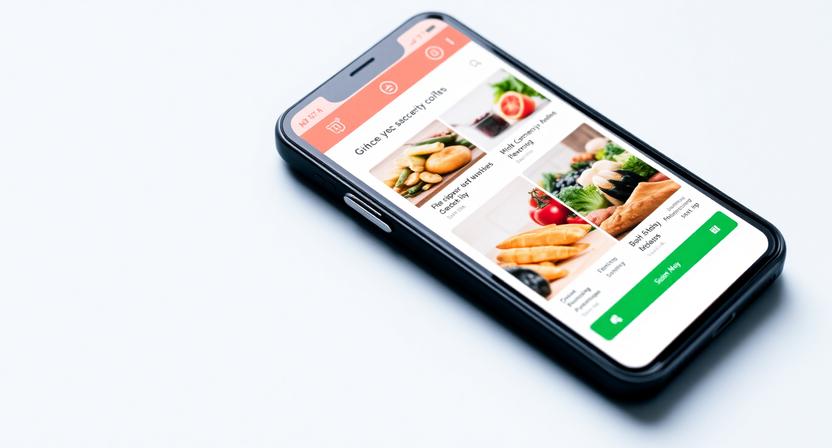
Imagine craving midnight snacks or running out of milk for your morning coffee and getting it delivered to your doorstep in just 10 minutes. This isn’t magic, it’s Zepto. In an era where convenience is currency, Zepto has redefined grocery shopping by making instant gratification not just possible but expected. But behind those lightning-fast deliveries lies a complex business model that’s fundamentally different from traditional e-commerce or food delivery platforms.
Let’s unpack how Zepto actually makes money and what makes this quick commerce phenomenon tick.
What is Zepto? Understanding the Quick Commerce Pioneer
Zepto burst onto the Indian startup scene in 2021 with a bold promise that seemed almost impossible: grocery delivery in 10 minutes. Founded by two Stanford dropouts, Aadit Palicha and Kaivalya Vohra, the company was built on a deceptively simple insight that challenged conventional e-commerce wisdom.
The traditional model kept large warehouses on city outskirts where real estate was cheap, leading to delivery times measured in hours or days. Zepto flipped this entirely with one core principle: keep inventory extremely close to customers, not far away in distant fulfillment centers.
Unlike food delivery platforms like Zomato or Swiggy that connect you with restaurants, Zepto operates fundamentally differently. The company owns its inventory outright, purchasing products in bulk from brands and distributors. It operates hundreds of small neighborhood warehouses called dark stores that are strategically positioned within high-density urban areas. Most importantly, Zepto controls the entire fulfillment process end-to-end, from receiving inventory to picking products to last-mile delivery.
This vertical integration makes Zepto more akin to a hyperlocal retail chain than a marketplace platform. The company bears inventory risk, manages supply chains, and owns the complete customer experience from app click to doorstep delivery.
The Core Business Model: Inventory-Led Quick Commerce
At its foundation, Zepto operates an inventory-led quick commerce business model, which represents a significant departure from the marketplace models that dominate Indian e-commerce.
Here’s how the model works in practice. Zepto purchases groceries, snacks, household essentials, and daily necessities in bulk from manufacturers, distributors, and wholesalers at negotiated wholesale prices. These products are then stored in compact dark stores, typically ranging from 2,000 to 4,000 square feet, strategically located in dense residential neighborhoods. When customers place orders through the Zepto app, trained pickers inside these dark stores quickly assemble the items, and delivery partners stationed at the same location immediately dispatch orders to reach customers within the promised 10-minute window.
Importantly, there’s no third-party seller, no restaurant partner, and no external marketplace dynamics. Zepto acts simultaneously as the retailer making margin on product sales and the logistics company executing ultra-fast delivery. This dual role creates both the opportunity for higher profits and the burden of significant operational complexity.
Revenue Streams: How Zepto Actually Makes Money
Product Margins: The Primary Cash Generator
The backbone of Zepto’s revenue comes from the fundamental retail equation: buy low, sell at market rate, keep the difference. This product margin represents Zepto’s largest income source and determines the viability of the entire business model.
The mechanics are straightforward but the execution is nuanced. Zepto purchases groceries and essentials at wholesale rates, often securing volume discounts by buying in bulk. It then sells these products at maximum retail price or near-MRP to customers. The spread between the wholesale purchase price and the retail selling price constitutes Zepto’s gross margin.
However, not all products yield equal margins. FMCG products from established brands like Colgate, Maggi, or Parle carry relatively thin margins, typically in the range of 8% to 15%, because these brands maintain strict pricing discipline and customers know the expected prices. Fresh produce including fruits, vegetables, and dairy offers moderate margins in the 15% to 25% range but comes with higher wastage risk and inventory management challenges. The real margin goldmine lies in private label products, Zepto’s own branded items that can deliver margins exceeding 30% to 40% because there’s no brand premium being paid to external manufacturers.
Scale becomes absolutely critical in this model. A 10% margin on a ₹300 order yields just ₹30, barely enough to cover delivery costs. But multiply that across lakhs of daily orders and the math starts working. Additionally, as order volumes grow, Zepto gains negotiating leverage with suppliers to secure better wholesale rates, further improving margins.
Delivery and Platform Fees: Sharing the Logistics Burden
Beyond product margins, Zepto charges customers various fees that help offset the substantial costs of ultra-fast delivery. These typically include small delivery fees ranging from ₹5 to ₹25 depending on order value, time of day, and location. Many users also encounter platform fees or handling charges, usually around ₹2 to ₹10 per order, which have become increasingly common across quick commerce platforms.
While these fees might seem negligible on an individual basis, the impact at scale is substantial. When you’re processing hundreds of thousands of orders daily, even a ₹5 platform fee translates to significant revenue. These fees serve multiple strategic purposes: they reduce per-order losses during the path to profitability, help customers value the convenience being provided rather than expecting everything free, and create revenue streams independent of product margins.
Importantly, Zepto has moved away from the unsustainable free delivery culture that plagued earlier e-commerce models. Customers increasingly understand that getting groceries delivered in 10 minutes isn’t free and are willing to pay reasonable fees for extraordinary convenience.
Advertising and Brand Promotions: The High-Margin Opportunity
As Zepto’s user base has grown into the millions, the platform has become extremely valuable real estate for FMCG brands seeking to reach urban consumers with high purchase intent. This has opened up advertising as an increasingly important and high-margin revenue stream.
Brands now pay Zepto for premium visibility through several mechanisms. Sponsored product placements ensure that a brand’s chips or cookies appear prominently when users browse snack categories. Homepage banner slots capture attention during the critical first seconds of app usage. Category takeovers allow brands to dominate specific sections like beverages or personal care during promotional campaigns.
What makes advertising revenue particularly attractive is the margin profile. Unlike selling physical products that require procurement, storage, and delivery, advertising is nearly pure margin. There’s minimal incremental cost to showing a sponsored product higher in search results or featuring a brand banner. For FMCG companies, Zepto’s platform offers something Google or Facebook cannot: the ability to reach consumers at the exact moment they’re making purchase decisions, with the ability to buy instantly within the same app.
As Zepto matures and captures more consumer attention, advertising could evolve from a supplementary revenue stream to a significant profit driver, similar to how Amazon’s advertising business has become one of its most profitable divisions.
Private Label Products: Building a Margin Moat
One of Zepto’s most strategic long-term moves has been the development of private label products, items sold under Zepto’s own brand names rather than established national brands. These span categories from staples like rice and pulses to snacks, beverages, and household cleaning products.
Private labels matter enormously for several reasons. They deliver substantially higher margins because Zepto captures the entire value chain from manufacturing to retail without paying brand premiums. They provide better pricing control, allowing Zepto to optimize for profitability or competitiveness based on market dynamics. They reduce dependence on large FMCG brands who might eventually try to bypass platforms and sell directly to consumers. And they create customer loyalty when users find private label products that match or exceed branded alternatives at better prices.
Many successful retailers, from Costco’s Kirkland Signature to Amazon’s Basic brands, have demonstrated that private labels can eventually contribute 20% to 30% of revenue while driving disproportionate profitability. Zepto appears to be following this proven playbook, gradually expanding its private label SKUs across categories.
The Cost Structure: Where Money Flows Out
Quick commerce is operationally intensive and capital-heavy, resulting in a complex cost structure that Zepto must carefully manage to achieve profitability.
Dark store operations constitute one of the largest fixed costs. Each dark store requires monthly rent payments, often in prime urban locations where real estate is expensive. The stores need electricity, refrigeration for perishables, and climate control. They require trained staff for inventory management and order picking. This infrastructure must be maintained 24/7 in many locations to serve customer demand at all hours.
Inventory holding and wastage represent another significant expense. Zepto must purchase products before customers order them, tying up working capital in stock that might not sell immediately. Perishable items like fruits, vegetables, dairy, and bread have limited shelf life, leading to inevitable wastage when demand forecasts miss the mark. Sophisticated inventory management becomes critical to minimize losses while ensuring popular items never go out of stock.
Delivery partner compensation forms a major variable cost. Unlike gig workers who might handle multiple platform deliveries, Zepto’s delivery partners are often stationed at specific dark stores and focused exclusively on Zepto orders. They need competitive wages to maintain service quality and retention, especially given the demanding nature of making multiple 10-minute deliveries per hour.
Technology infrastructure, while less visible, requires substantial ongoing investment. The app must handle millions of users seamlessly. Backend systems need to optimize picker routes inside dark stores for fastest fulfillment. Algorithms must predict demand patterns at the neighborhood level to ensure optimal stocking. All of this requires talented engineers, robust servers, and continuous innovation.
Marketing and customer acquisition costs remain significant in a competitive market where Blinkit, Swiggy Instamart, and others fight for the same urban customers. While Zepto has reduced reliance on heavy discounts, promotional campaigns and brand building still require meaningful expenditure.
Why the 10-Minute Promise Matters
Zepto’s obsession with 10-minute delivery isn’t just clever marketing, it’s fundamental to the business model’s success and reflects a deep understanding of consumer psychology and competitive dynamics.
Ultra-fast delivery serves multiple strategic purposes. It dramatically increases order frequency as customers who previously planned weekly grocery trips now order multiple times per week for immediate needs. It builds habit-based usage where Zepto becomes the reflexive solution whenever any grocery need arises, not just major stock-ups. It justifies premium pricing by creating perceived value that extends beyond the products themselves to include extraordinary convenience. And it significantly improves customer retention as users who experience reliably fast delivery develop strong loyalty and switching costs.
The competitive moat this creates is substantial. Ten-minute delivery requires incredibly dense dark store networks that take years and substantial capital to build. Competitors can’t simply copy the promise without replicating the entire infrastructure. By being first and fastest to build this network, Zepto has established barriers to entry that protect its market position.
Most importantly, speed fundamentally changes the value equation. Customers tolerate higher prices or fees because they’re paying not just for groceries but for the ability to satisfy needs instantly. This transforms Zepto from a commodity grocery seller into a premium convenience service.
The Path to Profitability
The question everyone asks about quick commerce: can it actually make money? For Zepto, the answer is nuanced but increasingly positive.
Zepto isn’t yet fully profitable at the company level, but it has achieved profitability in several mature cities where operations are optimized and scale has been achieved. The company focuses intensely on unit economics, measuring metrics like contribution margin per order and variable costs relative to order value.
Several levers drive the path to profitability. Dark store efficiency improves dramatically as staff become more experienced, inventory placement gets optimized, and picking times decrease. Higher average order values spread fixed costs over more revenue, improving margins substantially. Reduced delivery times per order allow each delivery partner to complete more deliveries per shift, improving labor productivity. And increased private label penetration boosts overall margin profiles.
Quick commerce fundamentally is a long-term scale game rather than a short-term profit pursuit. The fixed costs of dark stores and technology infrastructure require high order volumes to justify. But once scale is achieved in a specific geography, the economics become quite attractive as incremental orders leverage existing infrastructure.
Competitive Landscape: Zepto vs The Rest
Understanding Zepto requires comparing it to other players in the food and grocery delivery ecosystem.
Zepto and Blinkit are most similar, both operating inventory-led models with their own dark stores and focusing on 10 to 15 minute grocery delivery. The primary revenue source for both is product margin rather than commissions. Zomato, while now owning Blinkit, traditionally operated a marketplace model for food delivery where restaurants fulfill orders and Zomato charges commissions. Swiggy sits somewhere in between, operating both marketplace food delivery and inventory-led quick commerce through Instamart.
The key distinction is that Zepto and Blinkit bear inventory risk and control the entire customer experience, while pure marketplace models like traditional food delivery platforms simply connect supply and demand without owning products.
Zepto’s Competitive Advantages
Several factors give Zepto a fighting chance in the intensely competitive quick commerce arena.
The dense dark store network stands out as the most tangible advantage. With hundreds of strategically located micro-warehouses, Zepto can reach more customers faster than competitors with fewer locations. Network density creates a compounding advantage where each additional dark store makes the entire system more valuable.
Operational discipline and execution excellence differentiate Zepto from competitors. The company obsesses over metrics like picker efficiency, measuring how quickly staff can assemble orders inside dark stores. It continuously optimizes SKU assortment, ensuring high-demand items are strategically placed while slow-moving products are removed. Sophisticated demand forecasting prevents both stock-outs and excess inventory.
The focus on urban, high-value consumers represents a strategic choice. Rather than trying to serve all customer segments, Zepto targets metros and affluent neighborhoods where order frequency and basket sizes are highest. This focus allows for better unit economics and more sustainable growth.
Risks and Challenges Ahead
Despite its promise, Zepto faces significant headwinds that could impact long-term success.
Thin grocery margins create limited room for error. Even small increases in costs or decreases in prices can swing individual orders from contribution positive to negative. High fixed costs from dark store rent and operations require sustained high volumes to justify. Unlike variable cost models that scale down during slow periods, Zepto’s infrastructure must be maintained regardless of demand.
Inventory wastage, particularly in perishable categories, can significantly erode margins if not managed precisely. Price sensitivity among Indian consumers limits pricing power, especially as quick commerce becomes more mainstream beyond just affluent early adopters. And intense competition from well-funded players like Blinkit (backed by Zomato), Swiggy Instamart, and potentially new entrants means constant pressure on margins and market share.
Execution determines survival in this space. Small operational missteps magnified across hundreds of dark stores and thousands of daily orders can quickly compound into major problems.
Future Growth Opportunities
Looking ahead, Zepto has multiple paths to expand and improve profitability.
Aggressive expansion of private labels across more categories could substantially improve margin profiles. Better advertising monetization as the user base grows could add high-margin revenue without operational complexity. Increasing average order values through strategic merchandising and bundling would improve unit economics. Selective geographic expansion into new cities that meet minimum density thresholds could multiply revenue without proportionally increasing costs. And operational automation, from robotic picking to AI-driven inventory management, could dramatically reduce labor costs over time.
The critical factor is sequencing: Zepto must become operationally efficient before aggressively scaling to new markets. Premature expansion into low-density markets or cities without sufficient order volumes could undermine the entire business model.
Conclusion: The Quick Commerce Equation
Zepto’s business model is conceptually simple but operationally complex. Success requires owning inventory with all its risks, controlling every aspect of delivery infrastructure, and building habit-based usage patterns that drive high-frequency orders.
The company wins by executing the fundamentals exceptionally well: keeping dark stores efficiently stocked, maintaining consistently fast delivery, managing margins carefully, and gradually reducing costs through scale and optimization.
Quick commerce remains one of the most challenging business models in Indian e-commerce, with thin margins, high capital requirements, and intense competition. But if Zepto successfully cracks unit economics at scale, it could emerge as a dominant force in local commerce, fundamentally changing how urban India shops for daily needs.
FAQs
What is Zepto’s business model?
How does Zepto make money?
Product margins on groceries and essentials
Delivery and platform fees
Brand advertising and sponsored listings
Private label product sales
Its main income comes from selling goods, not commissions.
Is Zepto a B2B or B2C company?
It sells groceries directly to consumers through its app, although it also earns B2B revenue from brand advertising and promotions
Is Zepto profitable?
Improving dark store efficiency
Increasing average order value
Reducing delivery costs
Expanding high-margin private labels
Quick commerce is a scale-driven business.
How is Zepto different from Blinkit?
Faster delivery (10 minutes)
Higher operational efficiency
Younger urban customers
Blinkit benefits from Zomato’s ecosystem, while Zepto operates as a standalone quick commerce player.
Does Zepto own its inventory?
Zepto owns and manages its inventory through local dark stores, which allows it to control pricing, availability, and delivery speed.
How does Zepto deliver in 10 minutes?
Small dark stores located near customers
Limited, fast-moving SKUs
Optimised picking and routing systems
This reduces last-mile delivery time significantly.
What are Zepto’s main competitors?
Blinkit
Swiggy Instamart
BigBasket (BB Now)
All operate in the quick commerce grocery space.
What is the future of Zepto’s business model?
Achieving unit-level profitability
Expanding private labels
Increasing ad monetisation
Improving logistics efficiency
If executed well, Zepto can become a default urban grocery platform.
Discover more from Business Model Hub
Subscribe to get the latest posts sent to your email.



[…] Zepto capturing Indian market share with aggressive expansion […]