
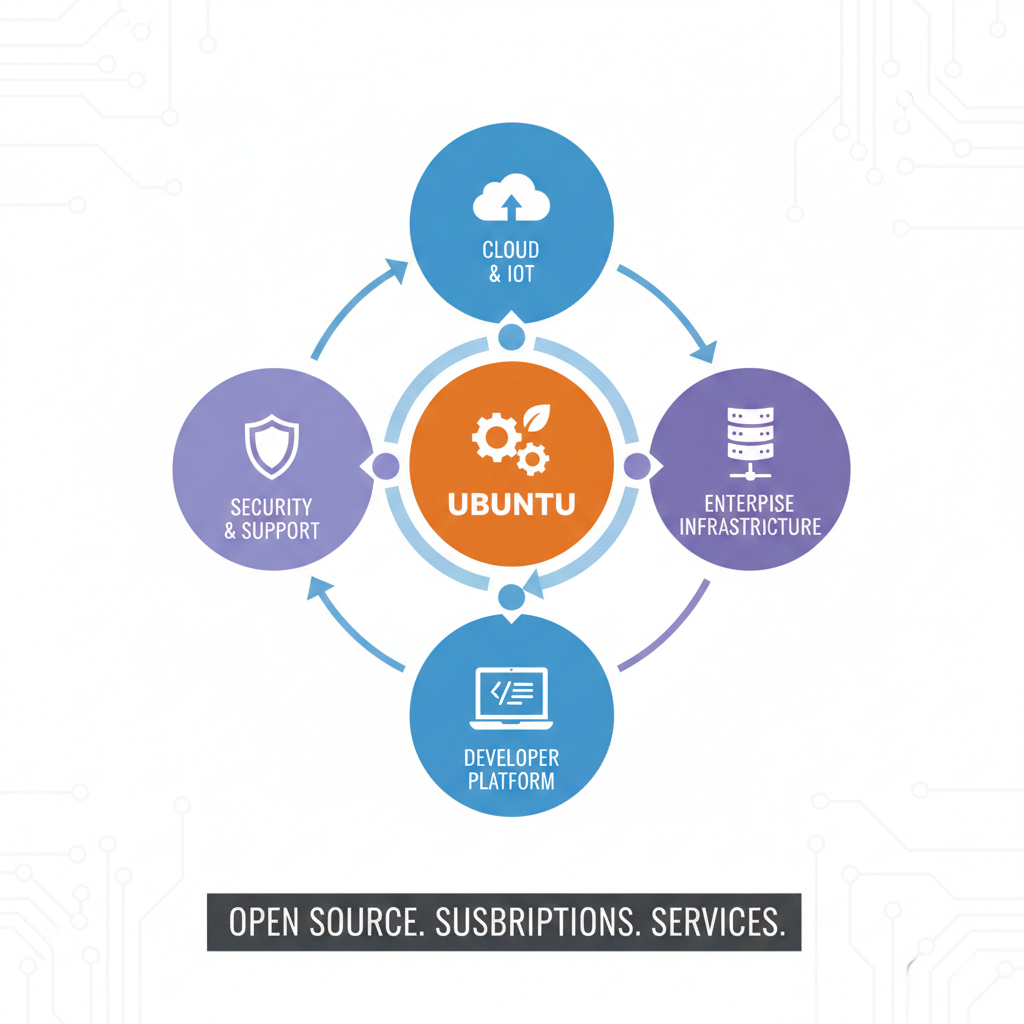
Ubuntu is completely free to use, but the company behind it, Canonical, earns money by selling enterprise-level support, security updates, cloud services, and managed infrastructure. While individuals and developers use Ubuntu at no cost, businesses and governments pay for reliability, compliance, and long-term maintenance.
Now let’s break this down properly.
What Is Ubuntu?
Ubuntu is a free and open-source Linux operating system launched in 2004. It is developed and maintained by Canonical Ltd, a privately owned UK-based company founded by Mark Shuttleworth.
Ubuntu is used across:
- Personal computers
- Servers
- Cloud infrastructure
- Containers & DevOps
- IoT and embedded systems
This wide usage is what enables its business model.
Who Owns Ubuntu?
- Owner: Canonical Ltd
- Founder: Mark Shuttleworth
- Type: Private company
- Headquarters: United Kingdom
Ubuntu is not a separate company it’s Canonical’s flagship product.
Ubuntu Business Model Explained
Ubuntu follows a freemium plus enterprise services model. This means the operating system itself is free for everyone, but Canonical earns money by selling paid services to organisations that depend on Ubuntu for critical operations.
The core idea is straightforward:
Canonical gives away Ubuntu at no cost so that developers, startups, and individuals can adopt it easily. As these users grow and start running Ubuntu in production environments, their needs change. They require strong security, guaranteed updates, compliance support, and professional technical assistance. This is where paid plans come in.
Instead of charging for the software licence, Canonical charges for:
- Reliability and uptime
- Enterprise-grade security updates
- Long-term support
- Professional and managed services
This approach is a proven and successful open-source business strategy because it builds massive adoption first and monetises only those users who genuinely need advanced support. Ubuntu remains free, while enterprises fund its long-term development and stability.
How Ubuntu Makes Money (Revenue Streams)
1. Ubuntu Pro (Enterprise Subscription)
This is Canonical’s main revenue source.
Ubuntu Pro is a paid subscription that offers:
- Extended security updates (up to 10 years)
- Compliance certifications (HIPAA, PCI-DSS, ISO)
- Live kernel patching
- Priority security fixes
Who pays for it?
- Enterprises
- Governments
- Financial institutions
- Healthcare organizations
Pricing is usually per machine per year, especially for servers and cloud workloads.
2. Enterprise Support & Consulting
Canonical sells:
- 24/7 enterprise support
- SLA-based support contracts
- Technical consulting
- Custom Ubuntu deployments
Large companies don’t want “community support” they want:
- Guaranteed uptime
- Dedicated engineers
- Accountability
That’s where Canonical earns.
3. Cloud & Kubernetes Services
Ubuntu is deeply integrated with:
- AWS
- Google Cloud
- Microsoft Azure
Canonical monetizes this through:
- Managed Kubernetes (Charmed Kubernetes)
- Cloud-optimized Ubuntu images
- Enterprise cloud support
Cloud providers promote Ubuntu because it’s lightweight and stable, and Canonical gets paid for enterprise usage.
4. IoT & Embedded Systems
Ubuntu Core is used in:
- Smart devices
- Robotics
- Industrial machines
- Automotive systems
Revenue comes from:
- Long-term support contracts
- Security maintenance
- Device management tools
This segment is growing fast.
5. Landscape (Systems Management Tool)
Landscape is Canonical’s paid system-management platform.
It helps enterprises:
- Manage thousands of Ubuntu machines
- Monitor updates and compliance
- Control access and configurations
This is sold as a subscription SaaS product.
Ubuntu Revenue: How Much Money Does Canonical Make?
Canonical is a private company, so exact revenue is not publicly disclosed.
However, based on:
- Investor statements
- Hiring scale
- Cloud partnerships
- Industry estimates
Estimated Revenue
- Estimated annual revenue: $200 million – $300 million+
- Profitability: Canonical confirmed profitability after 2022
- IPO plans: Canonical has openly discussed a future IPO
Unlike many open-source companies, Canonical runs a sustainable, profitable business without aggressive advertising or data selling.
Why Ubuntu Can Be Free and Still Profitable
This is the key insight.
Ubuntu’s Strategy:
- Individuals → Free forever
- Startups → Free initially
- Enterprises → Pay for reliability & security
Most users never pay, but the ones who do pay a lot.
This works because:
- Linux is mission-critical in enterprises
- Downtime costs millions
- Security risks are unacceptable
So companies happily pay Canonical.
Ubuntu Customer Segments
Ubuntu serves four major user groups:
- Individual users (free)
- Developers (mostly free)
- Startups (free → paid later)
- Enterprises & governments (paid)
Only the last group drives revenue.
Competitive Advantage of Ubuntu
Ubuntu has built several strong competitive advantages that help it remain one of the most widely used Linux distributions in the world.
1. Massive Developer Adoption
Ubuntu is the most popular Linux distribution among developers. It is easy to install, well-documented, and supported by a huge community. Because many developers learn and build on Ubuntu early in their careers, they naturally continue using it in production environments. This widespread adoption creates a powerful network effect and keeps Ubuntu relevant across startups and enterprises.
2. Strong Cloud Presence
Ubuntu dominates the cloud ecosystem. Most Linux virtual machines on platforms like AWS, Google Cloud, and Microsoft Azure run Ubuntu by default. Its lightweight performance, regular updates, and strong compatibility with cloud tools make it the preferred choice for cloud workloads. This deep cloud integration also strengthens Canonical’s enterprise and subscription revenue.
3. Long-Term Support (LTS)
Ubuntu’s Long-Term Support (LTS) releases provide security updates and maintenance for up to 5–10 years. Enterprises trust Ubuntu because of these predictable release cycles, which reduce operational risk and planning uncertainty. LTS versions allow companies to run stable systems without frequent upgrades, a critical requirement for large-scale infrastructure.
4. Open-Source Community
Ubuntu benefits from a large global open-source community that contributes code, bug fixes, and improvements. These free contributions lower development costs while accelerating innovation. At the same time, Canonical focuses its paid efforts on enterprise features, security, and support, creating an efficient and scalable development model.
Challenges in Ubuntu’s Business Model
Ubuntu also faces challenges:
- Competing with Red Hat (IBM-backed)
- Monetizing without alienating the open-source community
- Dependence on enterprise customers
- Balancing free access with paid features
Still, Canonical has managed this balance well.
Ubuntu vs Red Hat: Business Model Difference
| Aspect | Ubuntu (Canonical) | Red Hat |
|---|---|---|
| Ownership | Private | IBM |
| OS | Free Ubuntu | Paid RHEL |
| Monetization | Services & subscriptions | Mandatory subscriptions |
| Target | Cloud, DevOps, IoT | Large enterprises |
Ubuntu’s approach is more developer-friendly, while Red Hat is enterprise-first.
Key Business Insights from Ubuntu
Ubuntu offers several important lessons for modern software and platform businesses, especially those operating in open-source and enterprise technology markets.
1. Free Products Can Build Billion-Dollar Ecosystems
Ubuntu shows that giving away the core product can create enormous long-term value. By removing the cost barrier, Ubuntu achieved massive global adoption among developers, startups, and enterprises. This widespread usage built an ecosystem worth billions, even though the product itself is free. Monetisation happens later through services, not licenses.
2. Enterprises Pay for Peace of Mind
For large organisations, the real cost is not software it’s downtime, security breaches, and compliance failures. Ubuntu monetises this reality by selling security updates, compliance certifications, and guaranteed support. Enterprises are willing to pay because these services reduce risk and protect critical infrastructure.
3. Open Source Reduces Customer Acquisition Cost
Ubuntu grows largely through organic adoption. Developers install it for free, startups build on it, and cloud platforms recommend it by default. This significantly lowers Canonical’s customer acquisition cost compared to traditional software companies that rely on heavy sales and marketing spending.
4. Cloud Partnerships Are Critical
Ubuntu’s success is closely tied to major cloud platforms like AWS, Microsoft Azure, and Google Cloud. Being the default or preferred Linux distribution on these platforms gives Ubuntu massive exposure and credibility. These partnerships also create steady enterprise demand for paid support and managed services.
Is Ubuntu a B2B or B2C Business?
- Usage: B2C + B2B
- Revenue: 100% B2B
Individuals use Ubuntu, but businesses fund it.
Wrap Up
Ubuntu’s business model is a perfect example of modern open-source monetization.
- Free for users
- Paid for enterprises
- Profitable without ads
- Scalable across cloud, IoT, and DevOps
Canonical didn’t sell Ubuntu they sold trust, security, and reliability.
That’s why Ubuntu is still growing after 20+ years.
Discover more from Business Model Hub
Subscribe to get the latest posts sent to your email.






[…] use Ubuntu for […]