
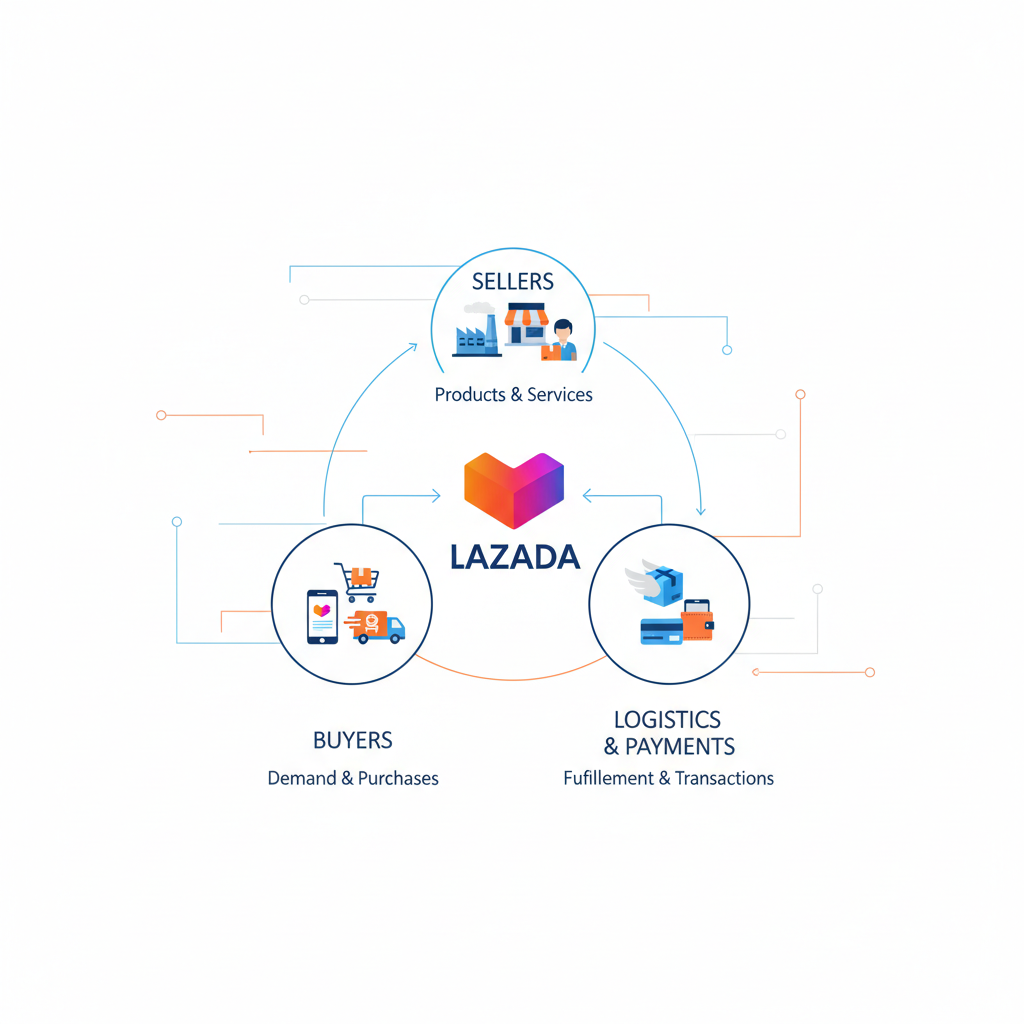
Lazada makes money by connecting sellers and buyers on its platform and earning through commissions, advertising, logistics services, seller tools, and value-added services, backed strongly by Alibaba’s technology and ecosystem.
Now let’s break this down properly step by step in a way that actually makes sense.
What Is Lazada?
Lazada is one of the largest eCommerce platforms in Southeast Asia, operating in countries like:
- Indonesia
- Thailand
- Vietnam
- Malaysia
- Philippines
- Singapore
Founded in 2012, Lazada was later acquired by Alibaba Group, which completely changed its scale, tech strength, and long-term vision.
Today, Lazada is not just an online shopping website.
It’s a full eCommerce ecosystem similar to Amazon, but deeply optimized for Southeast Asian markets.
Lazada’s Core Business Idea
Lazada follows a marketplace-first business model.
That means:
- Lazada does not sell most products itself
- It allows third-party sellers and brands to list products
- Buyers purchase from these sellers
- Lazada earns money by enabling and managing this ecosystem
Think of Lazada as a shopping mall:
- Sellers rent space
- Lazada manages traffic, payments, delivery, promotions, and trust
Lazada Business Model at a Glance
Here’s a simple breakdown:
| Aspect | Explanation |
|---|---|
| Platform Type | B2C + C2C Marketplace |
| Revenue Focus | Commission, ads, logistics, seller services |
| Target Users | Online shoppers + sellers |
| Ownership | Alibaba Group |
| Core Strength | Logistics + data + seller ecosystem |
Lazada’s Main Revenue Streams
Lazada does not rely on just one income source.
It uses multiple revenue streams, which makes the business more stable.
Let’s break them down one by one.
1. Seller Commission (Primary Revenue Source)
This is Lazada’s main way of making money.
How it works:
- Sellers list products on Lazada
- When a product is sold, Lazada takes a commission
- Commission varies by category (electronics, fashion, beauty, etc.)
Why this works well:
- Lazada earns only when sellers earn
- No inventory risk for Lazada
- Encourages platform growth
👉 This is the classic marketplace model, similar to Amazon and Shopee.
2. Advertising & Sponsored Listings
Just like Google Ads or Amazon Ads, Lazada offers paid visibility.
Sellers can:
- Promote products in search results
- Appear on homepage banners
- Run campaign-based ads during sales events
Why sellers pay:
- More visibility = more sales
- Competition on Lazada is high
- Organic reach is limited
For Lazada, this is a high-margin revenue stream.
3. Lazada Logistics (Lazada eLogistics – LEX)
This is a big strategic advantage.
Instead of depending fully on third-party couriers, Lazada built its own logistics network called LEX.
How Lazada earns here:
- Sellers pay for storage
- Sellers pay for order fulfillment
- Delivery fees are charged per shipment
Why this matters:
- Faster delivery
- Better customer experience
- Strong control over operations
- Extra revenue on every order
Alibaba’s logistics expertise plays a huge role here.
4. Lazada Fulfillment & Warehousing Services
Lazada offers something similar to Amazon FBA.
Sellers can:
- Store products in Lazada warehouses
- Let Lazada handle packing, shipping, and returns
Benefits:
- Faster deliveries
- Higher trust badges
- Better rankings
Revenue:
- Storage fees
- Handling fees
- Fulfillment charges
This pushes sellers to stay long-term on the platform.
5. Seller Subscriptions & Tools
Lazada provides premium seller tools.
These include:
- Advanced analytics
- Campaign access
- Store customization
- Seller education programs
Some tools are free, but advanced features come with paid plans or service charges.
6. Value-Added Services
Lazada earns extra income through:
- Packaging services
- Return handling
- Cross-border selling support
- Seller training programs
These services increase seller dependency on Lazada’s ecosystem.
Lazada’s Cross-Border Business Model
One unique strength is cross-border commerce, powered by Alibaba.
How it works:
- Sellers from China or other countries sell directly to SEA customers
- Lazada manages customs, logistics, and delivery
Why this is powerful:
- More product variety
- Competitive pricing
- Higher order volume
Lazada takes:
- Commission
- Logistics margin
- Service fees
Lazada’s Customer Value Proposition
Why do users choose Lazada?
For Buyers:
- Competitive prices
- Flash sales and mega campaigns
- Reliable delivery
- Easy returns
- Local language + payment options
For Sellers:
- Access to millions of users
- Strong logistics support
- Data-driven selling tools
- Alibaba-backed infrastructure
Lazada’s Key Cost Structure
Running Lazada is not cheap.
Major costs include:
- Logistics infrastructure
- Warehousing
- Technology development
- Marketing and discounts
- Seller onboarding
- Customer support
This is why Lazada focuses heavily on scale and ecosystem lock-in, not short-term profits.
Role of Alibaba in Lazada’s Business Model
Alibaba’s acquisition changed everything.
Alibaba provides:
- Cloud infrastructure
- AI-driven recommendations
- Payment tech
- Logistics expertise
- Capital support
This allows Lazada to compete with strong rivals like Shopee.
Lazada vs Shopee (Quick Comparison)
| Aspect | Lazada | Shopee |
|---|---|---|
| Parent Company | Alibaba | Sea Group |
| Focus | Ecosystem + logistics | Aggressive growth |
| Seller Tools | Advanced | Simple |
| Profit Strategy | Long-term | High burn |
Both models work but Lazada focuses more on operational depth.
Lazada’s Growth Strategy
Lazada grows through:
- Big sale events (11.11, 12.12)
- Mobile-first experience
- Seller education
- AI-based personalization
- Local partnerships
The goal is not just transactions but habit formation.
Challenges in Lazada’s Business Model
Despite its strength, Lazada faces challenges:
- Heavy competition
- High logistics costs
- Price-sensitive users
- Seller churn
- Profitability pressure
This is why Lazada keeps expanding services instead of depending on only commissions.
Is Lazada Profitable?
Lazada focuses more on market dominance than short-term profit.
With Alibaba’s backing:
- Losses are strategic
- Investments are long-term
- Ecosystem strength is priority
This is a common pattern in platform businesses.
What Can Founders Learn from Lazada?
Some real lessons:
- Build multiple revenue streams
- Control logistics if possible
- Support sellers deeply
- Think ecosystem, not just product
- Optimize for local markets
Conclusion
Lazada’s business model is not just about selling products online.
It’s about:
- Creating a strong marketplace
- Supporting sellers end-to-end
- Owning logistics and data
- Leveraging a powerful parent ecosystem
That’s why Lazada continues to be a key player in Southeast Asia’s eCommerce growth story.
FAQs
How does Lazada earn money?
Is Lazada making a profit?
How do sellers get paid on Lazada?
Is Lazada a B2C platform?
What is Lazada’s business model?
How does Lazada handle logistics and delivery partners?
What are Lazada’s marketplace fees and commission structure?
Commission fees (vary by product category and country)
Payment or transaction fees
Logistics and fulfillment fees (if Lazada logistics is used)
Optional advertising fees for sponsored listings and promotions
The exact fee structure depends on the seller type, category, and market.
How much revenue does Lazada earn from advertising services?
Why does Lazada focus so much on advertising and logistics?
Discover more from Business Model Hub
Subscribe to get the latest posts sent to your email.






[…] why Shopee dominates while Lazada struggles requires comparing their strategic approaches […]