

Grab started as a simple ride-hailing app in Southeast Asia, but today it functions as a true “super-app”—offering ride services, food and grocery delivery, financial services, payments, advertising and more. Over the past decade, Grab has expanded far beyond just mobility, building an ecosystem that millions of users rely on every day across multiple countries.
In this post, I’ll break down Grab’s core business model, its main revenue streams, key stats and financial performance from 2024 to 2025, why Grab is different from typical single-service apps, and the challenges and growth opportunities ahead.
What Is Grab? (Super-App for Southeast Asia)
Grab is a Singapore-listed technology company that operates digital services across eight countries in Southeast Asia, including Indonesia, Singapore, Malaysia, Thailand, Vietnam, the Philippines, Cambodia, and Myanmar.
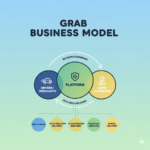
Originally launched in 2012 as a ride-hailing alternative to Uber, Grab has since evolved into a “super-app”—combining multiple everyday services under a single platform: ride-hailing and taxi services, food delivery, grocery and mart delivery, payments and wallets through GrabPay, lending and digital banking, advertising and subscriptions, and logistics and marketplace features.
This multi-service strategy enables Grab to earn money across different verticals, reducing reliance on any one source of revenue. The super-app model is particularly powerful in Southeast Asia, where smartphone penetration is high but traditional banking and retail infrastructure may be less developed than in Western markets.
By building a comprehensive ecosystem, Grab positions itself as an essential daily utility for millions of users. Instead of having separate apps for transportation, food delivery, payments, and banking, users can access everything through one platform. This convenience creates powerful retention effects and increases the frequency of user engagement.
How Grab Makes Money: Revenue Streams
Grab’s revenue model is diversified across several major business lines, each contributing to its growth and long-term sustainability. Here’s how Grab generates revenue across its ecosystem.
1. Mobility (Ride-Hailing Services)
This is Grab’s original service and still a core part of its business. The company makes money through commissions on each ride, service fees paid by riders, and other ride-related add-ons.
Drivers use the platform to find passengers, and Grab takes a cut of each fare. In 2024, the mobility segment generated over 1.04 billion dollars in revenue, growing about twenty percent year-over-year.
Mobility remains critical because it drives user acquisition and frequent app opens. Even if margins are lower than other segments, mobility brings users onto the platform who then discover and use other services. It’s the gateway to the broader ecosystem.
The ride-hailing market in Southeast Asia is highly competitive, but Grab has maintained leadership in most markets through network effects—more drivers attract more riders, which attracts more drivers, creating a self-reinforcing cycle.
2. Deliveries (Food & Mart Delivery)
Deliveries have become one of the largest revenue drivers, often surpassing mobility in GMV or Gross Merchandise Value. Grab charges delivery fees from customers and merchant commissions on orders.
In 2024, deliveries revenue reached about 1.49 billion dollars, growing fourteen percent over the previous year, driven by increased transactions and user engagement.
Deliveries also include advertising and premium delivery options, boosting higher-margin revenue streams. Restaurants and retailers pay for promoted placement within the app, and users can opt for faster delivery services at premium prices.
The pandemic accelerated food delivery adoption across Southeast Asia, and while growth has normalized, the habit of ordering food through apps has stuck. Grab benefits from being an established player with extensive restaurant partnerships and delivery infrastructure.
Grocery and mart delivery represents a growing opportunity. These orders tend to have higher basket sizes than restaurant orders, and the frequency of grocery shopping creates opportunities for recurring revenue.
3. Financial Services (Fintech)
Grab has aggressively expanded its fintech offerings, including GrabPay digital wallet, buy now pay later options, lending and micro-loans, and digital banking through ventures like GX Bank.
This segment is one of the fastest-growing. In early 2025, financial services revenue grew thirty-six to thirty-eight percent year-over-year, and the loan portfolio grew over sixty percent year-over-year, reaching hundreds of millions in outstanding loans.
Fintech brings higher margins compared to ride-hailing and delivery because financial products often carry greater profitability per customer. Payment processing fees, interest on loans, and fees for financial services all contribute to revenue without the heavy operational costs of physical logistics.
GrabPay has become particularly strategic. By controlling the payment layer, Grab reduces dependence on external payment processors, captures more transaction data to improve services, and creates additional monetization opportunities through the wallet ecosystem.
Digital lending fills a critical gap in Southeast Asian markets where many people are underbanked or lack access to traditional credit. Grab can leverage its transaction data to assess creditworthiness in ways traditional banks cannot, enabling it to serve customers who would otherwise be excluded from formal financial systems.
4. Advertising & Subscriptions
Grab earns revenue through advertising on the app for merchants and subscription plans like GrabUnlimited that offer monthly perks.
This category is smaller but growing quickly as merchant engagement increases. In the third quarter of 2025, the number of active advertisers was up significantly, and advertising spend by merchants rose by over forty percent year-over-year.
Advertising is particularly attractive because it’s high-margin. Once the platform infrastructure exists, incremental advertising inventory costs little to produce but can command meaningful prices from merchants competing for visibility.
Subscription services create predictable recurring revenue. Users who pay monthly for benefits like free delivery or discounts become more locked into the ecosystem and tend to transact more frequently, increasing lifetime value.
5. Logistics & Other Services
Grab also offers logistics and business solutions, such as last-mile delivery and B2B services. These contribute a smaller revenue share but expand Grab’s ecosystem reach.
By offering logistics solutions to businesses beyond just restaurants and grocers, Grab can monetize its extensive delivery network more fully. This includes services for e-commerce companies, retailers, and other businesses that need reliable last-mile delivery.
Grab Revenue Breakdown (2025 Snapshot)
According to recent analyses, the revenue mix estimate shows deliveries at approximately thirty-nine percent, mobility at approximately thirty-four percent, financial services at approximately nineteen percent, advertising and subscriptions at approximately five percent, and logistics and others at approximately three percent.
This diversified mix helps Grab reduce risk and increase customer lifetime value by capturing revenue from every stage of user interaction. If one segment faces headwinds, others can compensate. This diversification is a key strength of the super-app model.
Key Financial Stats (2024–2025)
Here are some of the most important recent metrics showing Grab’s growth and performance:
Total full-year 2024 revenue reached 2.797 billion dollars, representing nineteen percent year-over-year growth. On-demand GMV in 2024 hit 18.36 billion dollars, up sixteen percent year-over-year. Group monthly transacting users reached 41.3 million, growing sixteen percent year-over-year.
Fourth quarter 2024 revenue was 764 million dollars, up seventeen percent year-over-year. Second quarter 2025 revenue reached 819 million dollars, up twenty-three percent year-over-year. Third quarter 2025 revenue hit 873 million dollars, up twenty-two percent year-over-year.
Regarding profit and profitability, adjusted EBITDA hit record highs in 2024 at 313 million dollars. Grab has seen quarters with positive profit and improved margins, a sign its business model is maturing.
These numbers tell a story of accelerating growth and improving unit economics. The revenue growth is strong, but what’s more impressive is the path to profitability. Many super-apps and platform businesses struggle for years without reaching profitability. Grab’s achievement of positive adjusted EBITDA demonstrates that the business model can work at scale.
Why Grab’s Business Model Works
1. Super-App Network Effects
Grab’s strength lies in cross-selling multiple services to the same users. People who use ride-hailing are more likely to use deliveries. Users with GrabPay wallets are more likely to make frequent transactions. Fintech products increase stickiness and retention.
This creates strong platform loyalty and higher revenue per user. Instead of competing for single transactions, Grab builds relationships that span multiple use cases and increase over time. A user might start with ride-hailing, add food delivery, begin using GrabPay for convenience, and eventually take out a loan. Each additional service increases switching costs and deepens engagement.
2. Deep Regional Integration
Instead of copying a one-size-fits-all model, Grab tailors features to local markets across Southeast Asia—adapting payments, promotions, and services to fit each country’s culture and economy.
This localization matters tremendously. Southeast Asia isn’t a monolithic market. Indonesia, Singapore, Thailand, and the Philippines have different languages, regulations, consumer preferences, and infrastructure. Grab’s willingness to adapt to each market gives it advantages over competitors trying to apply global playbooks without modification.
3. Scalability from Digital Products
Services like fintech and advertising don’t require heavy physical infrastructure. This means higher margins, lower incremental costs per user, and faster scalability across markets.
As Grab grows, these digital products become increasingly important. They leverage the user base and transaction data built through mobility and delivery services but operate with fundamentally better economics. This mix of asset-heavy and asset-light businesses creates a more sustainable and profitable long-term model.
Challenges Grab Faces
Even with strong momentum, Grab’s model has challenges.
Competition
Rivals like GoTo in Indonesia and Foodpanda compete aggressively in ride-hailing and delivery, putting pressure on pricing and promotions. The competitive landscape requires constant investment in subsidies, marketing, and driver incentives to maintain market share.
Profitability
While adjusted EBITDA has improved, long-term profitability depends on scaling high-margin services and managing incentives. The path from positive EBITDA to consistent net profitability requires discipline and careful resource allocation.
Operational Complexity
Managing logistics, mobility, payments, lending, and ads simultaneously requires strong technology infrastructure and careful coordination. The more services Grab offers, the more complex the technical and operational challenges become.
Future Outlook
Grab’s financial guidance for 2025 suggested continued growth with revenue between 3.33 and 3.40 billion dollars and further profitability improvements.
Moreover, as Grab continues to innovate in fintech and advertising, these segments could contribute greater shares of revenue in the coming years, potentially unlocking sustained profitability and deepening user engagement across the super-app ecosystem.
The fintech opportunity is particularly significant. If Grab can become the primary financial services provider for millions of Southeast Asians, the lifetime value and monetization potential are enormous.
Conclusion: Grab Business Model in a Nutshell
Grab’s business model is built on the idea of a super-app ecosystem where users can get from point A to B, order food and groceries, pay digitally, borrow and save money, and engage with merchants’ ads.
Every service ties back to the platform, which boosts user interaction, revenue diversification, and long-term growth potential.
From ride-hailing to fintech, Grab has proven that multiple revenue streams combined with regional scale and ecosystem strategy can be a powerful recipe for success in today’s digital economy. The super-app model may not work everywhere, but in Southeast Asia’s fragmented and rapidly digitalizing markets, Grab has found a winning formula.
Discover more from Business Model Hub
Subscribe to get the latest posts sent to your email.



[…] playbook closely mirrors what Grab Holdings executed in Southeast Asia and what Gojek built in Indonesia. All three started with […]
[…] Grab’s broader regional footprint […]
[…] Grab […]