
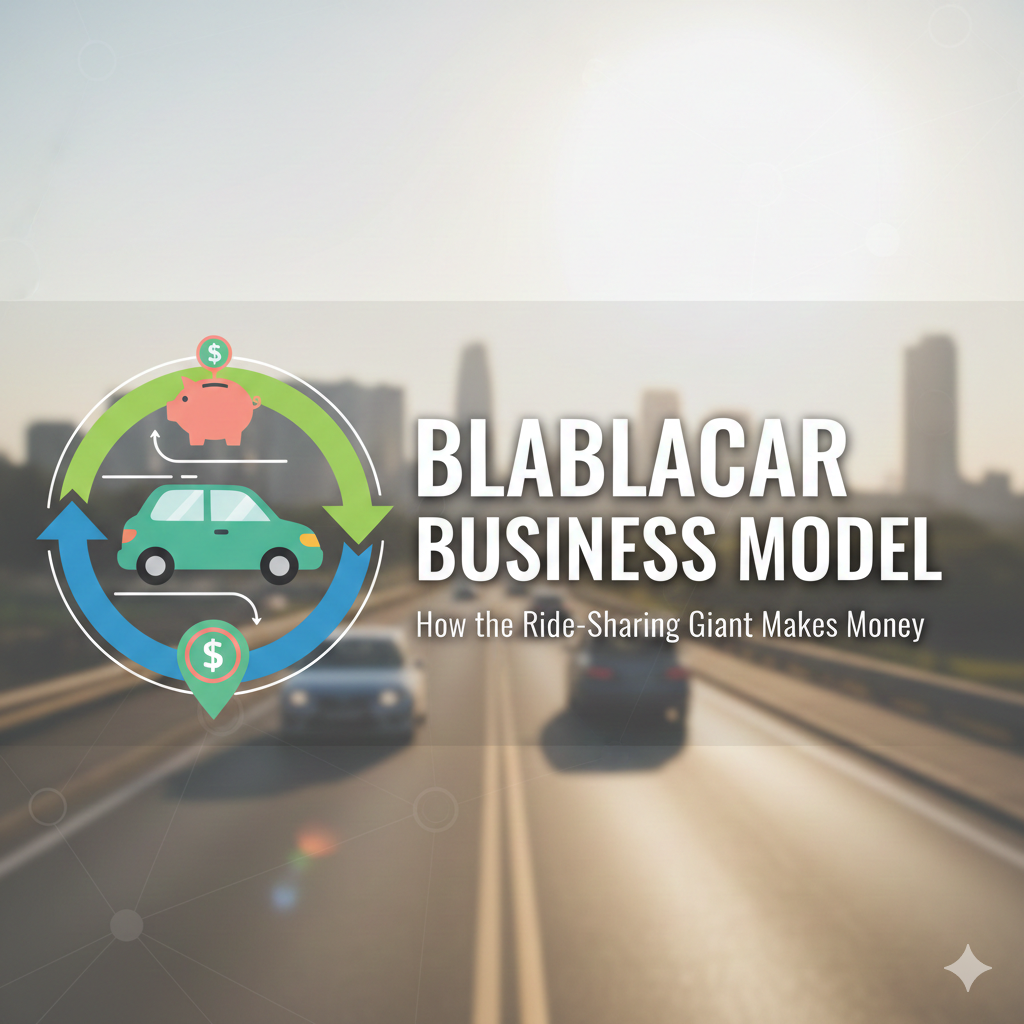
BlaBlaCar generates revenue by charging service fees on ride bookings and bus tickets booked through its long-distance carpooling platform. Unlike traditional taxi services, BlaBlaCar connects drivers with empty seats to passengers traveling the same route, creating a cost-sharing model rather than a commercial transport service.
This unique approach has made BlaBlaCar one of the world’s largest long-distance ride-sharing platforms, operating in over 20 countries with millions of active users. But how exactly does this carpooling business model work, and what makes it profitable?
In this comprehensive guide, we’ll explore BlaBlaCar’s business model, revenue streams, competitive advantages, and global expansion challenges.
What Is BlaBlaCar? A Quick Overview
BlaBlaCar is a peer-to-peer carpooling marketplace that facilitates long-distance travel by connecting drivers and passengers heading in the same direction.
Key Features:
- Long-distance focus: Typically routes over 100 kilometers
- Cost-sharing model: Passengers split fuel and toll costs
- Trust-based community: Verified profiles and rating systems
- Multi-country presence: Active in Europe, Latin America, India, and Russia
Founded in 2006 by Frédéric Mazzella in France, BlaBlaCar started as a simple idea: why should cars travel long distances with empty seats when people need affordable transport?
Today, the platform has facilitated over 100 million rides and continues to grow across emerging markets.
The Problem BlaBlaCar Solves
Understanding BlaBlaCar’s value proposition requires looking at the travel pain points it addresses.
For Passengers:
- High travel costs: Train and bus tickets can be expensive, especially for last-minute bookings
- Limited flexibility: Fixed schedules don’t always match travel needs
- Uncomfortable journeys: Crowded public transport reduces travel quality
For Drivers:
- Empty seats: Cars typically travel with 1-2 people, wasting capacity
- High fuel costs: Long-distance driving is expensive when costs aren’t shared
- Solo driving fatigue: Traveling alone on long routes can be tiring
For Society:
- Traffic congestion: More cars on roads create pollution and gridlock
- Carbon emissions: Individual car trips increase environmental impact
- Resource inefficiency: Unused vehicle capacity represents wasted resources
BlaBlaCar addresses all these issues simultaneously, creating value for multiple stakeholders.
How BlaBlaCar Works: The Platform Mechanics
The BlaBlaCar platform operates through a straightforward user flow designed for trust and convenience.
Step 1: Driver Posts a Ride
Drivers with upcoming long-distance trips create ride listings including:
- Departure and destination cities
- Date and departure time
- Number of available seats
- Price per seat (platform suggests pricing based on distance)
- Vehicle details and amenities
- Driver profile with verification status
Step 2: Passenger Searches and Books
Passengers looking for rides:
- Enter their route and travel dates
- Browse available rides
- Review driver profiles, ratings, and reviews
- Select preferred ride based on timing, comfort, and price
- Complete booking with online payment
Step 3: Ride Execution
On travel day:
- Driver and passenger meet at agreed pickup point
- Journey happens with optional stops along the route
- Driver drops passenger at destination
Step 4: Payment Release and Reviews
After trip completion:
- BlaBlaCar releases payment to driver (minus commission)
- Both parties leave ratings and reviews
- Trust scores update based on feedback
This review system is crucial for maintaining platform safety and quality.
BlaBlaCar Business Model: How It’s Structured
BlaBlaCar operates on a platform marketplace business model with several key characteristics:
Asset-Light Approach
- No vehicle ownership required
- No driver employment contracts
- Minimal physical infrastructure
- Focus on technology and community building
Network Effects
- More drivers attract more passengers
- More passengers attract more drivers
- Reviews and ratings strengthen trust
- Community grows organically through positive experiences
Two-Sided Marketplace
The platform must balance supply (drivers) and demand (passengers) to maintain liquidity and user satisfaction.
BlaBlaCar Revenue Streams: How Does BlaBlaCar Make Money?
1. Service Fees on Ride Bookings (Primary Revenue)
This represents BlaBlaCar’s largest income source.
How it works:
- Passengers pay for seats through the platform
- BlaBlaCar deducts a service fee (typically 10-20% depending on region)
- Remaining amount goes to the driver
Important distinction:
Drivers are not making profits—they’re recovering costs. This keeps BlaBlaCar legally classified as carpooling rather than commercial transport, avoiding taxi regulations.
Revenue factors:
- Commission percentage varies by country
- Longer distances generate higher absolute fees
- Booking volume determines total revenue
- Payment processing is handled in-platform
2. BlaBlaBus: Intercity Bus Ticket Sales
BlaBlaCar expanded into professional bus services through BlaBlaBus.
Business model:
- Partner with bus operators to list routes
- Users book bus tickets through BlaBlaCar platform
- BlaBlaCar earns commission per ticket sold
- Bus operators gain access to BlaBlaCar’s user base
Strategic benefits:
- More stable revenue compared to peer-to-peer rides
- Professional transport option increases platform credibility
- Reduces dependency on carpooling alone
- Covers routes where carpooling has low supply
3. Dynamic Pricing and Recommendation Tools
In certain markets, BlaBlaCar provides:
- AI-powered price recommendations for drivers
- Demand-based pricing adjustments
- Occupancy optimization algorithms
Revenue impact:
- Higher booking success rates
- Improved seat occupancy
- Better driver satisfaction
- Increased platform commission volume
4. Ancillary Services and Add-Ons
Additional revenue sources include:
- Cancellation protection: Insurance against booking cancellations
- Priority customer support: Premium assistance for frequent users
- Travel insurance: Optional coverage for passengers
- Featured listings: Enhanced visibility for driver posts (in select markets)
These services aren’t core revenue drivers but improve average transaction value.
Why BlaBlaCar Avoids Traditional Advertising
Unlike most free platforms, BlaBlaCar doesn’t heavily monetize through advertising.
Strategic reasoning:
- Trust preservation: Travel requires high confidence between strangers
- User experience: Ads could reduce platform quality perception
- Revenue stability: Commission model provides predictable income
- Brand positioning: Premium experience over ad-supported free service
This approach strengthens long-term user retention and brand value.
BlaBlaCar’s Cost Structure: Where Money Gets Spent
Despite not owning vehicles, BlaBlaCar faces significant operational costs.
Technology Infrastructure
- Mobile app development and maintenance
- Matching algorithms and recommendation systems
- Payment processing integration
- Data security and privacy protection
- Server hosting and scalability
- Fraud detection systems
Trust and Safety Operations
- Identity verification processes
- Profile authentication
- Review moderation teams
- Customer support centers
- Dispute resolution mechanisms
- Safety protocol development
Marketing and Growth
- Digital advertising campaigns
- Referral program incentives
- Partnership development
- Regional market expansion
- Brand awareness initiatives
- Community building events
Legal and Regulatory Compliance
- Transport law navigation across countries
- Payment regulation adherence
- Data protection compliance (GDPR, etc.)
- Tax compliance in multiple jurisdictions
- Legal team for policy development
BlaBlaCar vs Uber: Understanding Key Differences
While both are ride-sharing platforms, they operate fundamentally differently.
| Aspect | BlaBlaCar | Uber |
|---|---|---|
| Trip Type | Long-distance (100+ km) | Short urban rides |
| Driver Intent | Cost recovery | Profit generation |
| Pricing | Cost-sharing | Market-rate fares |
| Regulation | Carpooling laws | Taxi/rideshare laws |
| Schedule | Pre-planned trips | On-demand |
| Trust Model | Community reviews | Platform verification |
This distinction allows BlaBlaCar to avoid regulatory battles faced by Uber and Lyft in many countries.
Competitive Advantages: Why BlaBlaCar Is Hard to Replicate
1. Trust Network and Community
Building trust between strangers sharing long car journeys takes years:
- Comprehensive review system
- Verified user profiles
- Safety protocols and guidelines
- Strong community culture
- Positive reputation accumulated over time
New competitors struggle to establish this trust foundation quickly.
2. Network Effects and Liquidity
Ride-sharing marketplaces need:
- Sufficient drivers on popular routes
- Enough passengers to make listing worthwhile
- Geographic coverage across regions
- Consistent availability
BlaBlaCar’s first-mover advantage in Europe created strong network effects that are difficult to disrupt.
3. Regulatory Positioning
BlaBlaCar carefully positioned itself as cost-sharing, not commercial transport.
This strategic framing:
- Avoids taxi union opposition
- Reduces regulatory scrutiny
- Enables operation in restrictive markets
- Differentiates from Uber-like services
4. Technical Infrastructure
Years of development created:
- Sophisticated matching algorithms
- Multi-currency payment systems
- Fraud prevention mechanisms
- Scalable platform architecture
Replicating this technical depth requires significant investment.
BlaBlaCar’s Global Expansion: Regional Challenges and Opportunities
Europe: The Home Market
Strengths:
- Strong brand recognition
- Established user base
- Supportive carpooling culture
- Good public transport integration
Challenges:
- Market saturation in major countries
- Competition from low-cost airlines and trains
- Economic regulations vary by country
Latin America: Growing Markets
Opportunities:
- Rising middle class with travel needs
- Limited affordable long-distance transport
- High car ownership rates
- Environmental awareness increasing
Challenges:
- Safety concerns in certain regions
- Payment infrastructure limitations
- Trust barriers between strangers
- Competition from informal carpooling
Russia and Eastern Europe
Strengths:
- Large distances between cities
- Expensive traditional transport
- Tech-savvy population
- Strong community culture
Challenges:
- Economic fluctuations affecting travel budgets
- Payment processing complications
- Regional language variations
India and Emerging Asia
Unique challenges:
- Strong rail networks: Indian Railways offers extensive, affordable connectivity
- Cheap bus alternatives: Multiple budget bus operators compete aggressively
- Cultural trust barriers: Sharing cars with strangers faces social hesitation
- Language diversity: Multiple languages complicate platform localization
- Payment preferences: Cash-based economy limits online transactions
- Infrastructure variations: Road conditions vary significantly by region
Where BlaBlaCar succeeds:
- Tier-1 to Tier-2 city routes (Delhi-Jaipur, Mumbai-Pune)
- Young professionals and students
- Weekend and holiday travel
- Routes underserved by trains
Strategic approach needed:
- Hyperlocal marketing and community building
- Partnership with educational institutions
- Enhanced verification for trust-building
- Regional language support
- Flexible payment options including UPI and wallets
India represents a long-term opportunity requiring patient investment rather than quick returns.
Africa and Middle East: Untapped Potential
Opportunities:
- Growing urbanization
- Limited intercity transport options
- Young, mobile-first populations
- Rising environmental consciousness
Challenges:
- Infrastructure limitations
- Payment system development needs
- Regulatory uncertainty
- Security concerns in certain regions
Key Strengths of BlaBlaCar’s Business Model
- Scalability: Platform can expand without proportional cost increases
- Sustainability: Environmental benefits align with global trends
- Asset-light: No vehicle ownership reduces risk and capital requirements
- Community-driven: Organic growth through word-of-mouth
- Regulatory advantage: Cost-sharing model avoids commercial transport laws
- Multiple revenue streams: Diversification through buses and ancillary services
Risks and Challenges Facing BlaBlaCar
Regulatory Uncertainty
Governments could:
- Redefine carpooling versus commercial transport
- Limit pricing flexibility
- Impose new safety requirements
- Increase tax obligations
Competition from Alternative Transport
- High-speed trains in developed markets
- Low-cost airlines on popular routes
- Improved bus services
- Electric scooters and bikes for shorter distances
Safety Incidents
One major accident or security incident could:
- Damage brand reputation severely
- Reduce user trust dramatically
- Trigger regulatory crackdowns
- Decrease platform usage
Market Saturation
In mature European markets:
- Growth is slowing
- User acquisition costs increasing
- Competition intensifying
- Innovation needed to maintain relevance
Future Growth Opportunities for BlaBlaCar
1. Electric Vehicle Integration
- Partner with EV owners for eco-friendly rides
- Promote sustainable travel options
- Attract environmentally conscious users
2. Subscription Models
- Monthly passes for frequent travelers
- Discounted booking packages
- Premium membership with benefits
3. AI and Automation
- Better route matching algorithms
- Predictive pricing optimization
- Automated fraud detection
- Personalized recommendations
4. Mobility Ecosystem Expansion
- Integration with local transport apps
- First-mile and last-mile solutions
- Multi-modal journey planning
- Partnership with tourism operators
5. Corporate Travel Programs
- B2B partnerships with companies
- Employee commute solutions
- Business travel cost reduction
- Corporate sustainability goals support
Lessons from BlaBlaCar’s Business Model
For entrepreneurs and business strategists, BlaBlaCar offers valuable insights:
Trust Before Revenue
BlaBlaCar spent years building trust before aggressively monetizing, creating a sustainable foundation.
Regulatory Intelligence
Understanding legal positioning prevents future obstacles and enables long-term operation.
Community-Centric Approach
Treating users as community members rather than transactions builds loyalty and organic growth.
Patient Market Development
Success in new markets requires time, local adaptation, and cultural understanding.
Conclusion: Why BlaBlaCar’s Model Works
BlaBlaCar has built a sustainable, profitable business by:
- Solving real problems for drivers, passengers, and society
- Creating trust through technology and community
- Scaling without owning physical assets
- Navigating regulations intelligently
- Diversifying revenue beyond core carpooling
The platform demonstrates how technology can facilitate resource sharing, reduce environmental impact, and create economic value simultaneously.
For anyone studying platform businesses, marketplace dynamics, or the sharing economy, BlaBlaCar represents one of the most successful and instructive models globally. Its ability to balance profitability with social impact makes it a compelling case study for sustainable business building.
As the world moves toward shared mobility and environmental consciousness, BlaBlaCar’s model becomes increasingly relevant and valuable.
FAQs
How does BlaBlaCar make money?
How much commission does BlaBlaCar take?
The commission is paid by the passenger, not the driver, and is included in the final booking price shown in the app.
(Exact commission rates vary by region and are not publicly fixed.)
What is the revenue of BlaBlaCar?
Key indicators of revenue strength:
100+ million registered users globally
92 million passengers travelled in 2024
Commission-based earnings from rides and bus tickets
Expansion into multimodal transport (cars + buses)
The company has also reported profitability in recent years, indicating a sustainable business model.
Is BlaBlaCar cheaper than a train?
Why BlaBlaCar is often cheaper:
Prices are based on cost-sharing, not profit
No surge pricing
Lower operational costs compared to railways
Flexible pickup and drop points
However, prices may vary depending on route, demand, and seat availability.
Is BlaBlaCar legal?
Is BlaBlaCar safe to use?
Verified user profiles
Ratings and reviews for both drivers and passengers
In-app payments and customer support
Community trust systems built over many years
Like any shared travel platform, users are advised to check profiles and reviews before booking.
Is BlaBlaCar cheaper than Uber or Ola?
Uber and Ola charge commercial taxi fares
BlaBlaCar focuses on cost-sharing, not driver profits
No dynamic surge pricing
For short city rides, Uber or Ola may still be more practical.
Does BlaBlaCar own cars or employ drivers?
It does not own vehicles and does not employ drivers. It only connects people travelling in the same direction and earns through commissions.
Discover more from Business Model Hub
Subscribe to get the latest posts sent to your email.



[…] carpooling services (DiDi Hitch and shared rides) create multiple revenue opportunities from single […]